
Get all your news in one place.
100’s of premium titles.
One app.
Start reading
Grocery Coupon Guide
Shay Huntley

Did Retailers Raise Prices Before Discounts to Make Sales Look Bigger?

Image source: shutterstock.com

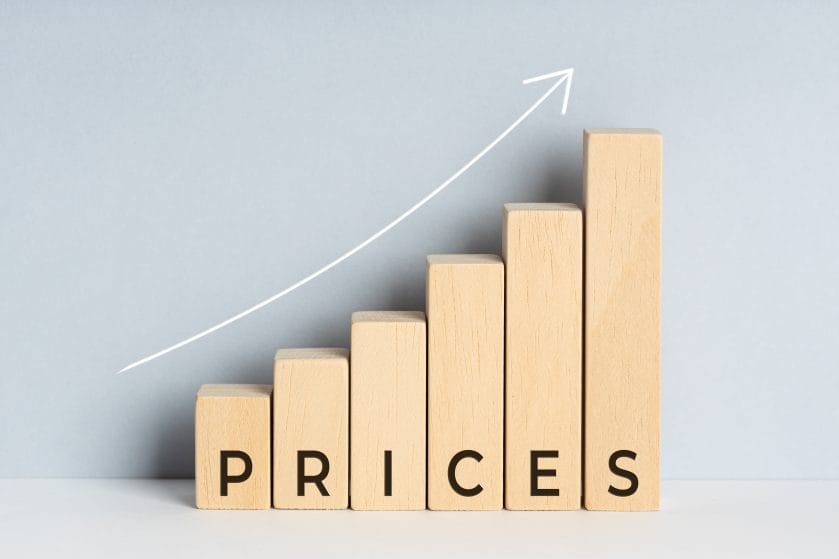
Walking into a store and seeing a “50% Off” sign triggers a rush of excitement, a dopamine hit that retailers have spent decades engineering. We instinctively believe that a slashed price represents a victory, a steal that we must claim immediately. However, a growing wave of consumer lawsuits and regulatory scrutiny suggests that many of these discounts are elaborate illusions. The practice, known as “fictitious pricing” or “false reference pricing,” involves retailers artificially inflating the “original” price of an item just days before a sale, creating a phantom discount that looks deeper than it actually is.

The Mechanics of the Illusion

The strategy is deceptively simple. A retailer wants to sell a blender for $50. If they simply put a sticker on it that says $50, the consumer perceives it as a standard transaction. To create urgency, the retailer briefly raises the list price to $100 for a few days, often with no intention of selling any units at that price. They then apply a “50% Off” banner, bringing the price back down to the intended $50. The customer buys the blender, thinking they saved $50, when in reality, they paid the standard market rate. The discount was merely a mathematical fabrication.

Legal Battles and “High-Low” Pricing

This tactic is not just unethical; in many jurisdictions, it borders on illegal. The Federal Trade Commission (FTC) guidelines state that a “former price” must have been a genuine price at which the item was offered for a substantial period. Despite this, retailers frequently operate on a “High-Low” model, where the “regular” price is permanently inflated to allow for constant “sales.” Recent class-action lawsuits against major fashion and home goods retailers have exposed internal emails and pricing algorithms designed specifically to manipulate this reference price, proving that the “original” price was never a real reflection of value.

The Psychological Anchor

Image source: shutterstock.com

This manipulation works because of a cognitive bias called “anchoring.” When we see the higher strike-through price our brain anchors to that number as the item’s true value. Any price lower than the anchor feels like a gain. Retailers know that we rarely judge an item’s value based on its utility or material cost; we judge it based on its relationship to the anchor price. By manipulating the anchor, they manipulate our perception of the deal.

How to Spot the Trap

In the digital age, consumers have the tools to shatter the illusion. Browser extensions and price-tracking websites allow shoppers to view the historical price of an item on sites like Amazon. These charts often reveal the “sawtooth” pattern of deceptive pricing: the price spikes upward for a week, only to drop back down to the average, accompanied by a “Sale” banner. If an item is “on sale” for 300 days out of the year, it is not on sale; that is simply its price.

The “Outlet” Loophole

The deception is even more profound in outlet stores. Shoppers assume that outlet merchandise is clearance stock from the main retail stores. In reality, many brands manufacture lower-quality lines specifically for their outlets. The price tag will list a “Compare At” price that references the high-quality main-line version, even though the outlet item was never sold at that higher price or quality level. This comparison creates a false sense of equity between two fundamentally different products.

Always Approach With Skepticism

The next time you see a massive discount percentage, treat it with skepticism. The only price that matters is the one you pay, not the crossed-out number next to it. By ignoring the anchor and researching the item’s true market history, you can ensure that you are buying a product because it is worth the money, not because you fell for a fabricated math trick.

What to Read Next

8 Psychological Games Big-Box Stores Play to Keep You Coming Back

Worst Grocery Store Sales Tactics to Watch For

7 Psychological Traps Every Retail Store Uses to Keep You Walking in Circles

Are Monthly Grocery Sales Cycles Predictable Enough to Plan Around?

Grocery Inventory Audits Bring Sales Lift in Perishable Aisles

The post Did Retailers Raise Prices Before Discounts to Make Sales Look Bigger? appeared first on Grocery Coupon Guide.

Sign up to read this article
Read news from 100’s of titles, curated specifically for you.
Already a member? Sign in here
Related Stories
Top stories on inkl right now
One subscription that gives you access to news from hundreds of sites
Already a member? Sign in here
Our Picks
Fourteen days free
Download the app
One app. One membership.
100+ trusted global sources.







