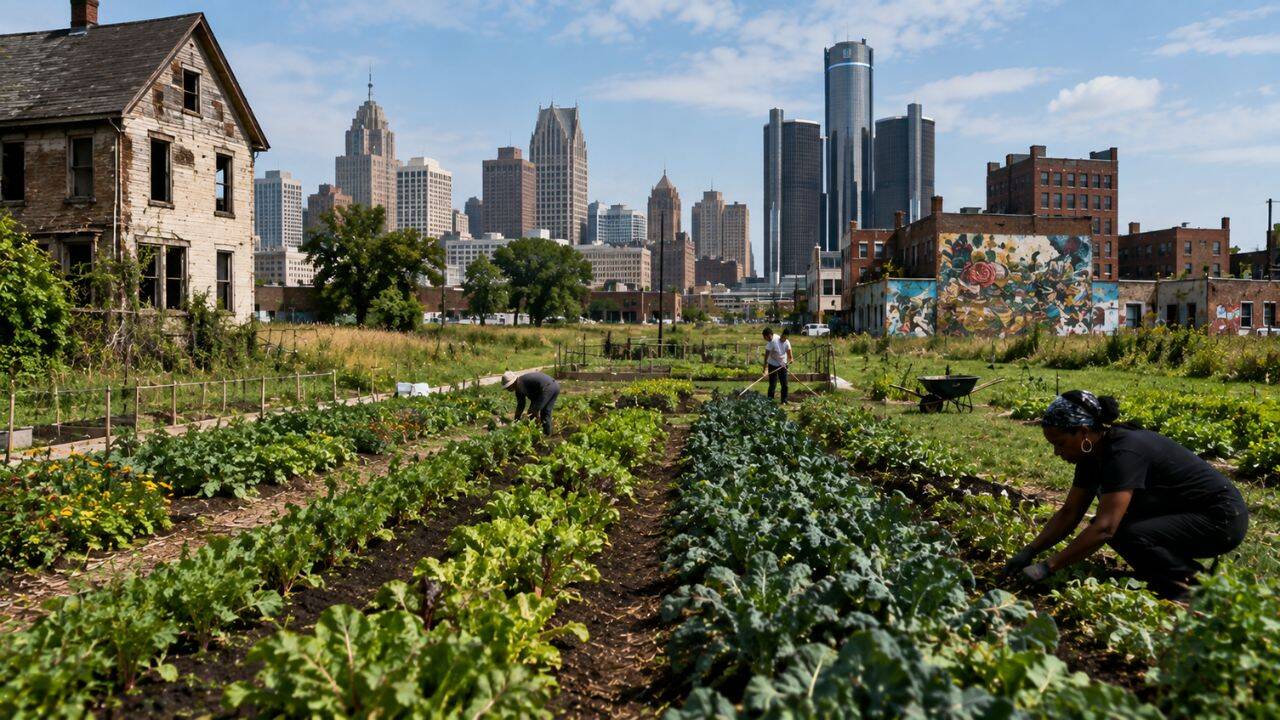
Detroit was once built for two million residents, but the population today stands at under a million. That shift left behind a vast amount of unused space, and rather than let it sit idle, residents began reclaiming it. What started with small community gardens on scattered plots has grown into one of the strongest urban agriculture movements in the United States. Today, the city counts more than 2,200 gardens and farms, run largely by local residents who turned neglected land into a source of food, income and community pride. This transformation reflects decades of grassroots effort, changing city policy and a determination to make the most of the land Detroit has in abundance. Detroit was once built for two million residents, but the population today stands at under a million. That shift left behind a vast amount of unused space, and rather than let it sit idle, residents began reclaiming it. What started with small community gardens on scattered plots has grown into one of the strongest urban agriculture movements in the United States. Today, the city counts more than 2,200 gardens and farms, run largely by local residents who turned neglected land into a source of food, income and community pride. This transformation reflects decades of grassroots effort, changing city policy and a determination to make the most of the land Detroit has in abundance.
Get breaking news anytime, anywhere. Download the TOI app now!