
Get all your news in one place.
100’s of premium titles.
One app.
Start reading
PC Gamer
PC Gamer
Andy Edser

Despite Intel dropping the desktop CPU ball this year, its share of the market fell by just 4.9%—while AMD still lags significantly behind on mobile

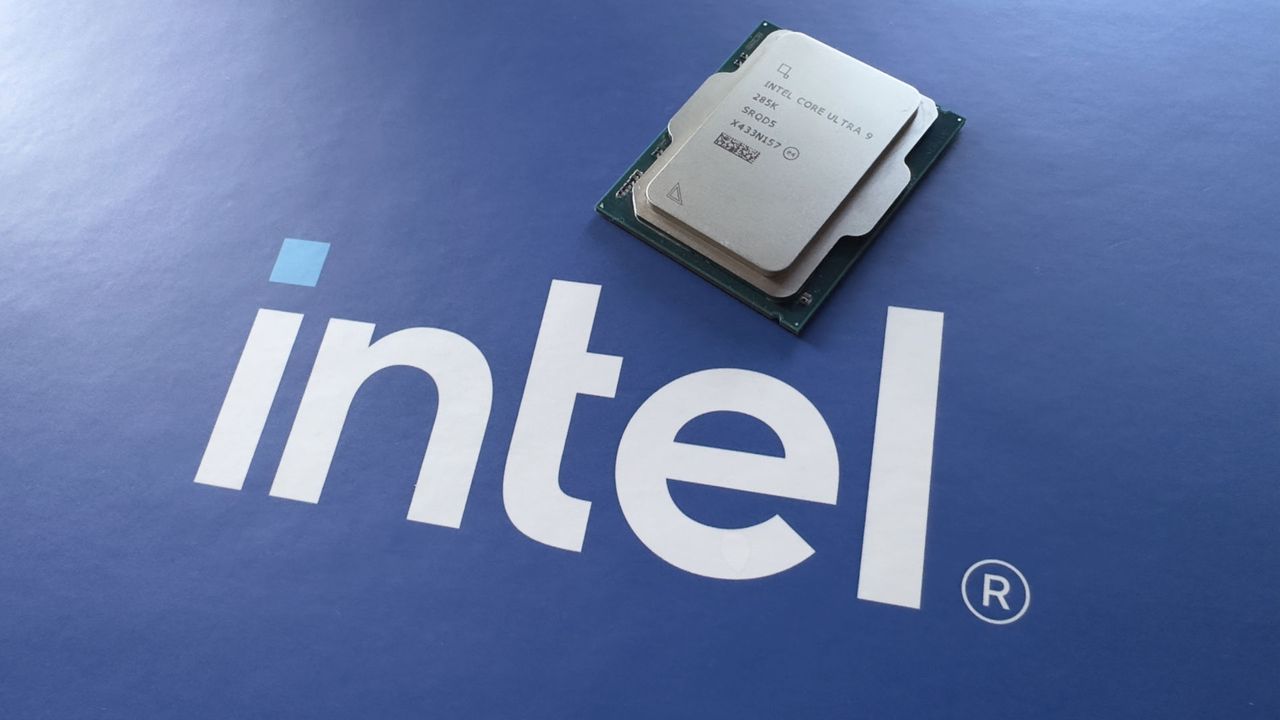
A photo of an Intel Core Ultra 9 285K processor next to an Intel logo.

We weren't particularly impressed with Intel's Arrow Lake desktop CPUs upon their release earlier this year. While chips like the Core Ultra 9 285K and Core Ultra 5 245K are far from sluggish, we clocked them as slower in games overall than some of the comparable chips from the older Raptor Lake generation, and nowhere near as good value in relative terms compared with their AMD competition.

Nonetheless, new data from Mercury Research shows that, despite the frosty reaction towards these chips from the PC hardware community at large, it doesn't appear to have made as much of a dent in Intel's desktop market share as you might expect. MR reports that Intel's slice of the desktop CPU market is 4.9% lower in the third quarter of this year, compared to Q3 2025.

So, despite AMD having had a relatively bumper year for desktop CPUs, it still trails behind Intel with 33.6% of the market share. And it's still lagging behind when it comes to mobile chips, too, where AMD's percentage share has actually dropped down to 21.9% compared to 22.3% in the same quarter last year.

So, what's going on? Did buyers ignore our (excellent) consumer advice and pick up an Intel desktop chip regardless, or are AMD's mobile CPUs simply no good?

The answer is far more nuanced. While we're huge DIY gaming PC enthusiasts, it's important to remember that the DIY market is absolutely tiny compared to the OEM equivalent, as many major system builders will still have existing agreements with Intel to use their chips exclusively, or in large proportion.

(Image credit: Mercury Research)

So, pick up, say, a fleet of desktop PCs for your business from many major manufacturers, and chances are you'll be choosing from an Intel-dominated lineup. Of course, AMD has its own arrangements with certain manufacturers, but it's still Intel that has the lion's share, and as a result, Intel's latest desktop CPUs are still moving at a considerable rate.

And when it comes to laptops, that effect is magnified. We were surprised when Razer switched over to AMD for its latest generation Blade gaming laptops, and wondered whether it might be a sign of a tipping point being reached. Were we about to see other laptop manufacturers jump ship in a similar way?

Turns out, apparently not. And to be fair to Intel, its new mobile CPUs are some of the fastest we've tested. Not that it makes too much difference, as it's down to what manufacturers are providing, and most laptop providers are still pumping out machines with Intel chips almost to the exclusion of AMD Ryzen silicon.

AMD may be having quite the run of success with its desktop CPUs, and servers, too, but it's still running into OEM agreements that mean the market share overall still sides significantly in Intel's favour, despite all the negativity it's received this year. It's a complicated world, isn't it? A butterfly flaps its wings, but in this case, it looks like nothing but a brief gust of air.

Best CPU for gaming 2025

All our current recommendations


POWERED BY
Sign up to read this article
Read news from 100’s of titles, curated specifically for you.
Already a member? Sign in here
Related Stories
Top stories on inkl right now
One subscription that gives you access to news from hundreds of sites
Already a member? Sign in here
Our Picks
Fourteen days free
Download the app
One app. One membership.
100+ trusted global sources.







