Closing summary
Florida governor Ron DeSantis ruffled some feathers in the Republican party by saying he would oppose further military aid to Ukraine ahead of his widely expected presidential run, and referring to Russia’s invasion as a “territorial dispute”. His comments were rejected by Florida’s Republican senator Marco Rubio but indicate the widening divide in the GOP over continued American aid to Kyiv. Meanwhile, the Republican House oversight committee chair James Comer appeared on Fox News to give an update on his committee’s investigation into Joe Biden and his family’s business practices – but was greeted with skepticism.
Here’s what else happened today:
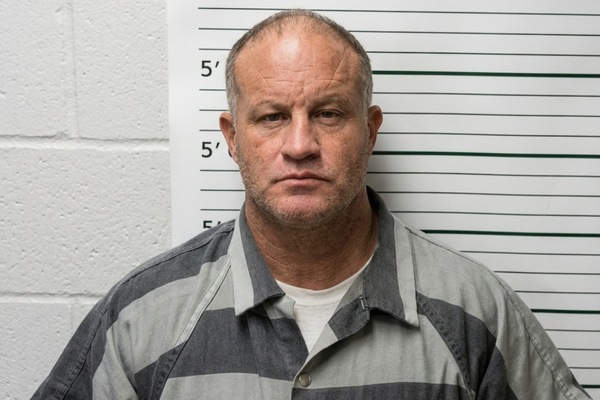
Two more years for George Santos? The Republican congressman and admitted liar has filed the initial paperwork to stand for re-election.
DeSantis did not always oppose aid to Ukraine, it turns out.
Democratic senator Elizabeth Warren wants answers from Silicon Valley Bank’s former CEO about his advocacy for financial sector deregulation and the role it played in the bank’s collapse.
Roger Wicker, the top Republican on the Senate foreign relations committee, decried “isolationists” (who could he be referring to?) after a Russian plane crashed into an American drone.
The Senate will on Thursday begin the process of repealing the legal authorization for the invasion of Iraq.
Joe Biden yesterday infuriated environmental groups by approving a massive oil drilling project in a protected area of Alaska, despite promising to fight climate change as president. Here’s the Guardian’s Oliver Milman with a look at why the project is so dangerous for the climate, and the reasons Biden may have decided to okay it:
Joe Biden continues to confound on the climate crisis. Hailed as America’s first “climate president”, Biden signed sweeping, landmark legislation to tackle global heating last year and has warned that rising temperatures are an “existential threat to humanity”. And yet, on Monday, his administration decided to approve one of the largest oil drilling projects staged in the US in decades.
The green light given to the Willow development on the remote tundra of Alaska’s northern Arctic coast, swatting aside the protests of millions of online petitioners, progressives in Congress and even Al Gore, will have global reverberations.
There are more than 600m barrels of oil available to be dislodged by ConocoPhillips over the next 30 years, effectively adding the emissions of the entire country of Belgium, via just one project, to further heat the atmosphere.
The scale of Willow is vast, with more than 200 oilwells, several new pipelines, a central processing plant, an airport and a gravel mine set to enable the extraction of oil long beyond the time scientists say that wealthy countries should have kicked the habit, in order to avoid disastrous global heating.