
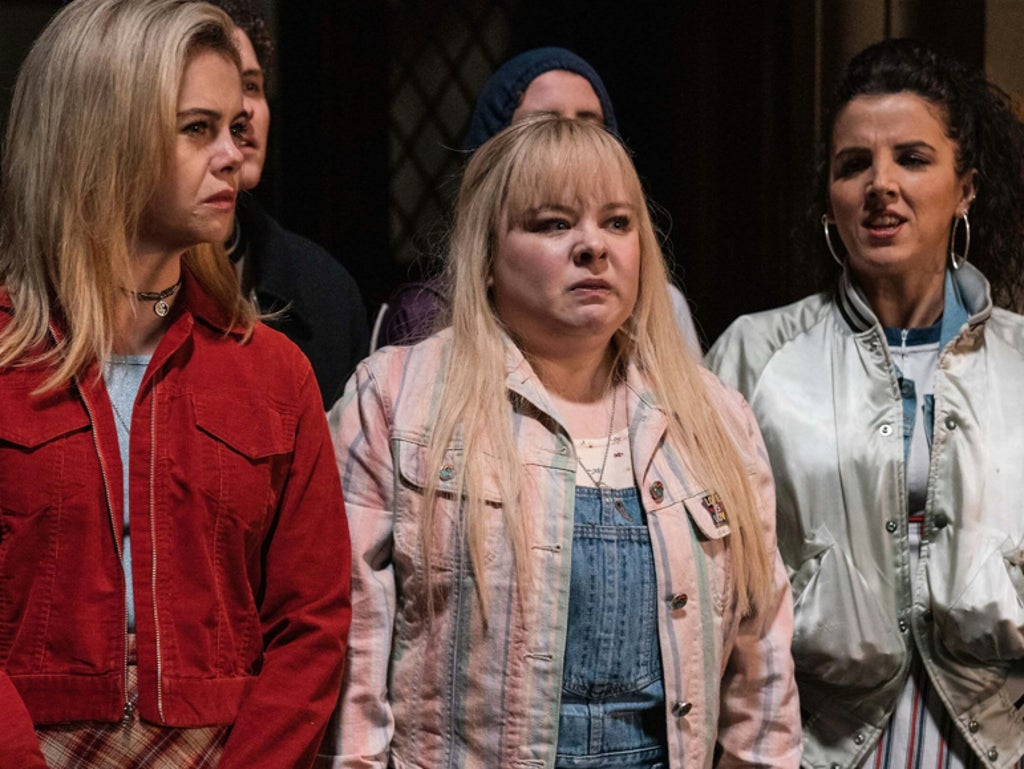
“They told us we were young,” a breathy voiceover declares, in a pronounced Northern Irish accent, “yet we understood the enormity of it. We understood what was at stake”. These opening words – especially with Saoirse-Monica Jackson’s trademark quiver on the word “enormity” – would be enough to thrust the viewer straight back into the world of Derry Girls, even if they weren’t being played over home video footage of the show’s central cast, intercut with balaclava-wearing riflemen, burning vehicles and rosary beads. This is the Derry of the 1990s, the backdrop against which Lisa McGee’s rightly acclaimed sitcom plays out.
The show’s third and final season begins with the gang of schoolmates attempting to replicate the success of some East German teenagers, by making a short film about the Troubles. Though it’s really a throwaway gag designed to introduce the episode’s main plotline – the girls preparing to receive their GCSE results – it’s typical of how the show handles its context. Derry Girls is neither about, nor not about, the Troubles. Instead, it’s about the resilience of human vanity and self-absorption in the face of the greatest challenges. In the same way that M*A*S*H demonstrated its characters’ capacity to be drunk and disobedient, even under constant threat of shelling, Derry Girls is an electric depiction of adolescent monomania.












