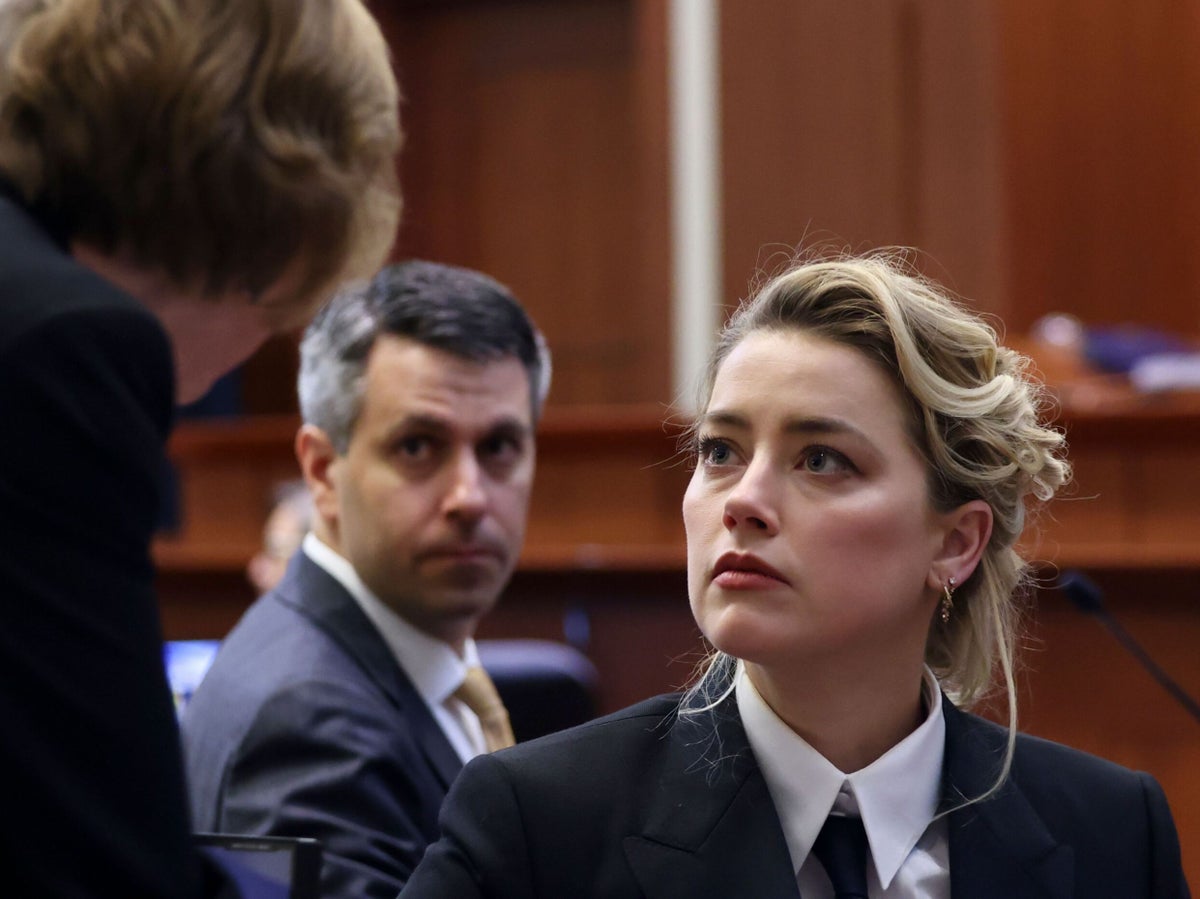
It is said, by historians of language use, that the phrase “he-said, she-said” was popularised in 1991 when American lawyer Anita Hill testified against Clarence Thomas, who had been nominated to the Supreme Court, claiming he sexually assaulted her. That may have brought the flippant phrase into common usage, but some form of it has doubtless been around since cavefolk started using pronouns. And nowhere in recent years has the concept of this tit-for-tat battle of opposing perspectives been rendered more starkly than in the defamation case waged by Hollywood actor Johnny Depp against his ex-wife, Amber Heard, the subject of a new three-part Channel 4 series, Depp v Heard.
Emma Cooper’s documentary purports to be, through the magic of editing, the first time that Depp and Heard’s testimony has been presented side-by-side (in reality, they testified two weeks apart). But more strikingly, this collage is presented alongside snapshots of the public show trial. As social media began to turn against Heard, the documentary illustrates the pernicious influence of civilian journalists – from TikTok to podcasts – in picking over the bones of this case, which was broadcast live from a Virginia courtroom. “This has moved away from a news story or a lawsuit,” observes Dellara Gorjian, a vaguely legally qualified TikToker, “and it’s transformed into a cultural moment.”