Get all your news in one place.
100's of premium titles.
One app.
Start reading
The Economic Times
The Economic Times

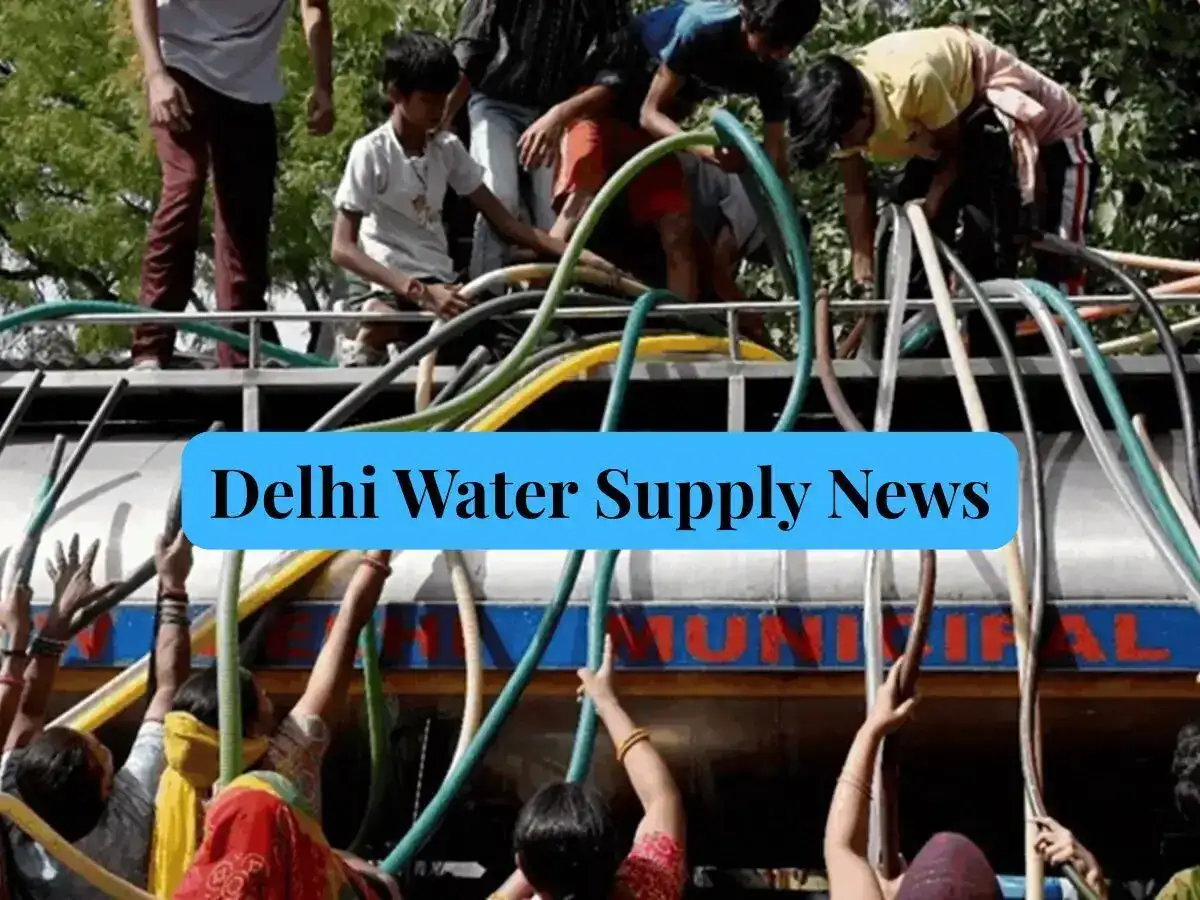
Delhi water crisis: Will supply improve in coming days? Here’s the latest update after Haryana releases water

Residents across several parts of Delhi may continue to face disrupted water supply for the next few days as the water level at the Wazirabad barrage remains far below the normal mark, even after Haryana released additional Yamuna water to the national capital.

Officials said the water level at the barrage stood at nearly 669.5 feet on Wednesday, sharply lower than the required 674.5 feet needed for smooth operations at key treatment plants. The shortage has already reduced drinking water production in multiple parts of the city.

Although Haryana released 979.5 cusecs of water through the Carrier Line Canal (CLC) and Delhi sub-branch (DSB) routes managed by the Delhi Jal Board (DJB), authorities said the impact has not yet reached the main supply system.

Why Delhi’s water supply is still under pressure

According to officials, Delhi’s biggest concern remains the low pond level at Wazirabad, which directly affects the functioning of major water treatment plants.

"It does not solve our problem because we need water in the Wazirabad pond through the Yamuna river. The water in the two canals has seen some increase, but that will take around three days to reach the plants," a senior DJB official said.

“Until the water levels return to normal, the water treatment plants are likely to operate below capacity,” he added.

Government officials also confirmed that discussions are continuing with Haryana to secure a larger raw water supply in the coming days.

Water treatment plants running below capacity

The shortage has particularly hit the Wazirabad and Chandrawal water treatment plants, both of which supply large parts of Delhi.

The Wazirabad plant usually produces around 131 million gallons per day (MGD), while Chandrawal has an average output capacity of 94 MGD. Officials said production at these facilities has dropped by nearly 25 to 30 per cent because of the low raw water availability.

Delhi Jal Board’s total average drinking water production generally remains between 990 and 1000 MGD, including supply from tubewells. However, current estimates suggest that the city’s overall output has fallen by nearly 70 to 100 MGD due to the declining water levels near Wazirabad.

Which areas are facing water shortage?

The reduced production has already started affecting several localities in North, West and parts of South Delhi.

Among the areas likely to face continued water supply disruption are Civil Lines, Kamla Nagar, Shakti Nagar, Karol Bagh, Pahar Ganj, Hindu Rao Hospital zone, NDMC areas and parts of Delhi Cantonment along with nearby localities.

The Delhi Jal Board has not announced any clear timeline for restoration of normal water supply, leaving many residents uncertain about when the situation will ease.

(Inputs from PTI)

Sign up to read this article
Read news from 100's of titles, curated specifically for you.
Already a member? Sign in here
Related Stories
Top stories on inkl right now
One subscription that gives you access to news from hundreds of sites
Already a member? Sign in here
Our Picks
Fourteen days free
Download the app
One app. One membership.
100+ trusted global sources.