NEW DELHI: As the monsoon is soon to arrive in Delhi following the current drizzle and clouded sky, several summer migratory and local migratory — species from the rest of India — birds have started gathering in the region for nesting and breeding.
Explaining the importance of monsoon for species like bitterns, prinias, bristled grassbirds, paradise flycatchers, birders said certain species of both resident and migratory birds had shown a change in distribution or even the sign of early or late breeding.

“This is the season of nesting, and the species that have finished breeding in summer will raise their second brood in the monsoon, such as house sparrows. Some will, however, breed for the first time during abundance of food. There are also hole nesting birds like woodpeckers, barbets, coppersmith, flame-back woodpeckers, which will breed now as the temperature will settle down,” said ecologist K S Gopi Sundar.
According to Sundar, extreme weather events at two levels — temperature and rain — had affected at least two species, sarus cranes and hornbills. “Due to extreme heat, lots of hornbills have apparently not nested. After breeding, hornbills put the females inside their nest hole and seal at the entrance as guards against predators, till the chicks are hatched. For the entire season, they feed the female through a tiny opening in the hole. Extreme heatwaves didn’t allow them to do it as the holes became warm,” he pointed out.
Species like paradise flycatchers, pittas, too, come to Delhi-NCR early in the summer with the assurance of food and make use of green areas in parks to build their nests. Rain signals nearing their breeding cycles, following which they fly away.
Some birders have also observed thinning of a few species, like cotton pygmy goose, a species that prefers cleaner water. “Cotton pygmy goose was a common visitor around 2007, but slowly it’s become rare. It’s difficult to give exact reason as more studies need to be done. It could be loss of preferred vegetation or excess of vegetation covering water surfaces,” said Faiyaz Khudsar, scientist in-charge at Yamuna Biodiversity Park. A few species like Jacobin cuckoo, Eurasian golden oriole, brown flycatcher are among the major attraction during the monsoon, he added.
Extreme weather conditions have, however, also stretched the sightings of some species, birders pointed out. “Due to unseasonal stormy weather this season, sighting of some species, often seen in the foothills, have increased. Common cuckoo, which was rarely seen in Mangar, was seen even in Okhla,” said birder Narendra Singh Khaira.
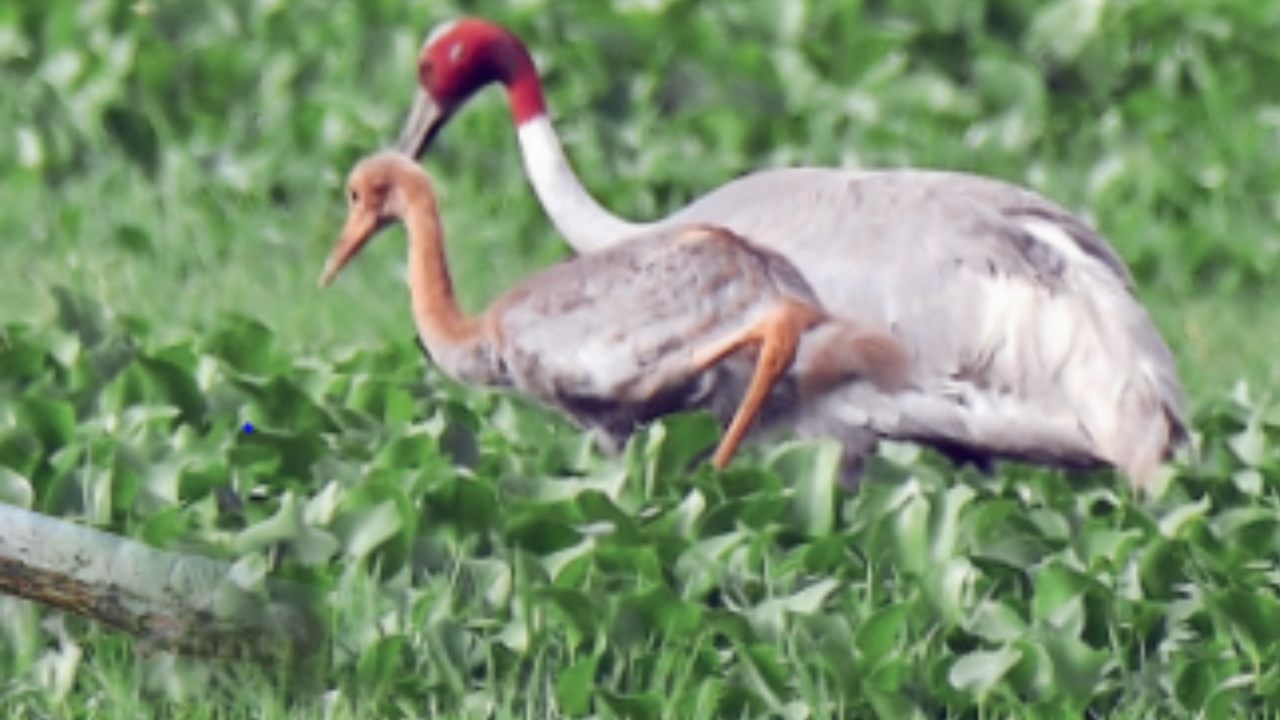
There have also been early nesting of some species, like sarus cranes. “We have seen sarus chicks in April, though they are usually hatched around July,” Khaira said.
The city needs more forest areas, minimal tree felling, and more herbs, shrubs and bushes to make it more welcoming to birds, birders pointed out. “We need to protect wetlands. The protection and recognition of wetlands is very slow; only four-five wetlands are recognised per year as the human needs are increasing,” Khaira said.