Get all your news in one place.
100's of premium titles.
One app.
Start reading
The Economic Times
The Economic Times

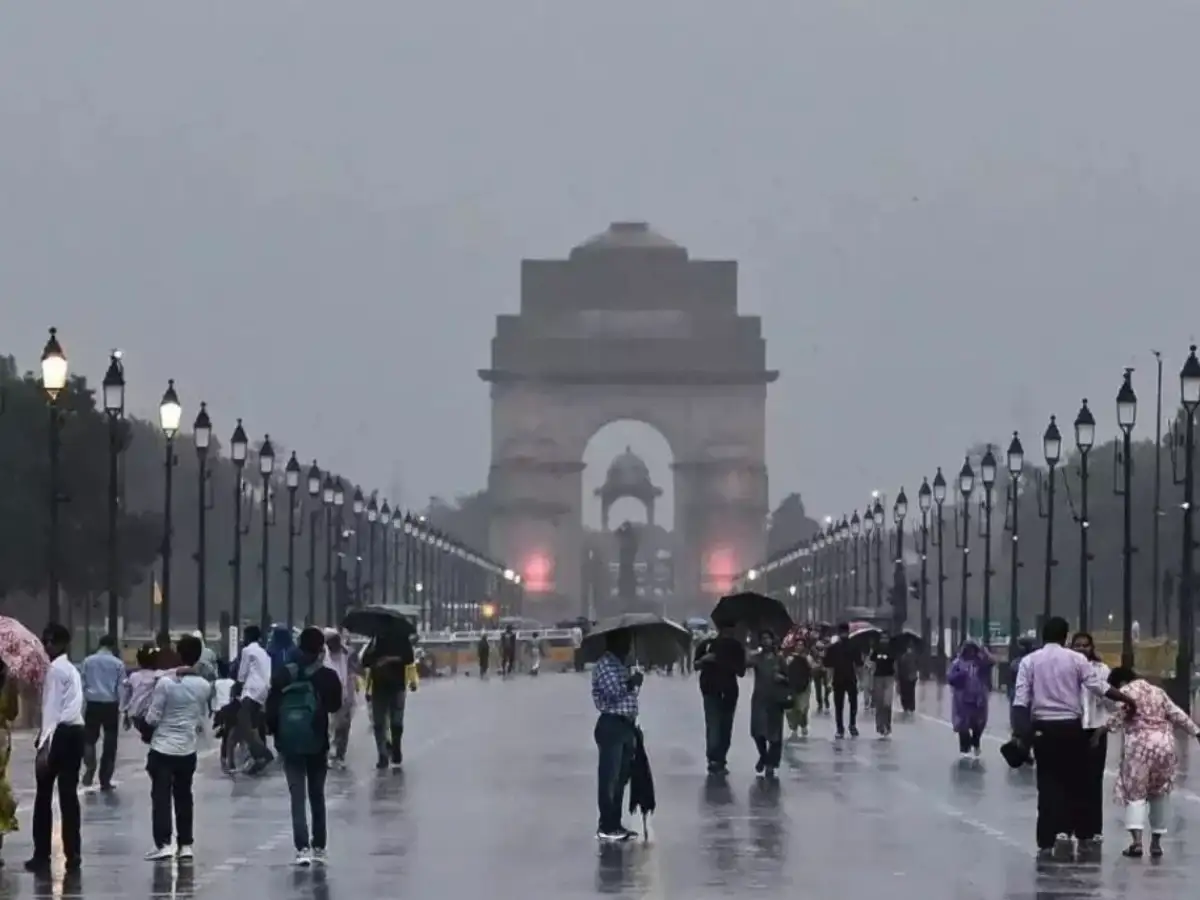
Delhi gets an early taste of winter at 21°C as September temperature hits 18-year low

Delhi woke up to an unusually cool Sunday as the minimum temperature dropped to 21 degrees Celsius, the lowest recorded in September in 18 years, according to the Times of India.

The temperature was three degrees below normal, with cool northerly and north-easterly winds combining with widespread rainfall across neighbouring states to bring an early winter-like feel to the capital.
Also Read: Weather today, September 28: Heavy rain alert for Uttarakhand, Karnataka; Telangana, Andhra Pradesh face thunderstorms; check latest IMD update

India Meteorological Department (IMD) data showed that Sunday's reading at Safdarjung was also among the lowest September minimum temperatures recorded in Delhi in more than two decades.

“The minimum temperature of 21 degrees Celsius recorded at Safdarjung was the second-lowest minimum temperature recorded in the month of Sept since 2001. The lowest was 20.8 degrees Celsius, recorded on Sept 6, 2008, and the third lowest was 21.1 degrees Celsius, on Sept 19, 2024,” Krishna Mishra, weather scientist at IMD, told the Times of India.

Temperatures fell even further at some other weather stations across the city. Ridge recorded a minimum of 16.8 degrees Celsius, while Palam registered 19.2 degrees Celsius and Ayanagar 21.2 degrees Celsius.

The fall was particularly sharp compared with Saturday, when Delhi's minimum temperature stood at 23.2 degrees Celsius.

Daytime temperatures also remained below normal. Safdarjung recorded a maximum of 30.6 degrees Celsius on Sunday, around four degrees below normal. The maximum temperature a day earlier was 29.2 degrees Celsius.

Widespread rain brings temperatures down

The unusually cool conditions in Delhi came amid intense rainfall across large parts of northern, central and eastern India.

According to the Times of India report, the IMD attributed the widespread rainfall to a deep depression over the west-central Bay of Bengal, which affected a broad belt stretching from Andhra Pradesh and Odisha through Chhattisgarh, eastern Madhya Pradesh, Jharkhand and Bihar to Uttar Pradesh and Uttarakhand.

“A very large area saw intense rain activity, up to more than 30cm at many places in UP. The low minimum temperatures in Delhi and adjoining areas can be attributed to this large-scale rain,” Mishra said, adding that minimum temperature departures in Uttar Pradesh, Chhattisgarh and eastern Madhya Pradesh were running as much as four degrees below normal.

The impact was also visible in daytime temperatures across several states.

“The maximum temperature departure on Sunday was up to 10 degrees below normal in parts of UP; 5-7 degrees below normal in parts of Chhattisgarh and MP; and 7-8 degrees below normal in Uttarakhand. Even in Delhi, it was around four notches below normal in some parts,” Mishra said.

The cool spell, however, may not last. The IMD expects conditions to turn drier as the southwest monsoon continues to withdraw, with both minimum and maximum temperatures in Delhi likely to gradually increase over the coming days.

On Monday, the minimum temperature is expected to remain between 20 and 22 degrees Celsius, while the maximum could range between 31 and 33 degrees Celsius. No rainfall is expected from Monday onwards, according to the report.

Delhi's air gets cleaner

The cooler weather also coincided with an improvement in Delhi's air quality.

The city's Air Quality Index stood at 53 at 4 pm on Sunday, remaining in the 'satisfactory' category and marking Delhi's cleanest air since July 9, when the AQI was recorded at 48. Several parts of the capital recorded air quality in the 'good' category.

Delhi's southwest monsoon withdrew on September 23, two days ahead of the normal withdrawal date.

Safdarjung recorded 728.6 mm of rainfall during the monsoon season, 16% above the long-period average of 629.7 mm but still within the range classified as normal rainfall. By comparison, Delhi recorded a 41% rainfall surplus last year.

Parts of the capital also received around 5 mm of post-monsoon rainfall on Saturday as the depression interacted with a western disturbance that supplied additional moisture to the region.

Sign up to read this article
Read news from 100's of titles, curated specifically for you.
Already a member? Sign in here
Related Stories
Top stories on inkl right now
One subscription that gives you access to news from hundreds of sites
Already a member? Sign in here
Our Picks
Fourteen days free
Download the app
One app. One membership.
100+ trusted global sources.