
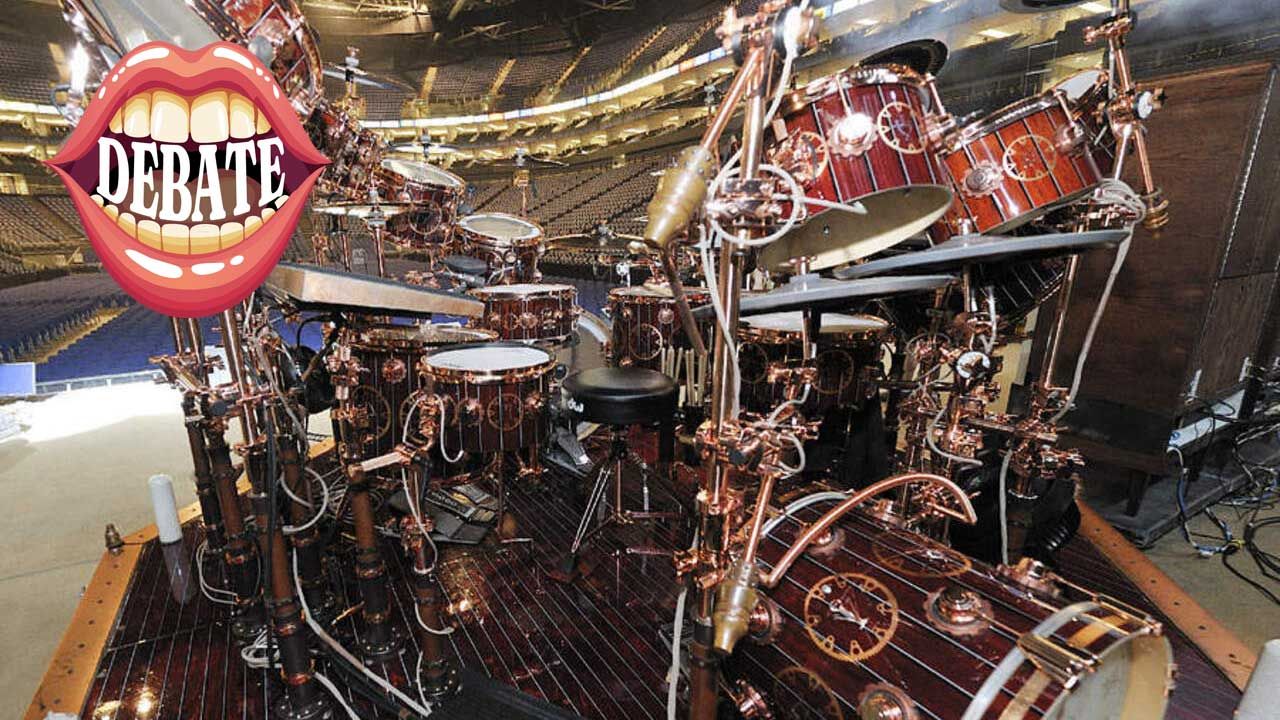
From the thunderous crack of a snare to the gut-punching thud of a bass drum, rock music has always lived and died by its drummers, even if the jokes say otherwise.
Guitar heroes may grab the headlines and frontmen the spotlight, but it’s the man and woman at the back who set the pulse, drive the drama and, time and time and time again, turn good bands into great ones.

Is greatness about brute force or subtlety? Feel or finesse? Led Zeppelin’s John Bonham essentially wrote the rulebook for hard rock, playing with explosive power and accidentally becoming a posthumous force in hip-hop. The Who's Keith Moon treated the drum kit like a lead instrument, his wild, anarchic style a lesson in coralling chaos. Then there’s Rush's professor, Neil Peart: intricate, cerebral, precise, ever-evolving and (largely) irreplaceable.
Further back in time, Ringo Starr's taste, imagination and timing proved him to be a perfect Beatle, and Charlie Watts brought sharp suits and jazz cool to the Rolling Stones. Today, Dave Grohl’s ferocious work with Nirvana and Foo Fighters must make him a contender, Danny Carey’s polyrhythmic wizardry with Tool demands consideration, and Mike Portnoy gets a look-in just for being Mike Portnoy.
So what makes a drummer truly great? Innovation? Influence? Power? Longevity? The ability to make a song swing? A gift for driving cars into swimming pools and destroying hotel rooms? Something else we haven't mentioned?
This debate isn’t about settling the argument once and for all. It’s about celebrating the sticksmen who make rock'n'roll soar. Over to you: who gets your vote, and why? Leave your answer in the comments below.