Get all your news in one place.
100's of premium titles.
One app.
Start reading
AAP
AAP
Ben McKay

Dear Diary: ministers hiding the business of government

Freedom of Information advocates are appalled at the government's non-disclosure of diary records. (Lukas Coch/AAP PHOTOS)

When NSW Premier Mike Baird announced he was shutting down greyhound racing off the back of animal cruelty revelations in 2016, he could hardly have been more absolute.

"It is horrific. It is damning and it leaves the government with no real choice but to take the action we have," he said.
Three months later, after a political furore and backlash from dog racers and breeders, Mr Baird backflipped, saying he had listened to community feedback to "give the industry one last chance".

What we know now is that in those three months, Mr Baird and then deputy premier Troy Grant were only listening - formally - to only one side of the argument.

The state's proactive ministerial diary disclosures revealed the pair booked six meetings with industry groups before the reversal, and none with animal welfare advocates.

Mike Baird
Mike Baird's greyhounds backflip in October 2016 came just months before he departed politics. (Dan Himbrechts/AAP PHOTOS)

Grattan Institute chief of staff Kate Griffiths - who helped highlight that distinction - says the episode remains the gold standard argument for releasing diaries.

"Access and influence are inextricably linked, and that's what makes ministerial diaries important for public disclosure," Ms Griffiths told AAP.

Routine disclosure of diaries in Australia began in Queensland in 2013, with NSW, Tasmania, the ACT and Victoria later adopting the practice.

The disclosures are not standardised - most come quarterly, though Queensland is monthly - and each includes slightly different information.

Some ministers are required to release only portfolio-related matters. Other disclosures include media appearances and sporting events.

Some diaries list other attendees but others do not. Some include the purpose of the meeting, some do not.

Ms Griffiths said it was reasonable to carve out personal meetings and informal gatherings but the default should be to include.

"I've also seen carve-outs where a meeting held in the office counts but maybe a scheduled phone call doesn't," she said.

"All official meetings, whether it's by phone, the office, off-site, events where the minister is attending in an official capacity, all of those things should be captured.

"I would absolutely include sporting events, which are opportunities for access and influence, and what's important there is who attended - who's in the corporate box - because that's where the access and influence is happening."

Peter Costello and Anthony Albanese
Anthony Albanese was seated next to former treasurer Peter Costello at the 2023 Australian Open. (Lukas Coch/AAP PHOTOS)

Other governments have yet to adopt the practice, including Anthony Albanese's federal government.

"It's a glaring omission," Accountability Round Table acting chair Stuart Hamilton told AAP.

"People will only trust governments, given the inherent suspicion that politicians face, if they believe that they are telling it straight.

"Nobody has any problems with the idea that special interests, whether environmental, industry, health groups, pro-gambling, anti-gambling, whatever, should have access ... but people reasonably want to know who these people are."

The Greens, several crossbenchers and non-governmental groups share Accountability Round Table's call for a federal ministerial diary disclosure.

The Centre for Public Integrity included the omission as a reason to grade the Albanese government poorly in an integrity scorecard issued in 2025.

A spokesperson for the prime minister said "the government is committed to a high standard of integrity, transparency and accountability" and "ministers' diaries are routinely released under FOI and published on departmental disclosure logs online".

In practice, this is not the case.

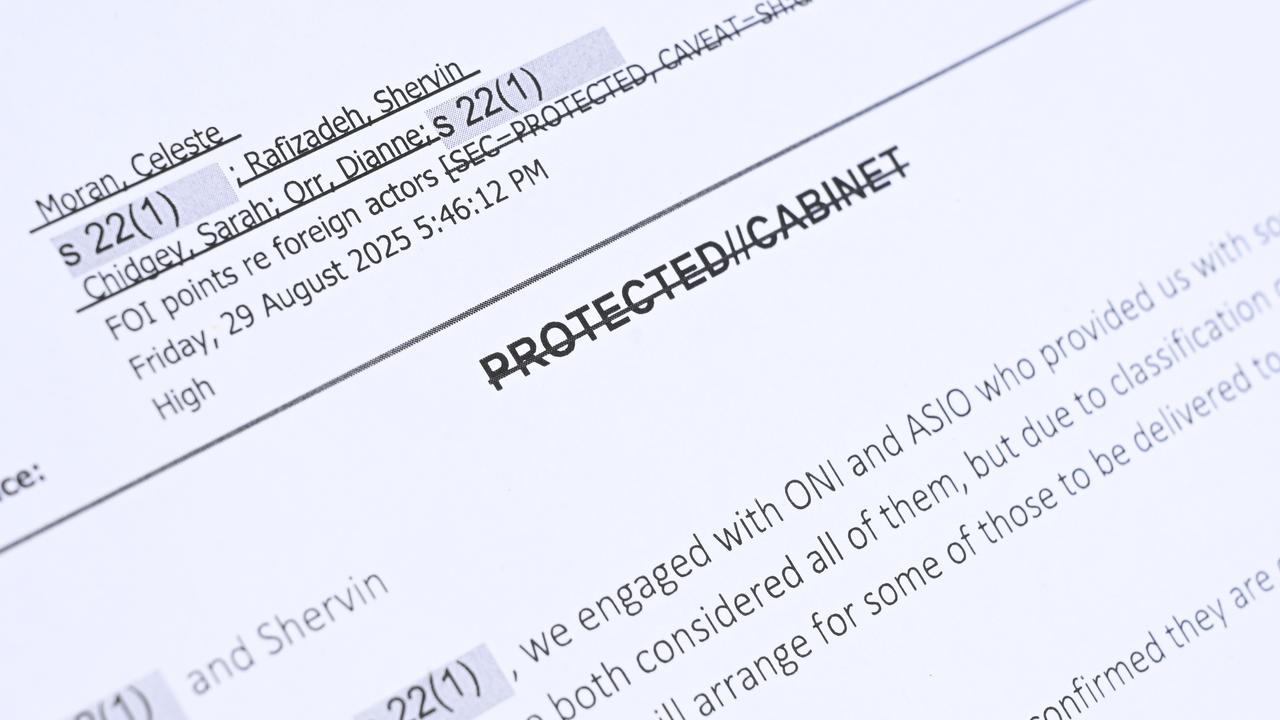
Mr Albanese appears to release diaries only on request, with huge holes in his schedule and no details about who he meets with.

A search of the Attorney-General's Department log shows Michelle Rowland has not provided her meetings since June 2025.

Treasurer Jim Chalmers' latest release in February shows a heavily blacked-out calendar of just eight days across 2023 and 2024.

The level of redaction recalls Simone de Beauvoir's memorable line about diary-keeping - "the things you omit are more important than those you put in".

Asked why the federal government had not opened its diary pages - especially given Mr Albanese's pre-election pledges of improved transparency - Ms Griffiths was unsure.

"I've heard a number of different excuses over the years and I don't think any of them stack up particularly well," she said.

The most prevalent is the administrative burden on staff.

"Ministers have supporting staff to actually capture the information and publish it on a regular basis," Ms Griffiths said.

"The ask of monthly disclosures is manageable administratively but still meaningful."

One federal representative who has juggled the task is Ross Cadell.

The NSW-based Nationals senator, who entered parliament in 2022, updated his interest register each month with a stocktake of meetings held on portfolio matters.

"I just thought that people deserve to know who we were meeting with, how often we were meeting," Senator Cadell told AAP.

"You shouldn't be ashamed of saying who you're meeting if you choose to meet them. If you think it's going to look bad, don't meet them. It's not hard."

Ross Cadell
Nationals senator Ross Cadell has taken a personal position to disclose key meetings. (Mick Tsikas/AAP PHOTOS)

Senator Cadell said he had only once received a call from a group that had read the disclosure and was asking to meet to make a counter-argument to another group.

"And that wasn't a problem," he said.

"Meeting someone doesn't mean you're in their pocket. It just informs the public who you are meeting and why."

Ideally, Ms Griffiths said, diary disclosure would sit alongside registers of conflicts of interest, financial interests, gifts and hospitality to help show the influences shaping public decision making.

However, she warned, "transparency alone is not enough".

"You need the diaries in the public domain but you also need strong voices looking at them to call out problems where they see them," she said.

"Voters also still need to hold elected officials to account. Transparency is just a start."

Sign up to read this article
Read news from 100's of titles, curated specifically for you.
Already a member? Sign in here
Related Stories
Top stories on inkl right now
One subscription that gives you access to news from hundreds of sites
Already a member? Sign in here
Our Picks
Fourteen days free
Download the app
One app. One membership.
100+ trusted global sources.