Get all your news in one place.
100’s of premium titles.
One app.
Start reading
Digital Camera World
Sebastian Oakley

DCS Lens Link allows cinematographers to control cameras on cranes, car rigs, and more from up to a mile away

DCS Lens Link.

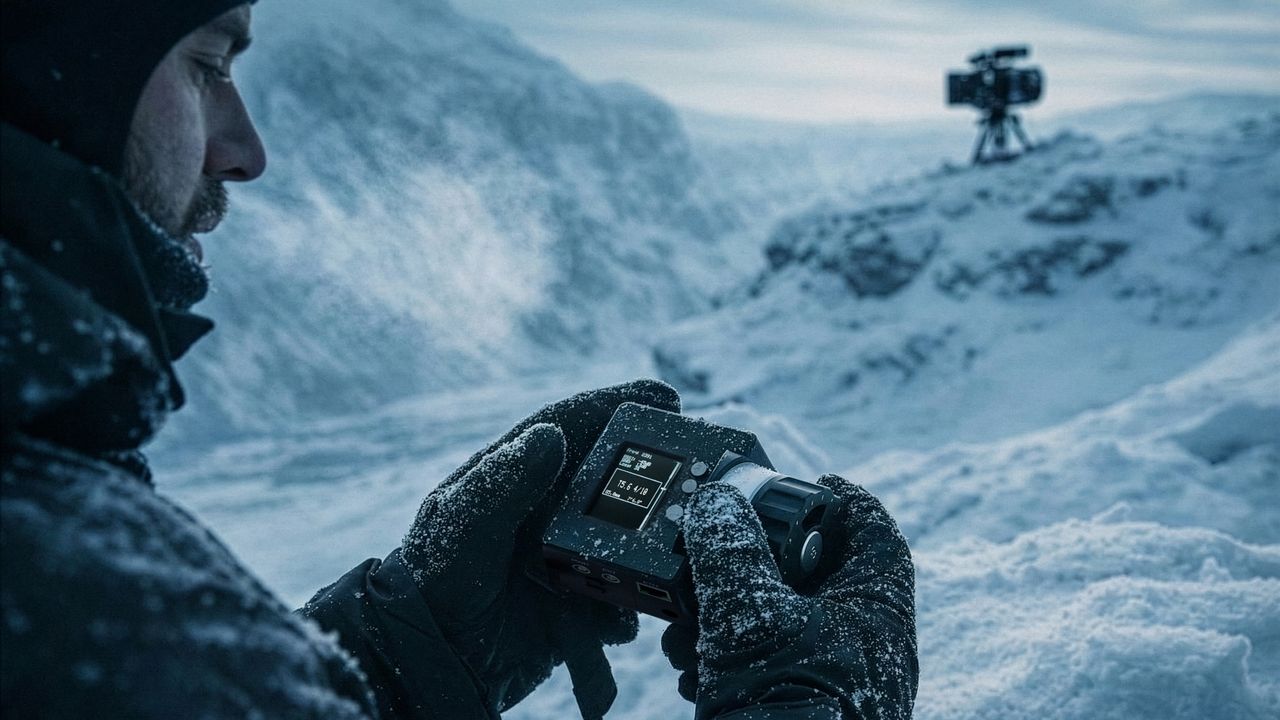
Digital Camera Systems has announced Lens Link, a new long-range handset designed to extend lens control on set without forcing crews to abandon the systems and muscle memory they already rely on.

Unveiled ahead of BSC Expo 2026 which opens in London this week, the aim is simple: keep DITs, DoPs and 1st ACs confidently in control, even when the camera is no longer within comfortable wireless reach.

(Image credit: Digital Camera Systems)

That matters more than ever as having a video village and remote operating positions become the norm. Productions and increasing leaning into bigger moves and trickier placements, from cranes and car rigs to stadium work and safety standoffs. If you’ve been comparing the best wireless follow focus units lately, Lens Link lands with a different promise: it’s not trying to replace your lens control ecosystem, it’s trying to stretch it further.

Rather than adding motors or reinventing on-camera workflows, Lens Link works alongside a Preston Cinema Systems setup that’s already driving the motors, with Arri LCS and Tilta compatibility noted as coming soon. 

The hardware is a two-part setup: a Lens Link handset paired with an on-camera receiver, either the DCS Bridge or LDT-V2, which then interfaces with a compatible Preston MDR for motor control. The point is flexibility, with a rugged, practical design intended for the realities of working at distance, not a lab-perfect demo.

Lens Link offers two operating modes depending on what a production needs most in the moment. True Wireless mode links the handset directly to the on-camera DCS Bridge using dedicated sub-WiFi frequencies (2,200–2,500MHz), targeting stable, low-latency control in congested RF environments and promising up to 2km / 1.25 mile range in ideal, clear line-of-sight conditions.

Remote mode is positioned as the primary long-range workflow: the handset connects via Ethernet to the LDT-RX1 Network Bridge placed closer to the camera, then the RX1 maintains a short, robust wireless hop to the on-camera receiver, letting overall distance be extended over Ethernet or fibre.

(Image credit: Digital Camera Systems)

DCS says the system has already logged more than 200 days of on-set testing, including work on productions for major studios such as HBO, Paramount, and Amazon MGM Studios. General Manager Gary Keller framed Lens Link as a response to the one thing that consistently breaks long-range workflows: range itself.

DIT Mardon Decarvalho called it “essential” on demanding shoots, describing a job inside an old military bunker where RF interference and heavy construction made outside control impractical until the RX1 was run inside over Ethernet. DIT Anton Badstuber echoed the point from location work in Kenya and Morocco, saying Remote mode allowed iris pulls from video village as if he was right beside the camera, even after extending the distance by over 100 metres.

In terms of the practical details, Lens Link is compatible with Preston MDR3, MDR4, and MDR5, and works with a DCS Bridge or LDT-V2; the handset weighs 500g and measures 110 × 55 × 90mm.

A full package (Lens Link, Bridge, LDT-RX1, and required cables/accessories) is priced at £6,000 (approximately $8,165), available to buy directly from DCS, with rental availability via CineArk, plus introductory pricing offering 25% off the first 25 units.

Lens Link will be shown at BSC Expo 2026 at Battersea Evolution in London on February 13–14, 2026.

Sign up to read this article
Read news from 100’s of titles, curated specifically for you.
Already a member? Sign in here
Related Stories
Top stories on inkl right now
One subscription that gives you access to news from hundreds of sites
Already a member? Sign in here
Our Picks
Fourteen days free
Download the app
One app. One membership.
100+ trusted global sources.