
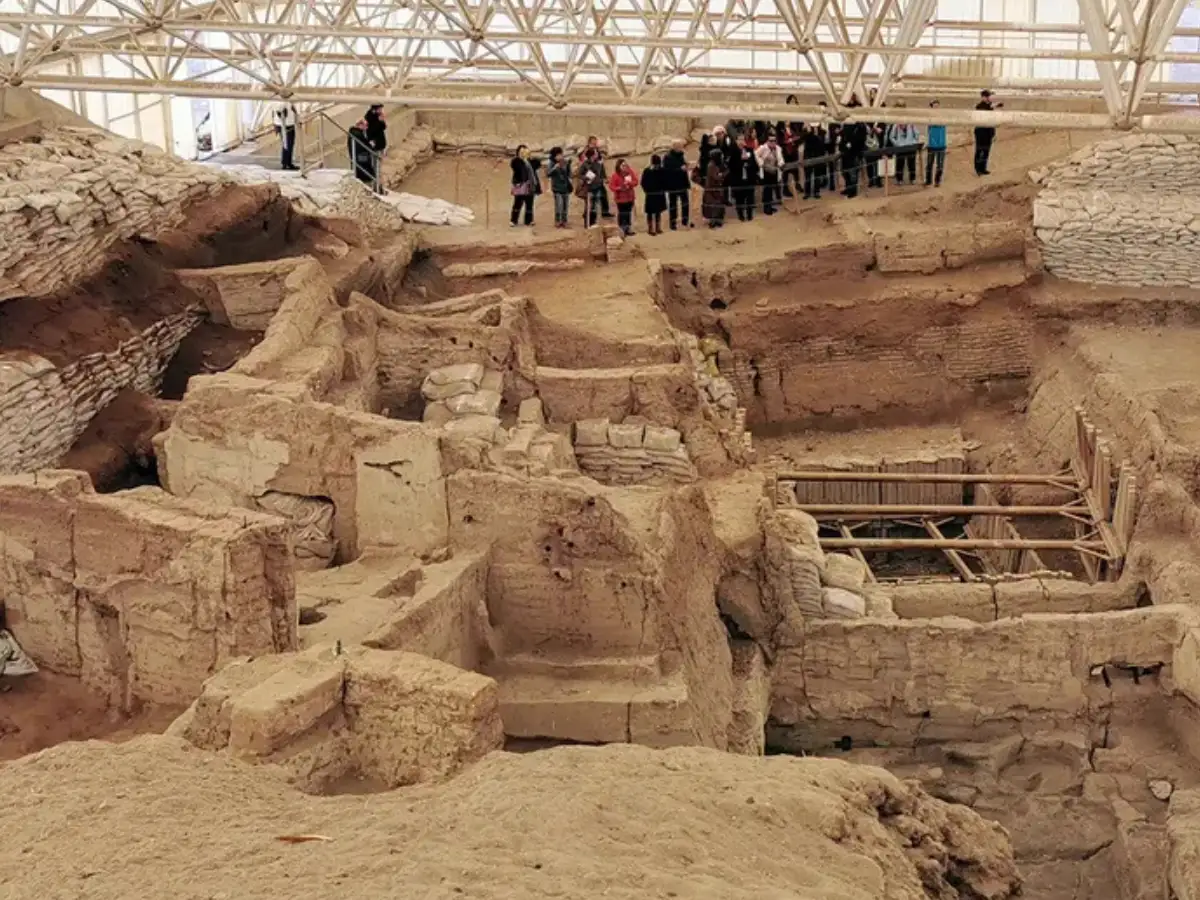
Pick up almost any account of early human civilization, and the story is much the same: men at the center, women adapting around them. But a discovery from one of the world's oldest settlements is quietly challenging that picture, and the evidence is written in 9,000-year-old DNA.
According to a study titled 'Female lineages and changing kinship patterns in Neolithic Çatalhöyük,' published in the journal Science by Eren Yüncü and colleagues, ancient DNA from 131 skeletons found at the Neolithic settlement of Çatalhöyük in what is now southern Turkey was analyzed. The settlement dates to roughly 9,000 years ago, with the study covering remains from 7,100 to 5,950 BCE, a research effort that took 12 years to complete. Their findings suggest a challenge to a long-held assumption: in this society, it appears men moved into their wives' households, not the other way around.
.jpg?w=600)













