
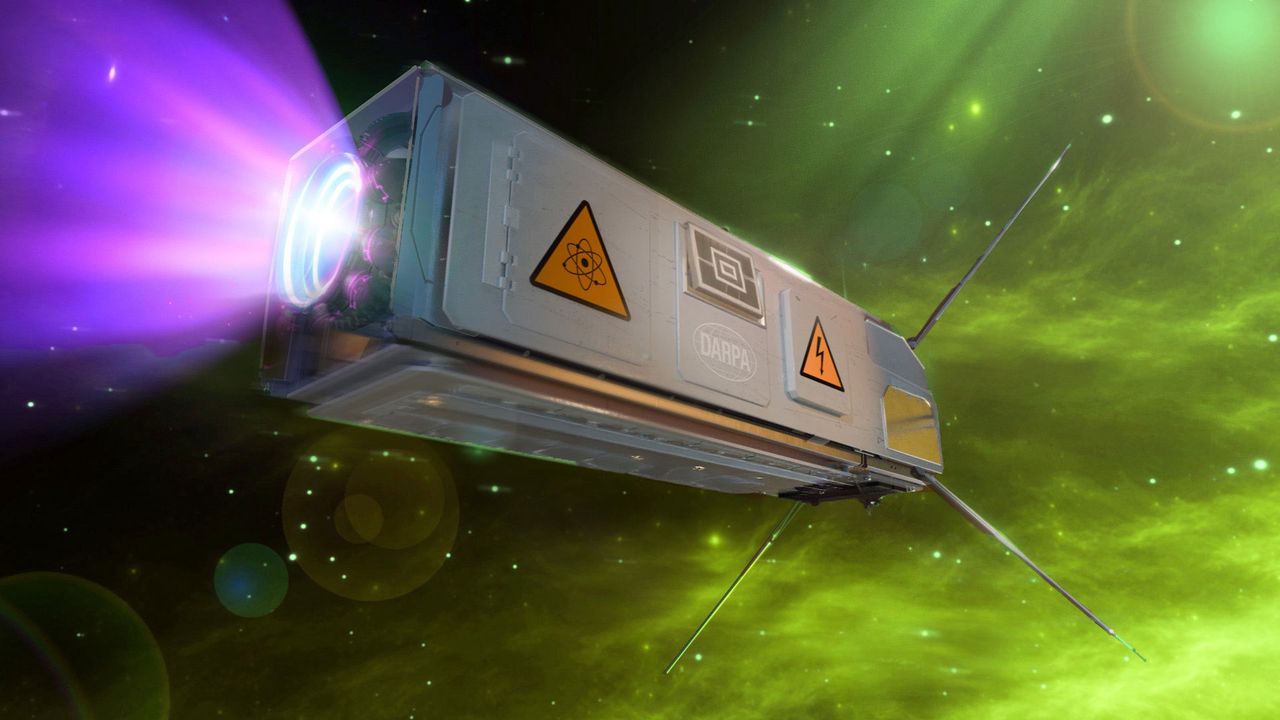
Batteries that can last decades between recharges or renewals are the stuff of tech enthusiast dreams. However, DARPA’s ‘Rads to Watts’ program could bring forth unrivaled portable power, lasting decades, via the development of a new class of radiovoltaic devices. Morgan State University recently won a $3.37M DARPA contract to advance this tech, and a report by Defense One suggests upcoming nuclear waste-powered batteries could last as long as 30 years and power next-gen drones.
Morgan State now has a considerable sum to keep its researchers employed on a project dubbed SYMPHONEE (Strontium-Yttrium Multi-junction PIN-based High-Density Output Nano-system for Extreme Environments). Radioisotope power sources have been used for quite some time in low-power draw applications such as smoke detectors and space systems for decades. However, the new initiative, led by Morgan State and with team members such as Northrop Grumman, PNNL, Project Omega, ARA, and Widetronix, aims to take the tech into the next generation. More specifically, under the auspices of (and with funds from) the 'Rads to Watts' program, they are aiming to build next‑generation radiovoltaic micro‑power systems for extreme environments.












