
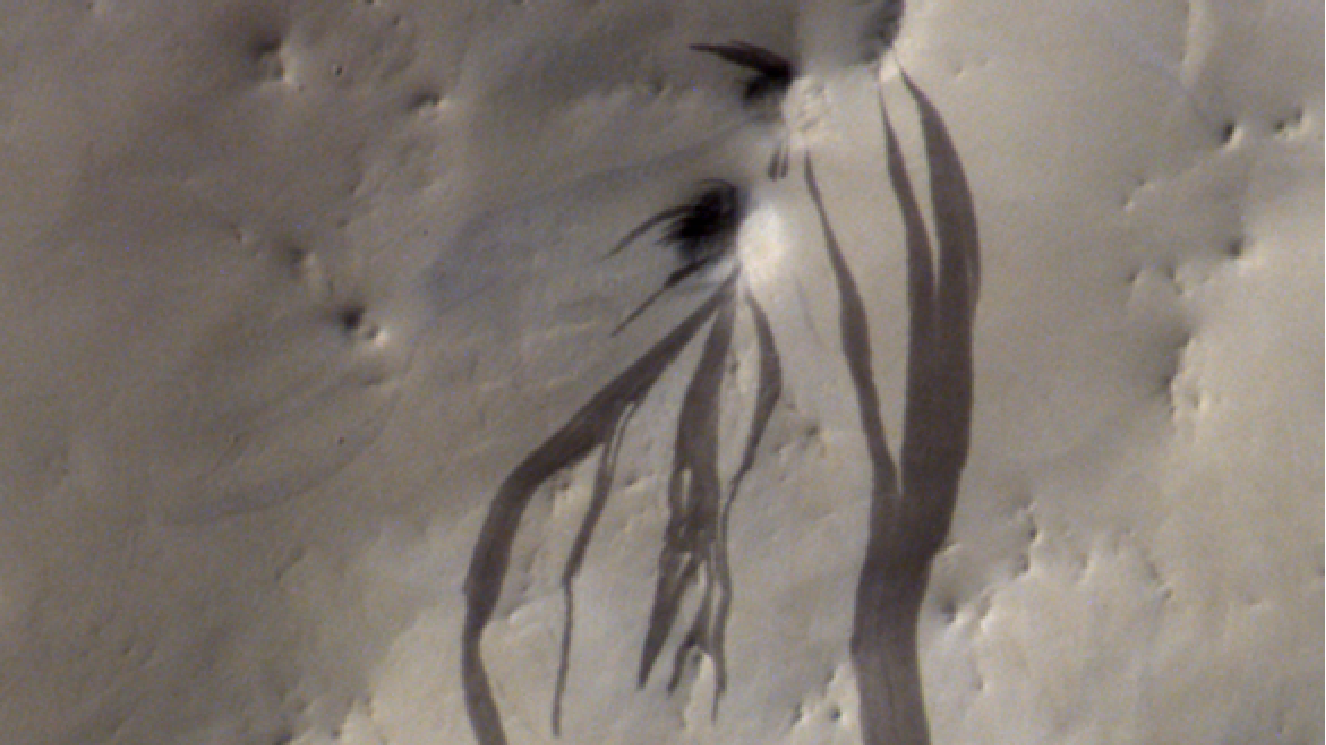
First identified in the 1970s by NASA's Viking mission, long, dark markings snake down Martian slopes, sometimes stretching across Mars' surface for hundreds of feet. Scientists have watched some of these markings exist for decades, while others, known as "recurring slope lineae," appear to fade in a single season. Nonetheless, they all starkly stand out against the planet's dusty red surface.
Given that modern Mars is dry and arid, with temperatures rarely climbing above the freezing point of water, the origin of these streaks has long been a topic of heated debate. For years, they were seen as one of the most compelling signs that liquid water might still exist on Mars, suggesting a rare pocket of habitability on an otherwise arid planet. The leading theory speculated that salty water was seeping from underground sources — like buried ice or subsurface aquifers — allowing it to briefly flow across the cold Martian surface. But new evidence suggests something else might be driving the phenomenon.















