
Get all your news in one place.
100’s of premium titles.
One app.
Start reading
GamesRadar
GamesRadar
Technology
Dustin Bailey

Dark Souls and Elden Ring studio FromSoftware was "worried" how its OG RPG King's Field would be received, but the studio wasn't going to be "constrained by existing games"

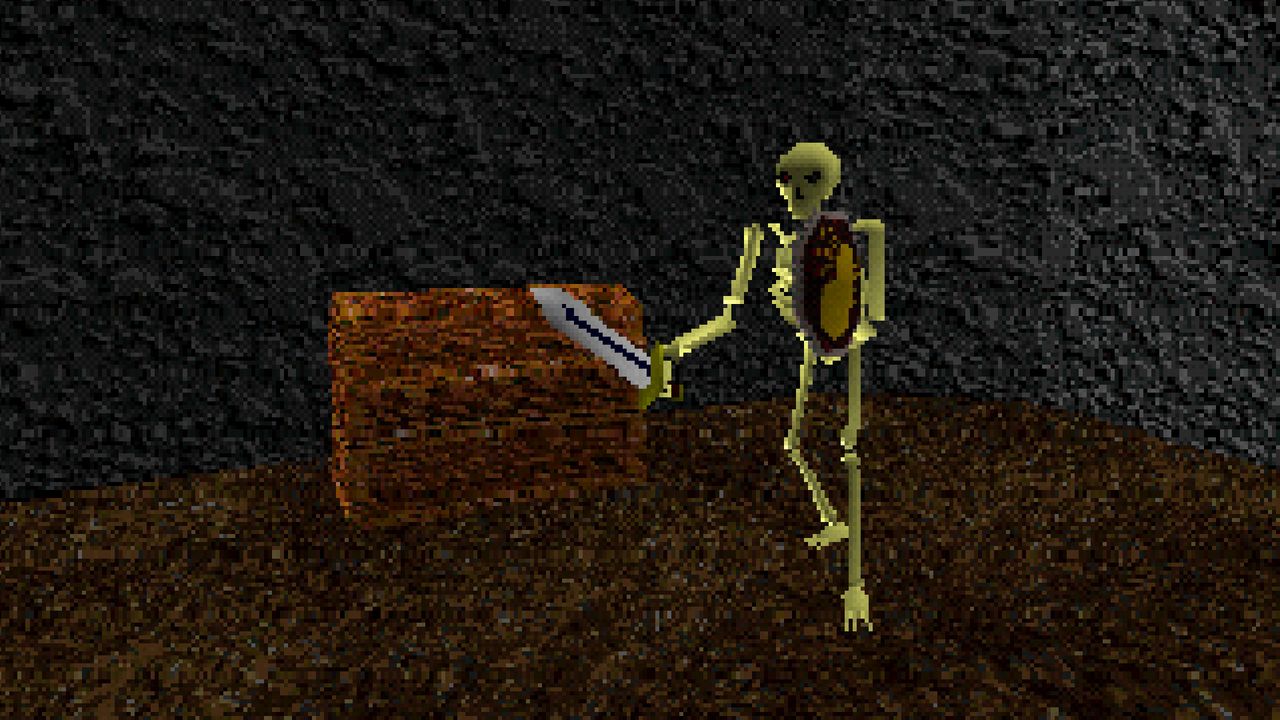
A mind-boggling skeleton stands next to a chest in King's Field.

When Dark Souls exploded in popularity well over a decade ago, it felt like a bolt from the blue, as if FromSoftware suddenly, single-handedly demonstrated that many players wanted challenging, often obtuse games that demanded time and attention to truly master – a fact that Elden Ring would embrace to even greater heights. Of course, the truth is a fair bit more complicated than that, not least because FromSoftware was already burning the RPG rulebook back in the '90s with King's Field.

Shinichiro Nishida is a longtime FromSoftware developer who is still working at the studio to this day. He spoke candidly about the development of the studio's original RPG as part of an interview in the King's Field Verdite Trilogy Perfect Guide in 2001, which was recently translated by shmuplations.

Even at the time, King's Field stood out for its willingness to throw players in with little explanation, and FromSoftware did have some concerns about how that approach would be received. "We were worried, but at the same time we genuinely didn't know how people would react," Nishida said. "We weren't expecting people to just freeze up after being dropped into the game… I mean, you can swing your sword, you'll figure it out. (laughs)"

King's Field was developed in eight months, and while that wasn't wholly unusual for games made in the '90s, it did contribute to the RPG's unfriendliness. "Honestly, we didn't have time to make a tutorial due to the development schedule," Nishida admitted. "For the first King's Field, there were parts of it that, by necessity, we had to leave somewhat unfinished, but even those parts ended up being cleverly executed in the end."

Still, the core of the King's Field vibe was set from the start, as "president Naotoshi Zin said he wanted to evoke a feeling of 'loneliness' in players," Nishida explained. The game was built in part to capture the feeling that the studio's RPG aficionados had "enjoyed in Wizardry, but expressed through the PlayStation hardware of the time," but it wasn't going to be constrained by the genre's predecessors, either.

"RPGs shouldn't inherently have rules like 'you must do this,'" Nishida explained. "We approached it based on common sense – what feels natural. Not thinking 'this is how other games do it' or 'this part should be like this in a game,' but rather, 'this is how someone would respond if you talked to them,' or 'you probably wouldn't talk to a complete stranger.' Starting with KFII, you can kill NPCs, but internally, monsters and NPCs share the same parameter setup. Hit points, defense, and the experience points gained upon defeat are set for every character. Ultimately, I suppose we weren't constrained by existing games."

Devotion to that idiosyncratic spirit is part of why games like Demon's Souls and Dark Souls felt so fresh – at least, to the wider audience that hadn't previously played the King's Field games. It's a bit ironic that Soulslike is now a distinct genre, offering its own set of rules and constraints for games to follow. I guess it's the curse of great art to get imitated, and there's a reason the FromSoftware formula has finally gotten its due.

Decades before Dark Souls and Elden Ring, FromSoftware's first dark fantasy RPG was built "from a kind of ignorance": "It was the type of challenge a first-time game developer naively takes on."

Sign up to read this article
Read news from 100’s of titles, curated specifically for you.
Already a member? Sign in here
Related Stories
Top stories on inkl right now
One subscription that gives you access to news from hundreds of sites
Already a member? Sign in here
Our Picks
Fourteen days free
Download the app
One app. One membership.
100+ trusted global sources.