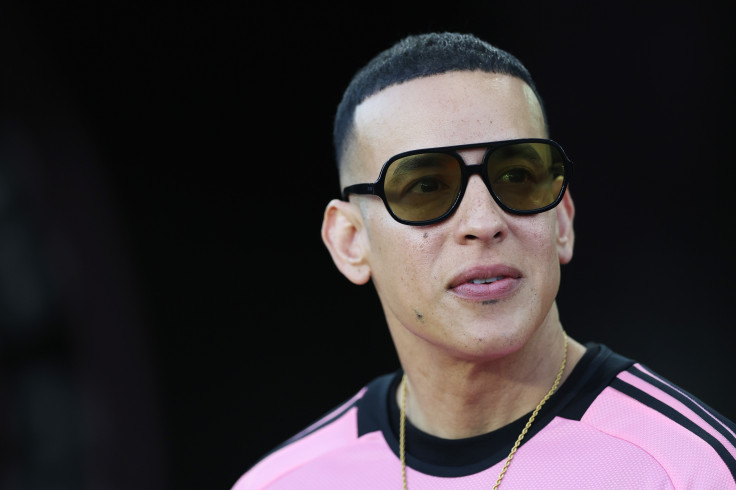
Daddy Yankee filed a federal defamation lawsuit in Miami seeking at least $10 million in damages, accusing a businessman of making false and damaging public statements that linked the reggaeton icon to money laundering and an alleged financial network tied to Venezuela's late President Hugo Chávez.
The lawsuit, filed Monday in the U.S. District Court for the Southern District of Florida, names businessman León Fernando Fiksman as the defendant. According to the complaint, Fiksman made the statements during an appearance on the Spanish-language podcast "Levántate y Cárdenas," where he allegedly accused the artist, whose legal name is Ramón Luis Ayala Rodríguez, of participating in money laundering activities and being connected to financial operations involving the Chávez government.
According to the complaint, Fiksman claimed his allegations were based on documents he had reviewed as part of an ongoing civil lawsuit involving both men. During the podcast, he allegedly referenced a message that he attributed to Ayala in an effort to support his claims.
Daddy Yankee's attorneys argue those statements were false, defamatory and made with actual malice, causing significant damage to the artist's reputation.
Daddy Yankee: cuánto dinero tiene, la prótesis de su pierna y su challenge en TikTok https://t.co/nKcOgM5Rka
— Levántate y Cárdenas (@cardenaseuropa) May 20, 2021
The new complaint also references a separate legal dispute already pending between the parties, in which Daddy Yankee's ex-wife, Mireddys González, is also involved.
According to the defamation lawsuit, Fiksman's underlying case "lacks substantial evidence" and has weakened significantly after a key ruling issued in December 2025, when the judge overseeing that litigation excluded Fiksman's expert witness on damages.
Without that expert testimony, the complaint argues, Fiksman no longer has a reliable method of calculating the financial losses he claims to have suffered.
Claims of an attempt to influence future jurors
One of the lawsuit's central allegations is that Fiksman's public statements were intended not only to damage Daddy Yankee's reputation but also to influence potential jurors before the underlying case reaches trial.
According to the complaint, the civil case will likely be heard before a jury selected from South Florida, a region with large Venezuelan and Cuban communities.
The lawsuit argues that by publicly associating Daddy Yankee with Hugo Chávez, corruption and money laundering before a Spanish-speaking audience numbering in the hundreds of thousands, Fiksman sought to prejudice members of the future jury pool.
The complaint characterizes the podcast comments as an attempt to taint public opinion against the Grammy-winning artist before the case is heard in court.
The lawsuit does not determine whether the allegations against Fiksman are true. Rather, it presents Daddy Yankee's legal claims, which must now be answered in federal court.
The filing marks the latest chapter in a series of legal disputes involving the Puerto Rican superstar following his highly publicized divorce from Mireddys González and the litigation that has surrounded the management of his business interests and intellectual property.
If successful, the case could become one of the most significant celebrity defamation lawsuits filed in South Florida in recent years, with Daddy Yankee arguing that the businessman crossed the line from legal advocacy into knowingly making false accusations capable of permanently damaging his reputation