
Earnings season is a pivotal moment for many stocks, but particularly for firms in a fledgling industry like quantum computing. When major player IonQ Inc. (NYSE: IONQ) reported results for the first quarter of 2026 in early May, investors took note of promising revenue growth, a raise to full-year guidance relative to prior projections, and a strong showing in both partnerships and system sales. Still, a crucial piece of the puzzle—profitability—remains missing.
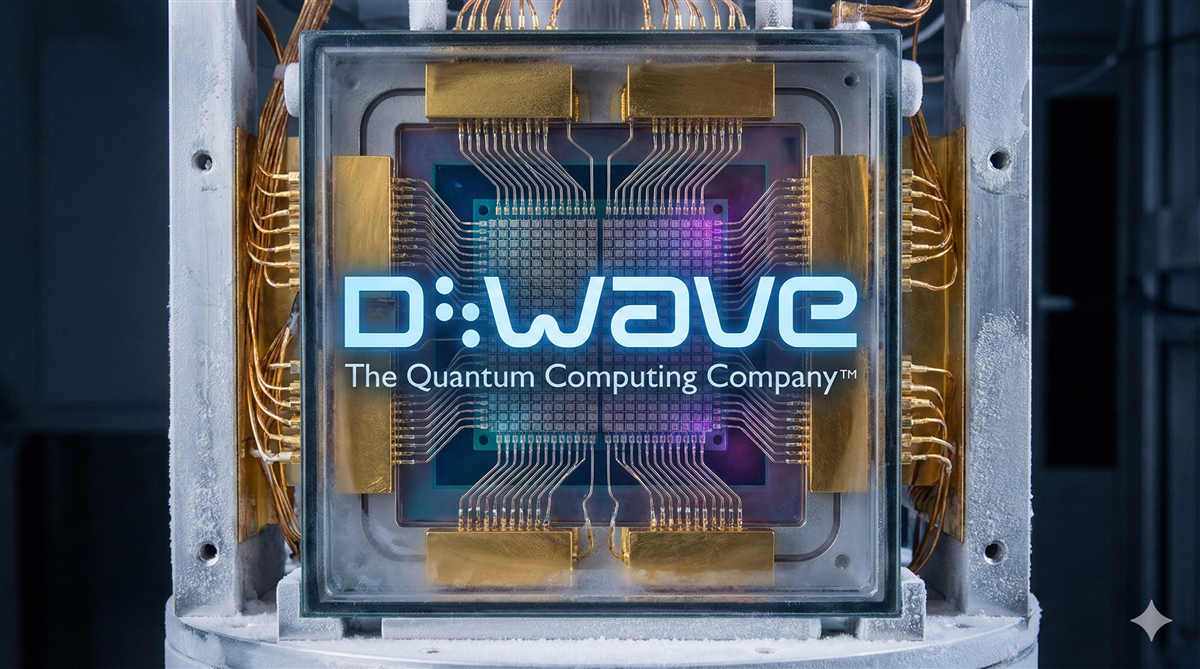
Now, other big names in the pure-play quantum sphere are sharing their own results, including from firms like D-Wave Quantum Inc. (NYSE: QBTS) and Rigetti Computing (NASDAQ: RGTI). D-Wave, known for its sizable cash holdings and recent purchase of Quantum Circuits Inc., stands out for its dual focus on two distinct technological approaches to quantum computing.

Like IonQ, the company noted several compelling developments in its Q1 2026 earnings, particularly in bookings, sales pipeline, and technological advances.
However, top- and bottom-line performance may have contributed to a post-earnings selloff that brought the share price down 7% on May 12, reversing the recent mini-rally initiated in April.
The Bright Spots in D-Wave's Earnings: Bookings, Recurring Revenue, Sales Pipeline, and More
A number of highlights emerge from a closer look at D-Wave's first quarter of the new year. Notably, quarterly bookings reached $33.4 million, a record for Q1 and a massive increase of about 2,000% year-over-year (YOY). This figure is impressive on its own, but one of the real strengths here is D-Wave's major growth to its quantum-computing-as-a-service (QCaaS) business, which climbed by 15% YOY to $1.8 million in revenue. QCaaS positions D-Wave to be able to build recurring revenue into its stream, which could be crucial in its efforts to achieve sustainable profitability. A $10-million enterprise QCaaS agreement from Q1 was a major driving factor here.
The company's sales pipeline is shining as well, with growth of more than 100% sequentially to Q1 2026. D-Wave sees system sales—the lion's share of its revenue so far—totaling two or three per year going forward, with at least two projected for 2026. These big-ticket sales do not necessarily mean recurring revenue, but they vastly outsize other revenue streams for the firm at this point.
Technological advances are also crucial for any quantum computing company, and D-Wave highlighted some important ones for the first three months of the year. A standout achievement for the company is its roadmap to 100 logical qubits, a major technological breakthrough, which it believes can be achieved by 2032.
Finally, investors have been waiting for signs as to whether D-Wave has been able to maintain its historically strong cash position. With more than $588 million in cash and equivalents as of the end of the quarter, the company's reserves remain healthy.
The Reason for the Share Price Decline
It's difficult for D-Wave to avoid negative headlines for its top- and bottom-line performance in the quarter, despite all of the successes above. Notably, revenue of $2.9 million was down more than 80% YOY and came in about $1.3 million below analyst predictions. Though losses per share beat predictions by 3 cents, they nonetheless widened by 3 cents relative to the prior-year quarter.
A closer look may give long-term D-Wave investors some comfort. Part of the reason for the seemingly-massive revenue slippage is the fact that Q1 of last year saw the sale of a quantum annealing computer system for nearly $13 million. A single transaction can have a major impact on revenue performance, particularly when overall revenue is so low.
Still, that D-Wave is so susceptible to these significant shifts based on the timing of an individual system sale is a reflection of how reliant the company has been on these types of one-off deals. Investors will surely be happy to see the company move toward a more predictable, consistent revenue stream.
Investors in the quantum computing space will need to evaluate whether D-Wave is still a suitable target based on its performance relative to its peers (for one thing, Rigetti announced on the same day that its Q1 2026 revenue roughly tripled YOY to $4.4 million).
The path toward profitability may have become somewhat clearer based on QCaaS performance, but widening losses and the sizable gap between expected revenue and actual performance suggest that there may still be significant ground to cover.
D-Wave shares remain a Moderate Buy, with 14 out of 17 analysts bullish on the stock.
Where Should You Invest $1,000 Right Now?
Before you make your next trade, you'll want to hear this.
MarketBeat keeps track of Wall Street's top-rated and best performing research analysts and the stocks they recommend to their clients on a daily basis.
Our team has identified the five stocks that top analysts are quietly whispering to their clients to buy now before the broader market catches on... and none of the big name stocks were on the list.
They believe these five stocks are the five best companies for investors to buy now...
The article "D-Wave Earnings Looked Weak, But Investors May Be Missing This" first appeared on MarketBeat.