
There are four main publicly-traded quantum computing companies, and they all have one thing in common: In the last 14 months, all of them have been the target of activist investors shorting their stock.
This isn’t totally surprising. All four companies—D-Wave Quantum, IonQ, Rigetti Computing, and Quantum Computing Inc.—have market caps in the billions of dollars, which in no way reflect the modest revenues generated by their day-to-day businesses.
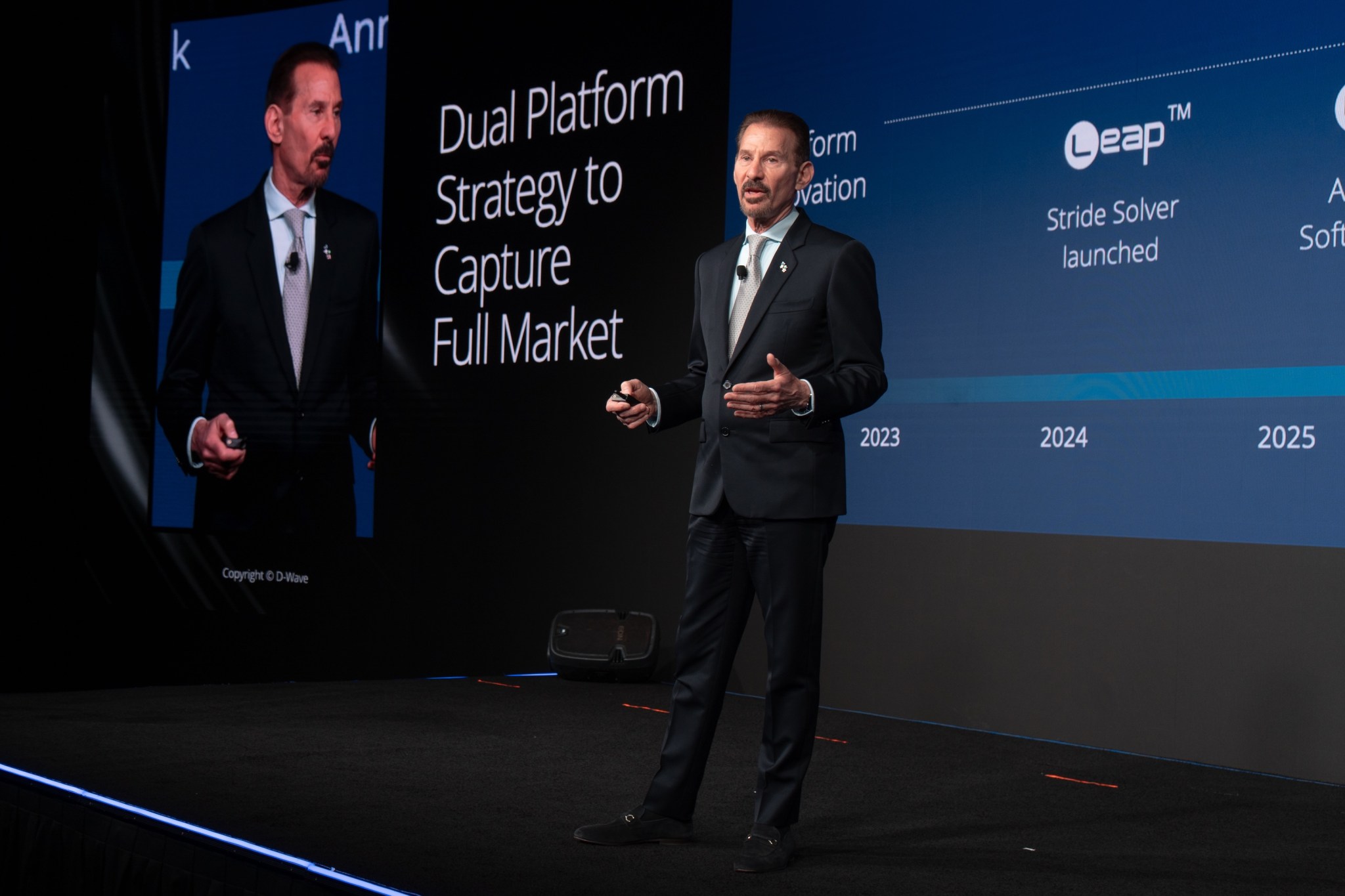
Alan Baratz, CEO of the 27-year-old Palo Alto, California-based company, says that short attacks are a hazard of the job. His company was the target of Kerrisdale Capital in April of last year, which argued “there is no proof” that D-Wave’s quantum systems solve complex problems faster than ordinary “classical” computers.
Nearly a year on from Kerrisdale’s broadside, D-Wave’s stock price has tripled, and a defiant Baratz is touting figures that counter Kerrisdale’s accusations: a three-fold increase in revenue, more than 100 paying customers (including a new $10 million licensing deal), and a half-billion-dollar acquisition that will help D-Wave solve one of quantum computing’s thorniest problems.














