
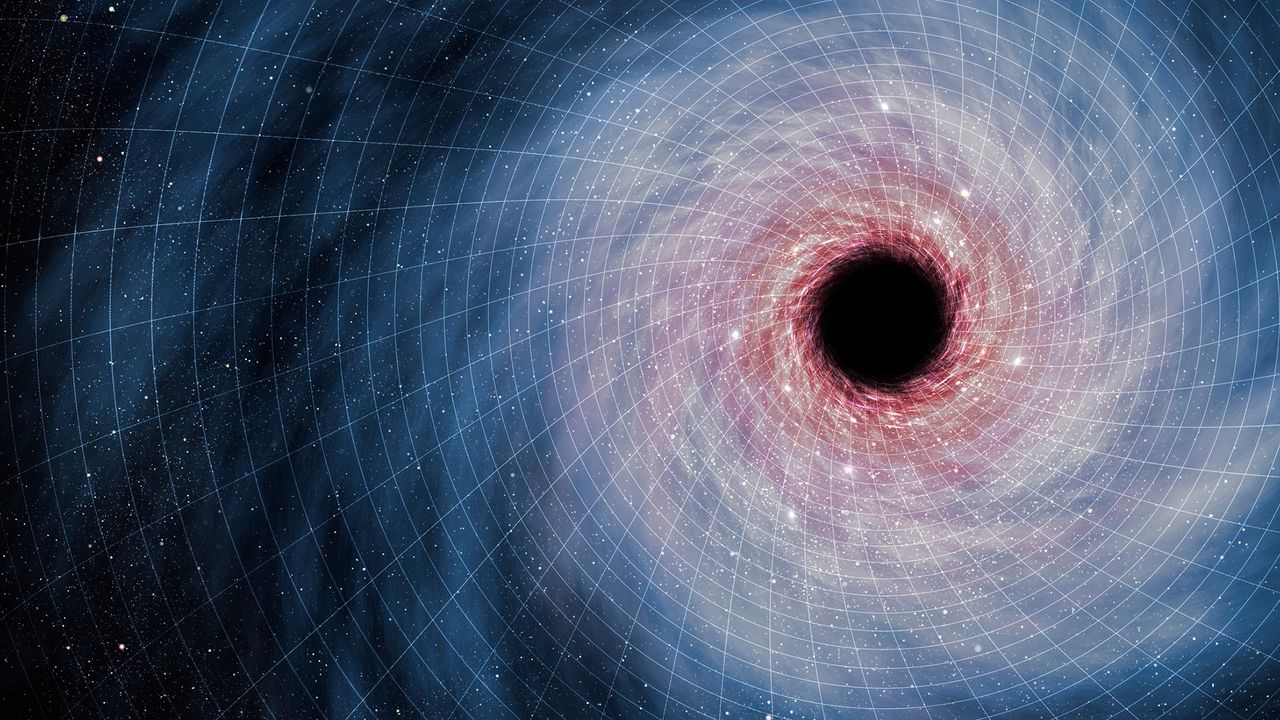
A new theoretical study adds fresh support to the idea that a mathematical pattern of ripples in space-time geometry could give rise to naked singularities and microscopic black holes. The new finding advances research into a subject that has vexed physicists for decades.
In 1997, Stephen Hawking famously conceded defeat on a 1991 bet with fellow theoretical physicists Kip Thorne and John Preskill about the possible existence of naked singularities: objects like black holes but without an event horizon (a point beyond which light, and all other matter, cannot escape), making them observable. Hawking eventually admitted that such objects could exist. Thorne and Preskill’s prize? T-shirts to cover their "nakedness."