Crumbling NHS buildings are suffering roof collapses and sewage leaks after a 10-year funding squeeze.
These are just some of the incidents revealed when 500 doctors were questioned.
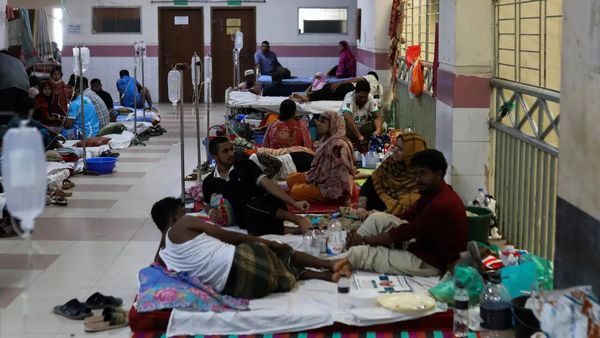
Medics compare conditions to hospitals in the developing world and report having to deal with sinkholes, fires and mite-infested wards.
Analysis shows the maintenance backlog has increased to £13.8billion – more than the annual NHS capital budget.
Patients are regularly evacuated and buckets and industrial-size bins are a regular sight in wards and corridors catching rain coming through roofs.
The British Medical Association report, seen by the Mirror, comes despite ex-PM Boris Johnson ’s much-ridiculed promise of “40 new hospitals”.
One doctor said: “A waste pipe burst in the ceiling covering multiple members of staff in liquid and detritus, exposing them to risks of infection and electrocution.”
Another said: “Mites in neonatal units, sewage coming into patient care areas from leaks, fires in the [emergency department] resus area are all things I’ve seen.” One report said: “The hospital looks more suited to the set of a post-apocalyptic film than a place to provide healthcare.”
The BMA report shows four in 10 doctors consider the condition of their building to be “poor” or “very poor”.
Britain spends on average 50% less on healthcare premises than other developed nations. Between 2015 and 2019, 0.37% of GDP went on capital health expenditure.
By comparison, Germany spent on average 1.11%.
The Tories have committed only £3.7billion towards their New Hospitals Programme, despite the Institute for Fiscal Studies saying the plan would actually cost £26billion.
A spokeswoman for the Department of Health and Social Care said: “This government is investing record sums to upgrade NHS buildings... including £4billion this year and £12billion over three years.
“We are also investing an initial £3.7billion as part of the biggest hospital building programme in a generation, delivering over 70 upgrades.”
We've become numbed to awful disrepair by Dr James Collins
I've worked at seven different hospitals and at every one there have been buckets catching rain in the corridors.
In one, a malfunction with the heating system in an obstetric theatre meant it wasn’t safe for premature babies to be delivered without transferring mums to a different part of the hospital.
Most recently, we had to push a patient, who was in a medically induced coma and had a breathing tube fitted, through a barricade of buckets on their way to surgery.
This was an incredibly sick patient who needed a procedure to save their life. In the process, it got myself, the patient and the electrical monitoring equipment wet.
If I went to another developed country and saw buckets in a hospital corridor I’d be gobsmacked, but here we’ve become desensitised.