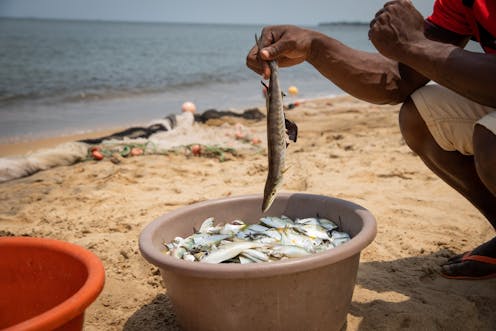
From Senegal through Ghana to Cameroon, small-scale fishing is both a livelihood and a way of life for people in coastal parts of West and Central Africa, with more than two million small-scale fishers. It has been this way for centuries – but that is changing.
Fishers are faced with diminishing fish stocks, competition from foreign industrial fleets, illegal fishing, unstable governance, and a lack of infrastructure to support fishing operations. Small-scale fisheries in these countries, as in other areas of the global south, are often part of the informal economy. Despite being critical to local livelihoods – across sectors, informal employment accounts for over 80% of all employment on the continent – small-scale fisheries are generally not regulated or protected by the state.