Get all your news in one place.
100's of premium titles.
One app.
Start reading
International Business Times UK
Entertainment
Thea Felicity

Court Junks Andrew Tate's Lawsuit Against Meta After He Was Banned from Instagram Over Hate Speech

Andrew Tate, a former kickboxer turned controversial online influencer, gained notoriety for his misogynistic views and lavish lifestyle, despite facing legal challenges. (Credit: X)

A US federal court has dismissed a lawsuit brought by influencer Andrew Tate and his brother Tristan Tate against Meta Platforms Inc over the removal of their Instagram accounts in California, according to a ruling issued on Tuesday in the Northern District of California in April 2026.

The court rejected the brothers' claims tied to the Instagram ban over alleged hate speech, finding that Meta was legally protected in its decision to take down the accounts.
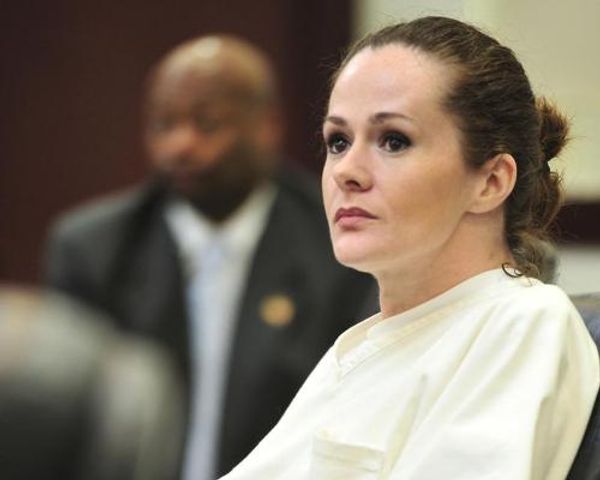
The legal dispute began after Meta removed six Instagram accounts linked to the Tate brothers, citing violations connected to the promotion of 'dangerous individuals or organisations' and content described in court filings as 'inciting misogyny.' The removal of their accounts also followed heightened international attention in Romania, where the two were linked to serious criminal allegations that remain ongoing.

Meta Instagram Ban Protected Under US Law

Judge Jacqueline Scott Corley ruled that Meta's actions were shielded under Section 230 of the Communications Decency Act, a US law that limits liability for online platforms over user-generated content and moderation decisions.

According to Bloomberg Law, the court also referenced protections under the First Amendment and Instagram's terms of use, concluding that Meta was within its rights to remove the accounts.

In her decision, the judge said the account terminations amounted to a 'content-based decision that Section 230 makes immune from liability.'

In practical terms, the court found that platforms like Instagram are allowed to decide what content stays online and what is removed without facing the kind of legal claims the Tate brothers brought forward.

Andrew and Tristan Tate had sued Meta in August 2025, initially filing the case in Los Angeles Superior Court before it was transferred to federal court.

They accused the company of breach of contract, tortious interference, and negligent misrepresentation, arguing that their removal was not a neutral enforcement of platform rules but was influenced by external scrutiny surrounding their public profile and legal issues abroad.

The brothers also claimed that Meta's actions caused reputational and financial harm.

However, the court found they failed to identify any contractual promise guaranteeing that their accounts could not be removed without notice or appeal rights.

Free Speech Claims Rejected

The court agreed with Meta's main argument that US law, specifically Section 230, protects social media companies when they remove or manage content.

This means platforms like Instagram are generally not held legally responsible for decisions about what stays online or gets taken down.

The judge also rejected the Tate brothers' free speech argument. She explained that the First Amendment limits only government action, and that Meta is a private company, not a government body, so those protections do not apply in the same way.

The ruling cited earlier court decisions, including a 2024 case involving Meta, which confirmed that social media companies have broad freedom to set and enforce their own content rules.

Meta had originally removed the Tate accounts because it believed they broke its internal rules on harmful content. The brothers disagreed and challenged that decision in court, but the judge found that the law ultimately supports Meta's right to make those moderation choices.

Both sides had legal teams listed in the case filings, but neither Meta nor the Tate brothers made a detailed public comment right after the decision.

Andrew Tate's Social Media Posts

Andrew Tate has posted a large number of videos and livestreams where he talks about relationships and gender roles in a very extreme way.

Before his accounts were removed, he had made comments suggesting women should be controlled by men, that they should focus on staying at home, and that relationships should be based on male dominance rather than equality. Some of his statements were also interpreted as normalising or downplaying violence in relationships, which led to criticism from advocacy groups and was flagged as harmful content.

He also promoted what he described as masculinity coaching, where he encouraged men to be dominant, emotionally detached, and in control within relationships.

Critics have said this type of content, combined with his blunt, aggressive tone, was especially influential among younger audiences because it spread widely on social media.

Because of these posts, Meta and other platforms removed his accounts under rules against hate speech and 'dangerous individuals,' arguing the content crossed boundaries around targeting or demeaning groups.

Tate has responded by saying he is often misunderstood or that he plays a character online, and that people take his words out of context. However, many of the clips used in the bans were reviewed by platforms and still found to break their rules.

Sign up to read this article
Read news from 100's of titles, curated specifically for you.
Already a member? Sign in here
Related Stories
Top stories on inkl right now
One subscription that gives you access to news from hundreds of sites
Already a member? Sign in here
Our Picks
Fourteen days free
Download the app
One app. One membership.
100+ trusted global sources.