A MAJOR local government shake up is not about “centralisation”, the Scottish Government has insisted.
Proposals put forward by the SNP could see Scotland’s 32 councils scrapped and replaced with six regional councils and as many as 160 community authorities.
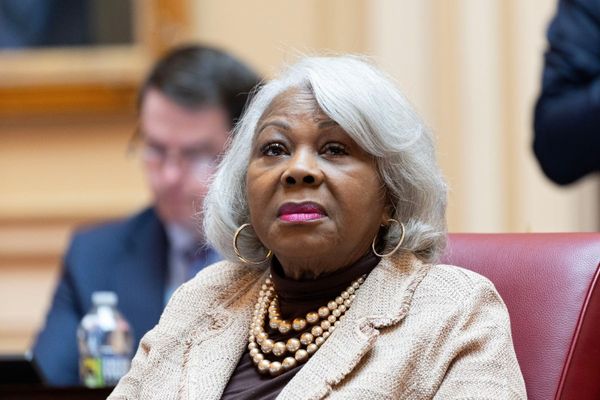
Deputy First Minister Jenny Gilruth said she wanted to see the overall number of councillors reduced and has signalled that no new powers would be devolved down.
Challenged on the proposals in Holyrood on Tuesday, Public Sector Reform Secretary Ivan McKee argued they were about “strengthening” councils at a more local level.
He said: “The proposals that we have put forward, in draft at this stage for further development, are not about centralisation, quite the opposite.
“They’re about strengthening the community layer of local government through our focus on community empowerment and making sure that citizens within those communities have a very genuine say in how public services are shaped and delivered.
“Alongside that, we absolutely recognise the importance of a strategic layer of regional local government to be able to take forward issues and challenges that are best addressed at that level.”
The larger councils would focus on major issues such as education, big planning decisions and economic growth, while the smaller authorities could preside over licensing and town centre improvements.
The proposals would represent the biggest shake-up to the country’s councils in decades and come as the Scottish Government also plans to slash the number of NHS health boards from 14 to two.
Under the local government reforms, the Government suggests that responsibilities currently held by one of Scotland’s roughly 130 public bodies could be given to either of the authorities.
But when asked by the Press Association if ministers would devolve their own powers, Gilruth said: “No, what we are promising is we will reform local government.
“I don’t want to prejudge the outcome of a consultation.”
Pressed whether councillors should have more powers, the Finance Secretary said: “I would like us to have a more democratic approach to decision-making in Scotland, absolutely.
“I think there are some powers that rest in local authorities, for example, which could be pushed down into our communities.
“But I am not going to prejudge the outcome of a consultation that just started yesterday.”
Under the Government’s plans, councillors would continue to be elected under the current ward system and would sit on both the local and regional authorities, though the paper suggests the increased time commitment may require a boost in councillor pay.
Gilruth said she could not say how much the reforms would cost the taxpayer because the plans were at an early stage but said she hoped ministers and councils would “arrive at a shared approach” when the consultation ends in December.
She said that a timescale for the reforms could not be set out until the end of the year.
Gilruth said the plans to scrap the current system see power “pushed into communities” while making the system more efficient.
“The public feel very strongly about their public services,” she said, “and that’s quite right. But we also need to reflect the way in which we’re delivering public services to them isn’t working for lots of different reasons.
“So improving public services, delivering that efficiency, will really be the test of public service requirement.”
The Finance Secretary said she would not “shy away from the ambition” of the proposals.
On the SNP’s 19-year promise to reform council tax, the SNP minister said she was still “absolutely committed to working with parties on that kind of project”.
She said: “The issue of council tax is challenging. We exist in a parliament of minorities.
“We’ve got to work on a cross-party basis if we’re going to move that forward. We haven’t been able to do that so far.”
She added that the so-called mansion tax was part of the Government’s reforms to council tax.