
Eurozone private sector activity expanded for the eighth month in a row in January, but a troubling uptick in services inflation may complicate the European Central Bank’s interest-rate path this year.
The latest flash Purchasing Managers’ Index (PMI) surveys, published by Hamburg Commercial Bank (HCOB) and S&P Global, show that the region's economy is still on a fragile growth path at the start of the new year.

The composite PMI for the euro area, which captures output across manufacturing and services, remained unchanged at 51.5 in January, slightly below expectations of 51.8.
“The recovery still looks rather feeble,” said Dr. Cyrus de la Rubia, chief HCOB economist.
While services activity remained in expansion territory, the sector showed signs of cooling.
The eurozone services PMI declined to 51.9 in January — its lowest level in four months — from 52.4 in December, falling short of the anticipated 52.6.
Growth in the manufacturing sector, meanwhile, continued to struggle, with the PMI remaining slightly below the 50-point threshold for the third consecutive month, indicating ongoing contraction.
Inflation risks
Still, the most pressing concern emerging from January's data is the reacceleration of services sector inflation.
Although eurozone inflation fell to 1.9% in December — below the European Central Bank’s (ECB) 2% target — the January PMI report indicates that underlying price pressures are far from subdued.
"Inflation in the services sector, which the central bank is watching particularly closely, has increased significantly in terms of sales prices," said de la Rubia.
Selling price inflation reached its highest level since April 2024, driven primarily by the services sector. By contrast, manufacturing output prices continued their marginal decline.
"For the ECB, these results are anything but reassuring," de la Rubia added, suggesting that policymakers may feel vindicated in their cautious stance.
According to de la Rubia, some of the more hawkish voices on the ECB's Governing Council could even argue that the next rate move should be a hike.
In its latest inflation outlook, the ECB projected inflation at 1.9% in 2026 and 1.8% in 2027.
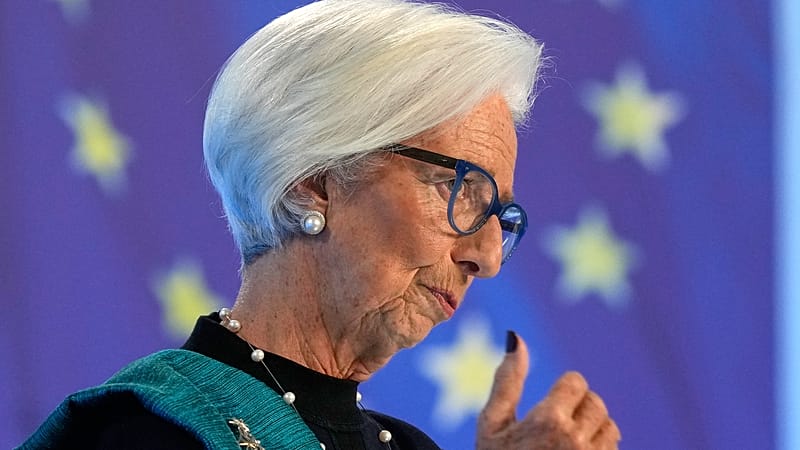
At last month’s ECB meeting, President Christine Lagarde said it was “hardly surprising” that services inflation was running higher than expected and contributing to the current inflation reading.
She added that this was balanced by declining goods prices, noting that the two components were moving in opposite directions.
Despite the mixed activity data and renewed inflation fears, business confidence across the eurozone improved markedly.
Optimism about the year ahead hit a 20-month high, supported by stronger sentiment in both the manufacturing and services sectors. Manufacturers posted their highest level of optimism in nearly four years.
Diverging national trends
A closer look at the two largest eurozone economies reveals diverging trajectories.
Germany’s private sector showed signs of renewed momentum, with the Composite PMI rising to a three-month high of 52.5 in January, up from 51.3 in December and surpassing expectations of 51.6.
"The data show a good start to the new year, overall," said de la Rubia.
"Manufacturing output and new orders both returned to slight growth, while the services sector saw a more convincing pickup in activity."
In contrast, France’s economy slipped back into contraction. The France Composite PMI dropped to 48.6 in January from December’s neutral reading of 50, marking the first return to decline since October and falling short of market forecasts.
External headwinds continue to weigh on French businesses, particularly exporters.
"Renewed tariff threats from the US, including the prospect of a 200% duty on French champagne, underscore how fragile the external environment remains," said Jonas Feldhusen, junior HCOB economist.
While such measures may be political posturing, they exacerbate uncertainty for export-oriented firms already grappling with a firm euro and intensifying competition from China.
Though the prospect of a resolution to the 2026 national budget offers a degree of political stability, Feldhusen warned that French manufacturers still face a difficult road ahead.
"Whether the manufacturing industry embarks on a recovery in 2026 remains uncertain," he said, noting that new orders continue to contract and export performance remains under pressure.