
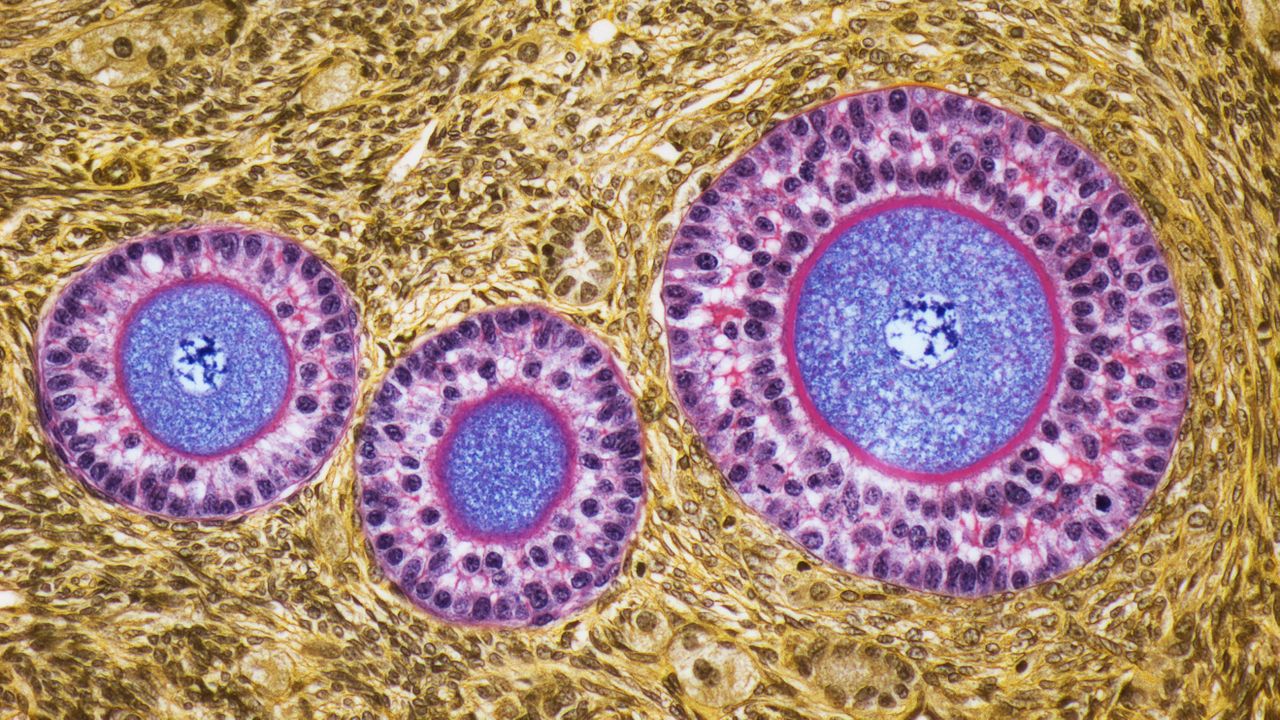
Scientists have taken an important step toward understanding why human eggs grow more prone to chromosomal errors as they age and whether that decline could be circumvented someday.
The research, published in November in the journal Nature Aging, introduces a new tool that enables scientists to replicate changes seen in eggs during the aging process. The technique, which uses mouse egg cells, doesn't require researchers to wait for the mice to age or to collect aged human eggs for study, and it enables them to zero in on different forces that might contribute to an egg's decline.














