
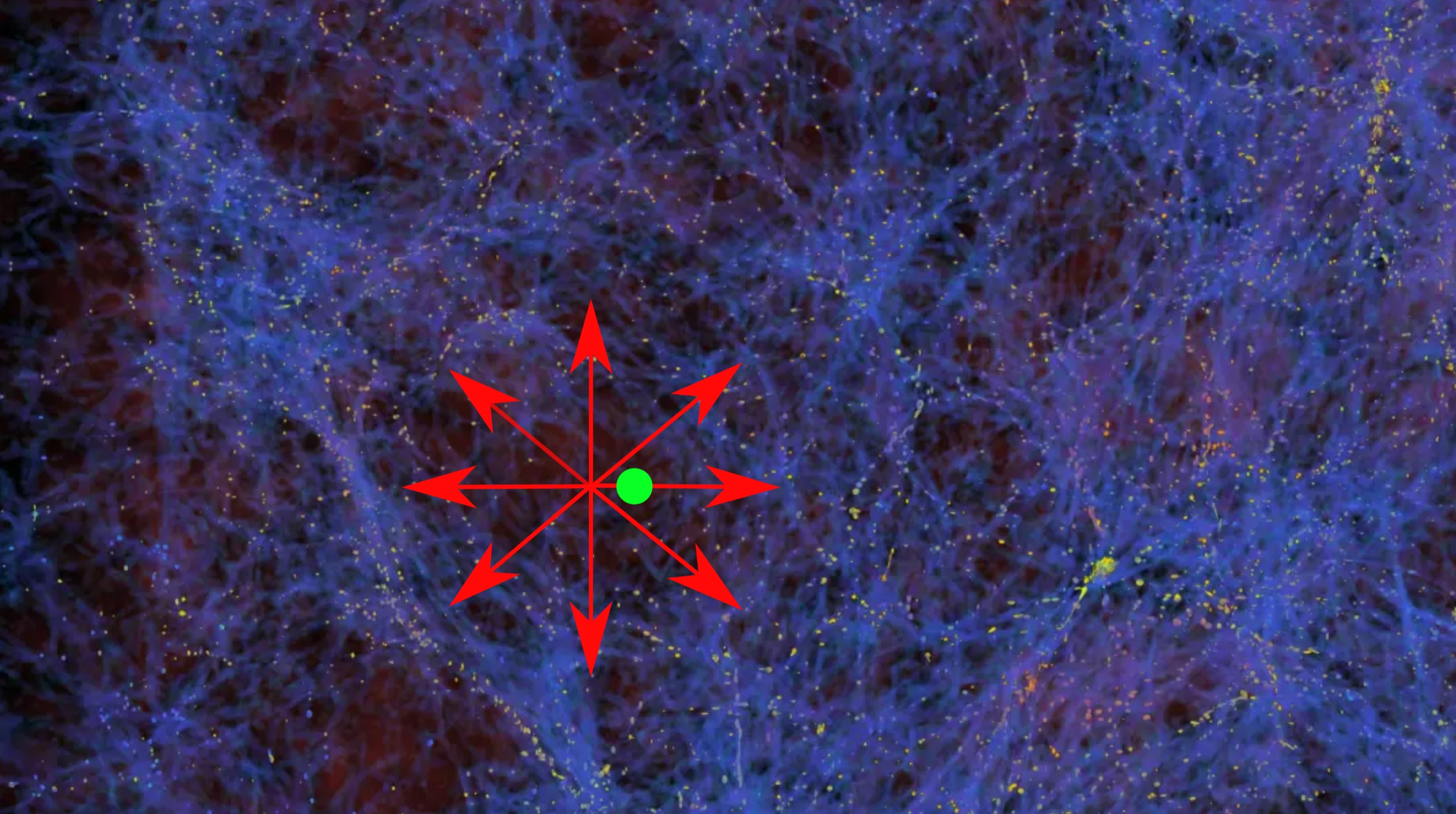
A major discrepancy between different measurements of our universe's expansion rate could be explained if our galaxy, the Milky Way, sits in a two-billion-light-year-wide void. Such is the conclusion of scientists who argue that a modified theory of gravity can replace the standard model of cosmology. However, this hypothesis is strongly disputed by many astronomers.
The standard model of cosmology describes how we live in a universe dominated by dark energy and dark matter. Dark energy is a mysterious force that is seemingly causing the expansion of the universe to accelerate, while dark matter provides most of the gravity in the universe and is thought to surround galaxies in halo-like shapes while preventing them from sort of falling apart. Together, these elusive phenomena describe how matter is distributed across the cosmos and how galaxies move with respect to one another.