Get all your news in one place.
100’s of premium titles.
One app.
Start reading
The Independent UK
The Independent UK
National
Nicholas Riccardi

Would President Donald Trump deport The Beatles? A judge asks the question

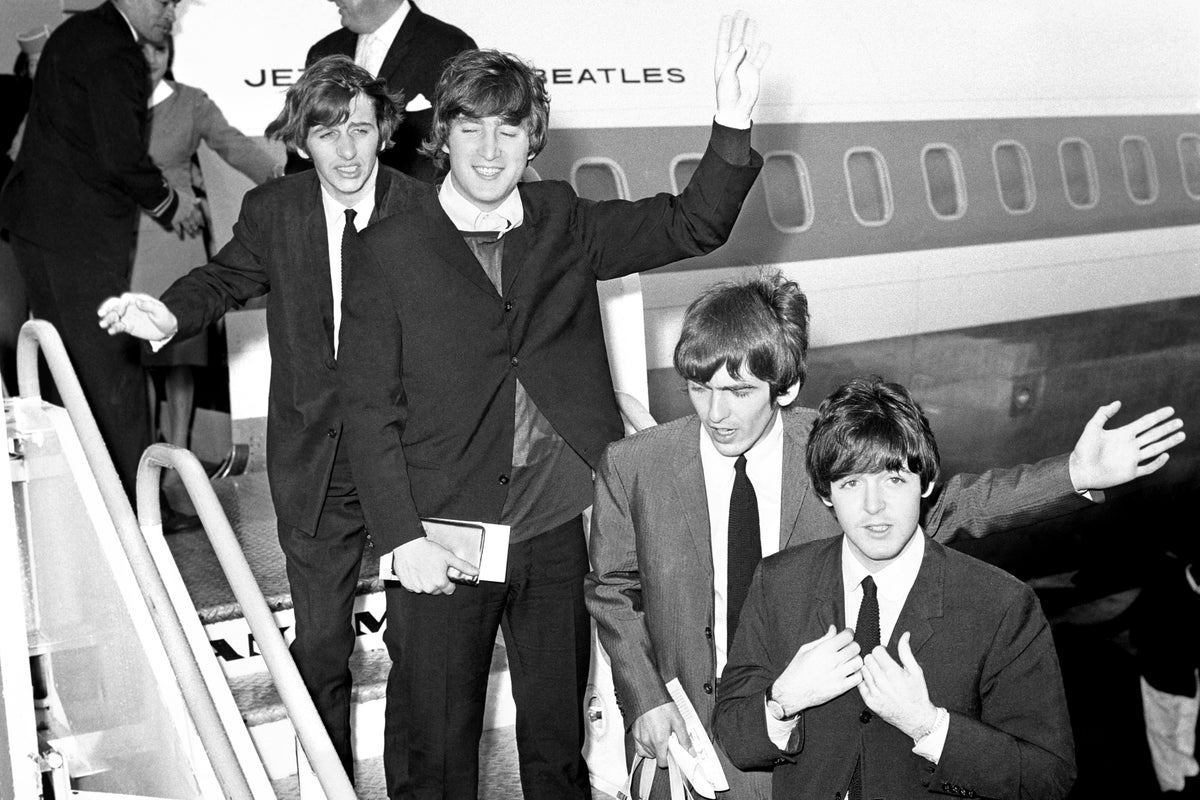
Ringo Starr, John Lennon, George Harrison, and Paul McCartney board a plane at Heathrow Airport for their tour of America (PA) - (PA Archive)

A judge in America has raised a provocative hypothetical during legal arguments around President Donald Trump’s use of an 18th-century wartime statute to deport Venezuelan gang members: ‘Could a president deport The Beatles?’

Jennifer Walker Elrod, chief judge of the 5th U.S. Circuit Court of Appeals in New Orleans, asked whether the same law could be deployed against a "British invasion" deemed to be corrupting young minds.

She described her reference to the 1960s moral panic surrounding The Beatles and other British bands as "fanciful". However, a government attorney responded unequivocally that the president possessed such power, and the courts would be unable to prevent its exercise.

“These sort of questions of foreign affairs and the security of the nation are specifically political issues,” said Drew Ensign, an assistant attorney general who was arguing the administration’s case before the full 5th Circuit Court of Appeals.

Ensign said it would be up to Congress to check the president in that scenario.

A Venezuelan deported from the U.S. shows his hands in handcuffs and chains after landing at Simon Bolivar International Airport on a plane of deportees in Maiquetia, Venezuela, Jan. 19, 2026 (Copyright 2026 The Associated Press. All rights reserved)

The unexpected exchange came in the administration's appeal of a ruling by a three-judge panel of the 5th Circuit, one of the most conservative courts in the country, that found Trump inappropriately used the Alien Enemies Act of 1798 when he targeted the Venezuelan gang Tren de Aragua last year.

The act has only been invoked three other times in American history, during the War of 1812 and both world wars. A majority of the three-judge panel agreed in last year's ruling with multiple lower court judges and immigration lawyers who brought the case that it cannot be deployed against a gang rather than a belligerent foreign power.

The administration appealed to the full 5th Circuit, and all 17 judges on the court were present for the arguments in New Orleans on Thursday.

“Tren de Aragua is committing ordinary crimes that are being dealt with by law enforcement,” Lee Gelernt, an attorney for the ACLU, told the judges. “The Alien Enemies Act is about wartime and it's about the military.”

Several of the judges were concerned about second-guessing the president's determination of a threat to the country. Ensign noted the law allows it to be invoked in attempts of “invasion” or “predatory incursion” and argued that courts should accept a president's declaration that that is happening.

“A predatory incursion is less than an invasion,” Ensign said, arguing that cases involving other laws have determined it happens when foreign fishing boats enter U.S. waters. He also noted that Trump alleged the gang was acting at the behest of recently ousted Venezuelan President Nicolas Maduro's government — an assertion that has been challenged by some law enforcement analysts.

It's unclear when the circuit will issue its ruling, and the final decision on the constitutionality of Trump's action will likely be made by the U.S. Supreme Court.

The nation's highest court has already had to wade into the tangled legal saga of Trump's invocation of the act twice before. His administration used the act to fly 252 Venezuelans from the United States to a notorious prison in El Salvador, where it contended that U.S. judges had no authority. The Supreme Court ruled that anyone else the administration tried to remove under the act needed a “reasonable” opportunity to challenge their designation as a gang member in court.

The following month, as the administration hurried to prepare another flight from Texas, the high court issued an unusual midnight ruling halting flights. It also barred removals under the act until the 5th Circuit could sort out the proper procedures. The high court never weighed in on the constitutionality of Trump's use of the act, giving the 5th Circuit first crack at that question as well.

Sign up to read this article
Read news from 100’s of titles, curated specifically for you.
Already a member? Sign in here
Related Stories
Top stories on inkl right now
One subscription that gives you access to news from hundreds of sites
Already a member? Sign in here
Our Picks
Fourteen days free
Download the app
One app. One membership.
100+ trusted global sources.