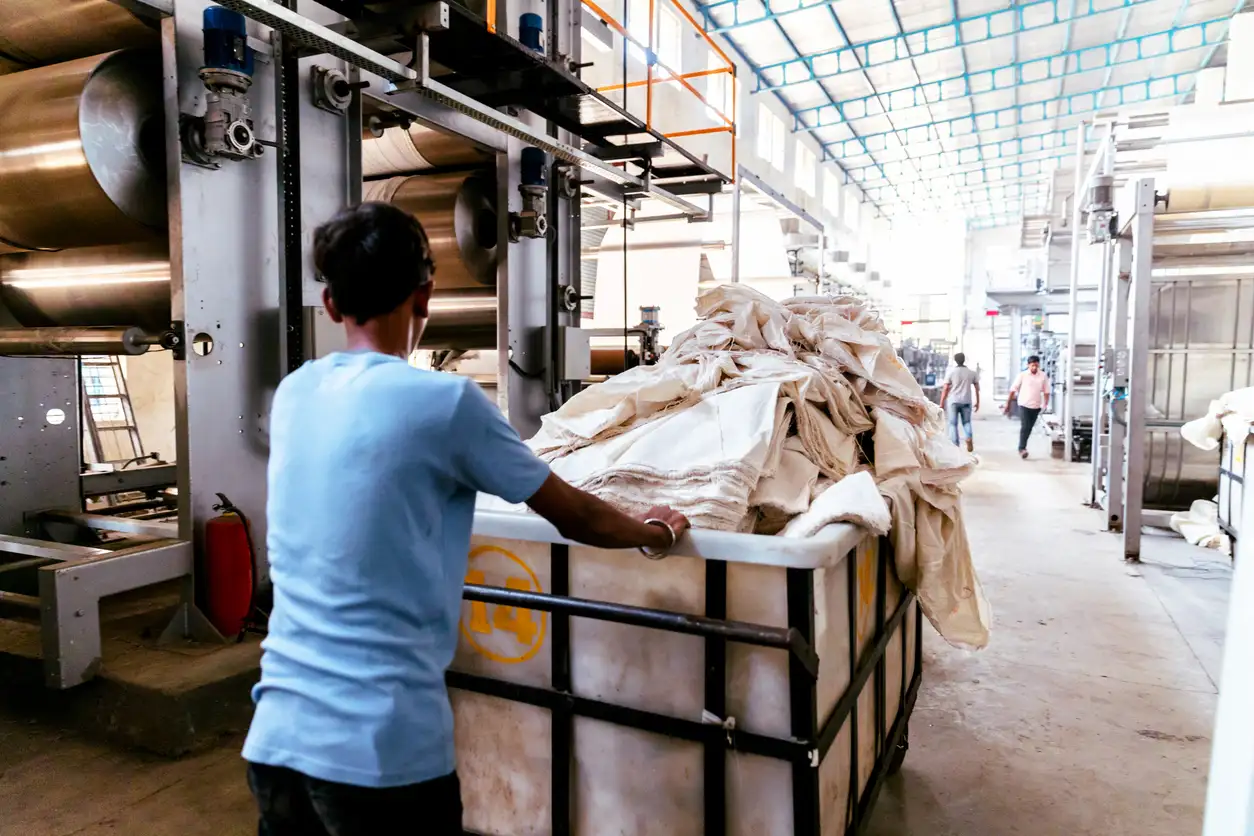
The government’s temporary custom duty exemption on cotton is expected to ease cost pressures on textile manufacturers. Industry officials and sector experts, however, argue that the measure reveals deeper challanges confronting India’s $190 billion textile and apparel industry. They point to persistent challenges in productivity, quality, and global competitiveness that require structural reforms instead of temporary tariff interventions.
Notably, the government on May 30, 2026, announced a temporary exemption on customs duties on cotton imports between June 1 and October 31, 2026. The measure aims to ensure adequate cotton availability for the textile industry, support MSMEs, moderate input costs, and strengthen the competitiveness of Indian textiles while safeguarding farmers’ interests.

Union Textiles Minister Giriraj Singh told The Economic Times Digital that the temporary duty exemption, applicable during the cotton off-season, is intended to support the entire cotton value chain by easing input cost pressures, strengthening textile exports, and maintaining stability in the domestic market.
Immediate relief for exporters
Industry stakeholders believe that the government decision comes at a time when textile exporters are facing multiple pressures. Lingering geopolitical tensions in West Asia have added fresh uncertainty to global trade flows, freight rates remain volatile, and manufacturers are grappling with fluctuating input costs, as they seek to capitalise on opportunities presented by free trade agreements (FTAs) and changing global sourcing patterns.
For exporters, the immediate benefit of the duty waiver is clear.
Anant Srivastava, President of the Home Textile Welfare Association (HEWA), says the removal of import duty could help correct cotton prices by as much as 6% and bring much-needed stability to a market that has been under pressure in recent months.
According to him, cotton prices have risen nearly 15% over the past 90 days, hurting both existing and future export orders, particularly in value-added categories such as garments, towels, bed sheets and home furnishings. The situation has been aggravated by a sharp increase in packaging costs and highly unstable freight rates. Buyers are increasingly reluctant to make large or long-term commitments, leading to a decline in orders across several value-added textile segments, he says.
Not everyone, however, views the issue merely through the lens of textile competitiveness.
Aditya Sesh, Member of the Expert Committee on eNWRS, an initiative under the Ministry of Agriculture & Farmers’ Welfare, says the debate reflects the competing interests of farmers and manufacturers within the same value chain. Sesh believes that lower import duties can help stabilise raw material prices for textile mills and exporters, and they may also exert downward pressure on domestic cotton prices.
He describes the issue as a “catch-22 situation” for policymakers attempting to balance farmer incomes with the textile industry’s competitiveness. “If I look at it as a cotton farmer, it can be a concern. If I look at it from the perspective of the textile industry and the broader economy, the logic is different,” Sesh explains.
For many in the industry, however, the latest duty waiver addresses only a symptom rather than the underlying problem. For them, it has once again revived a long-running question within the textile sector: why does one of the world’s largest cotton-producing countries repeatedly find itself seeking relief on cotton imports?
Why India still needs cotton imports
Industry stakeholders trace the recurring debate over cotton imports to a set of structural issues that have been building for years, from stagnant yields and quality concerns to a widening competitiveness gap with rival textile-producing countries. The Confederation of Indian Textile Industry (CITI), which had been seeking removal of the duty, argues that cotton imports are neither large enough nor disruptive enough to threaten domestic growers.
Cotton imports have averaged around 20 lakh bales annually over the past decade, accounting for roughly 7% of domestic production, as per CII data. These imports are largely driven by quality specifications and export commitments rather than replacing domestic cotton.
Textile manufacturers also point to a policy disadvantage vis-à-vis competing export nations.
Most major textile-exporting countries, including Bangladesh, Vietnam, Indonesia, and Pakistan, allow duty-free imports of cotton. This enables their spinning industries to source raw materials at globally competitive prices. Indian manufacturers, by contrast, have periodically faced one of the highest tariff burdens among major cotton-importing textile economies, according to the WTO tariff database.
Industry stakeholders say this cost disadvantage has increasingly been reflected in export performance. India’s share in global cotton yarn exports has declined from around 38% in 2015 to roughly 28% in 2024, even as countries such as Vietnam and Bangladesh have strengthened their position in global textile supply chains.
Against this backdrop, Ashwin Chandran, Chairman of CITI, says the 11% import duty had become a significant disadvantage for Indian manufacturers. “Amid the ongoing global volatility, the 11% import duty on cotton was acting as a major hindrance, especially since our major Asian competitors already have duty-free access to cotton,” Chandran says. He contends that the duty increases costs across the value chain and makes it harder for exporters to leverage opportunities arising from new trade agreements and shifting global sourcing patterns.