Get all your news in one place.
100's of premium titles.
One app.
Start reading
The Independent UK
The Independent UK
Joe Sommerlad

Cost of Trump’s Iran war is now estimated to be $500 million a day

As President Donald Trump threatens a major escalation in his war against Iran, analysts have placed the cost of the conflict at approximately $500 million per day, with as much as $31 billion spent on the five weeks of bombing seen so far.

In his latest apocalyptic warning to Tehran ahead of the 8 p.m. ET Tuesday deadline he has set for the regime to agree to a ceasefire, the president declared that “a whole civilisation will die tonight, never to be brought back again” unless a deal is reached, promising to decimate the country’s civilian infrastructure.

But according to The Financial Times, citing research by the Washington think-tank the American Enterprise Institute, Trump’s aggressions carry with them an extremely high pricetag.

Senior fellow Elaine McCusker has calculated between $22.3 billion and $31 billion has already been spent on Operation Epic Fury since it began on February 28.

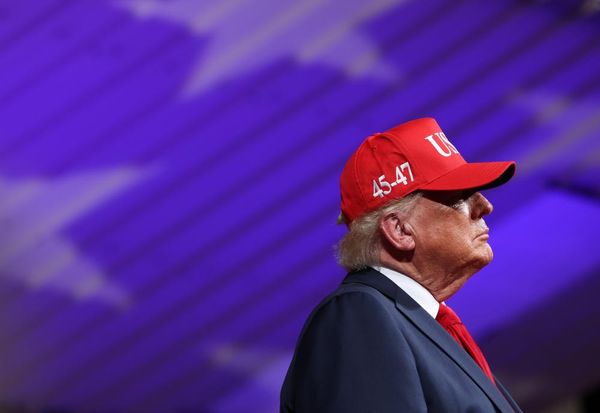
President Donald Trump has ratcheted up his rhetoric towards Iran ahead of his Tuesday night deadline for a ceasefire agreement and the reopening of the Strait of Hormuz (AFP/Getty)

The AEI estimates that between $2.1 billion to $3.6bn of that total is likely to be accounted for by replacing equipment either damaged or destroyed in Iran’s retaliatory strikes, although the think-tank acknowledges that no definitive accounting of battle damage can be made reliably until the conflict ends.

The FT cites further analysis from another D.C. nonprofit, the Center for Strategic and International Studies, which found that at least $1.4 billion in losses were chalked up in the first six days of fighting alone and whose analyst, Mark Cancian, pinned the current running cost of American operations at half a billion dollars per day.

The Independent has reached out to the White House and the Pentagon for comment on the figures.

The U.S.’s costliest expenses so far are likely to include the repairs required by the USS Gerald R Ford aircraft carrier, which sustained damage in an onboard fire, and those required by a ballistic missile early warning system in Qatar after it was struck by an Iranian drone.

“Damaged equipment can sometimes be repaired in days, while some destroyed systems will take years to replace on a one-to-one basis,” McCusker said, adding that repair work was likely to exacerbate existing strains on materials and further eat into stockpiles of much-needed components.

Other significant costs are likely to have been incurred through the damage done to a Boeing E-3 Sentry airborne early warning and control system, worth $700 million, which was badly hit in a retaliatory strike on the Prince Sultan Air Base near Riyadh, Saudi Arabia.

Two radar systems hit in Jordan and Qatar are also among the key U.S. assets to have been damaged, which, in addition to requiring expensive maintenance, also mean the American ability to detect and respond to missile attacks is hindered.

“Repairing or replacing them is going to be a very high priority,” CSIS analyst Tom Karako said of the compromised radar. “You cannot take an Amazon Basics radar and substitute it for an AN/TPY-2.”

Iran is further believed to have shot down more than a dozen MQ-9 Reaper drones and downed an F-15E, setting in motion the race to find the two missing crewmen in the country’s mountainous southwest over the weekend, which was ultimately won by the American rescuers.

In addition to enemy fire incidents, the U.S. has also lost three F-15Es in a “friendly fire” disaster over Kuwait and a KC-135 tanker that crashed over Iraq, equipment that is likely to cost at least $460 million to replace.

The Operation Epic Fury airstrikes have also caused widespread devastation across Iran, reducing buildings and key civilian infrastructure to rubble (Reuters)

And there is the human cost, including the 13 U.S. soldiers who have lost their lives so far and another 373 personnel injured.

A former senior U.S. military official told the FT that much of the damage sustained by assets was “self-inflicted” because of their flawed use.

“We either didn’t defend ourselves properly, or we made mistakes in the employment of the systems,” they said.

Analysts have warned that the real long-term cost of the war could be the loss of key communications systems necessary to monitor potential threats posed beyond the current war, notably from China, which may feel emboldened to attempt to seize Taiwan at a time when American attention and resources are devoted elsewhere.

“We cannot afford to keep expending these things,” Karako warned.

The Pentagon has nevertheless asked Congress for an additional $200 billion to bankroll the continuation of its operations in Iran.

Sign up to read this article
Read news from 100's of titles, curated specifically for you.
Already a member? Sign in here
Related Stories
Top stories on inkl right now
Our Picks
Fourteen days free
Download the app
One app. One membership.
100+ trusted global sources.