
Get all your news in one place.
100's of premium titles.
One app.
Start reading
Salon
Salon
Amanda Marcotte

Cornell case shows #MeToo's limits

Jane Doe, a former Cornell University student who has filed a civil lawsuit alleging gang rape at the hands of seven Chi Phi fraternity members, has struggled since she first reported the incident to the police in November 2024, a few weeks after night a frat party turned ugly. “Her life has been destroyed,” her attorney Thomas Giuffra told CNN’s Jake Tapper. Unlike most of the alleged assailants, Doe left college after what Giuffra has described as a “horrifying” semester in which she had to attend classes “where she saw these guys on a fairly regular basis.”

She was not from “a wealthy family,” he said. “This was her dream and it was taken away from her at a young age in just a horrific fashion.”
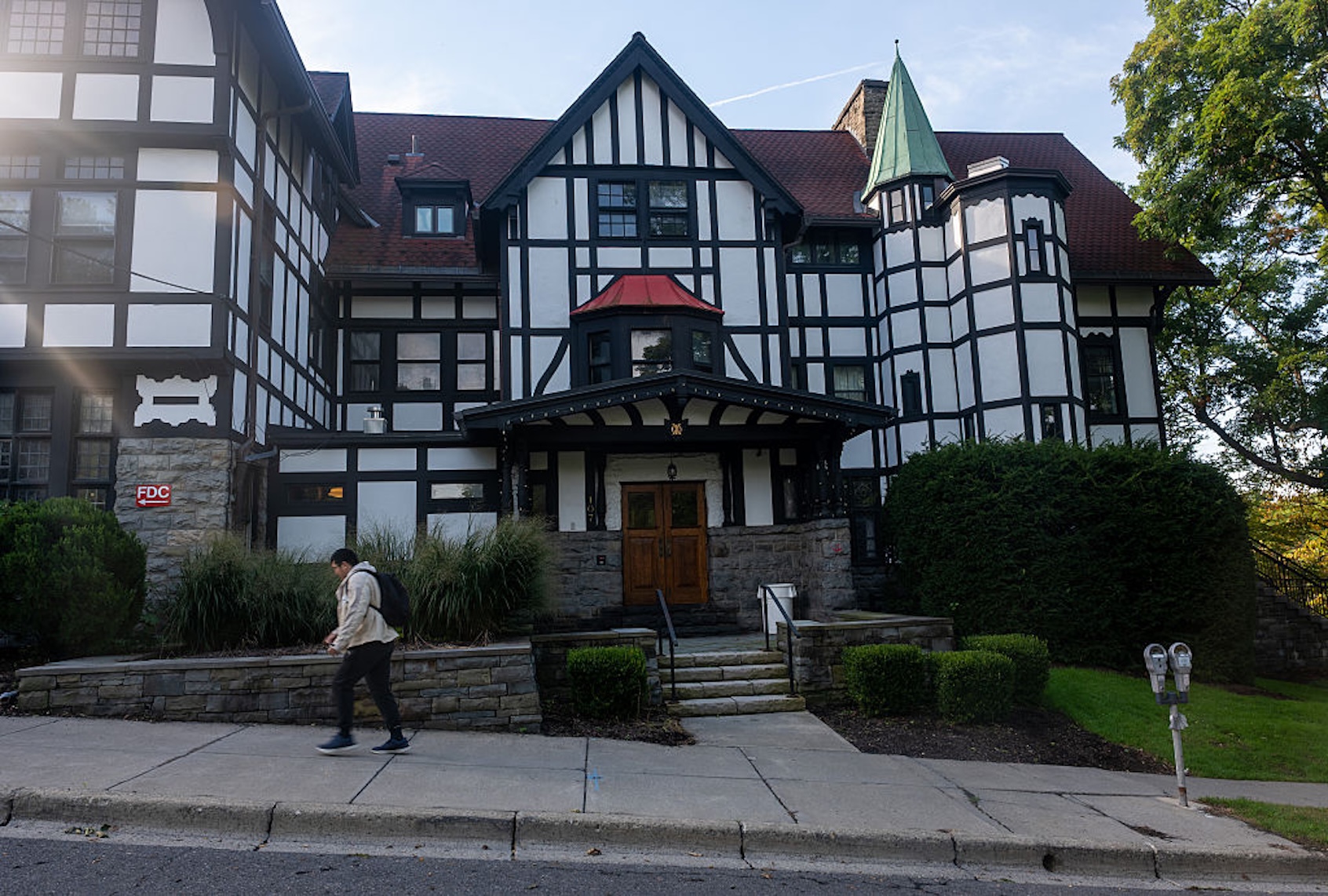
But according to some on the right, Doe has not suffered enough for reporting her alleged assault to the police and then later suing the accused, the university and the fraternity. It’s not enough that she saw no charges filed, or that reportedly only two of the accused were expelled from campus. On top of her existing pain, therefore, many of the MAGA faithful are punishing her further by calling her a liar, implying she’s a slut and even threatening to out her, which would put her personal safety at risk. Whatever their intent, by doing this, they are sending a strong message to any victim of rape who might feel tempted to seek justice: Stay silent, or you’ll be next.

In 2017, the #MeToo movement took the nation by storm. A veritable flood of women, and some men, spoke out about their own experiences with sexual abuse, leading to a slew of firings, lawsuits, arrests and social opprobrium of the accused, especially since so many accusers produced compelling evidence. Despite this, it was barely weeks before the backlash began, with countless articles about how #MeToo had gone “too far,” despite scant evidence that innocent men were getting entangled. That response swelled until it overcame #MeToo, which has largely faded into the background.

The Cornell case shows, though, that far from going too far, the #MeToo movement didn’t go far enough. Much — if not most — of the time, alleged victims still face far more serious consequences than their accused assailants, and for many people and institutions, it still feels much easier to make the issue go away by suppressing accusations than dealing with these cases which are, admittedly, often complex.

There is no doubt that the Cornell case is messy. By her own account, the victim was initially consenting, though perhaps not enthusiastically, to a threesome with two fraternity members. But the situation apparently took a turn when she took ketamine during the encounter and more fraternity members joined in, even communicating about “free p—y” on Snapchat. She describes hiding and swatting the new men away, but being too incapacitated to fight back.

“I can say with 100% confidence I was raped,” she told police during a November 2024 interview.

It took time for the alleged victim to get to the point where she was ready to file a report, which right-wing pundits have seized on as evidence that she was not really raped. The New York Times, using campus police documents and witness statements, laid out the timeline showing that she initially reacted with confusion and shame. While she didn’t call it “rape,” she was clearly unhappy about what had happened. Over the course of a few weeks, she came around to first texting one of the accused that “90% of what happened that night was not consensual,” and then filing a police report.

“After rape, it’s common that victims don’t realize what happened was rape,” explained Anne DePrince, a psychology professor at the University of Denver and author of “Every 90 Seconds: Our Common Cause Ending Violence Against Women.”

Victims “feel some shame about reporting it,” especially if they initially “liked the boy or they wanted to go to an event,” Sharon Gandarilla-Javier, an assistant professor at the John Jay College of Criminal Justice, told me. She noted that it’s also common for someone to initially consent to one activity that then becomes “totally different than what they expected.”

Journalists and feminist writers have been cautious in addressing this case, making it clear that the claims haven’t been tested in court and that New York’s rape laws may not be enough to secure an indictment, much less a conviction. Tompkins County District Attorney Matthew Van Houten has reopened the case, arguing that this new lawsuit presents evidence he didn’t have when he initially made the decision to not charge the accused. New reporting also shows that Van Houten was given a condensed version of Doe’s report to Cornell police, one that omitted her use of the word “raped.”

But on the right, there appears to be no similar care when lobbing unproven — and unevidenced — accusations that Doe is lying.

“Her account has radically changed,” The Daily Wire’s Ben Shapiro said on Tuesday’s episode of his podcast, insisting “it turned out that the details of the police report did not amount to anything like rape.”

We need your help to stay independent.

Become a member to support Salon’s progressive journalism. Join today!

While he may be proven right if prosecutors can’t secure an indictment, this is not the same thing as saying that all Doe reported was “bad things happening with consent,” as Shapiro claimed. She herself said she was “raped,” and as many have pointed out, the very fact that she filed a police report is relevant. Calling the police suggests that a person believes they are reporting a crime.

Matt Walsh, also of the Daily Wire, accused feminists of “rushing into the next Duke lacrosse/UVA-style hoax” and argued on X that the situation was nothing more than “a disgusting drug and alcohol fueled orgy,” where “the drunk men have just as valid a claim to being raped.” This, of course, ignores the fact that the alleged victim did not get on Snapchat to advertise “free p—y” to strangers, as well as her own testimony that she pushed them away and tried to hide.

The story “gets transformed from a night of regrets that the young woman is ashamed of into a night in which she’s a victim,” former Fox News host Megyn Kelly said on her podcast, where she also threatened to release the accuser’s name.

Feminists and journalists are wise to use words like “alleged” and to be clear that the evidence has not been fully evaluated in a court of law, and it is true that there remains much about this case that is unknown. Still, there are the Snapchats and text messages, including one where the alleged victim uses the word “nonconsensual” and another where the accused wrote “I just wanted to apologize for how things went down the other night.” This alone makes it hard to believe the accusations are a “hoax,” as Walsh suggested, even if there are outstanding legal questions about whether a consensual encounter turned into something illegal.

For people who insist on the principle of “innocent until proven guilty,” many on the right have proven themselves quick to make claims about the alleged victim’s motives. It’s worth remembering that E. Jean Carroll won a defamation civil suit against Donald Trump after he accused her of lying when she claimed he sexually assaulted her in the dressing room of a Manhattan department store in the 1990s. There is a demonstrable psychological and reputational toll on alleged victims when they face public accusations that they are lying, especially when they come from high-profile people who also insinuate that the victim is an immoral person because of their sexual history.

In this case, no one is required to have an opinion about the accuser’s character. They don’t know her history or her life or why she was even at the party, beyond her stated desire to have some fun. They could, like most decent people, consider the allegations and assume that, even if there is not a crime here, what is described should never happen to anyone. Shutting up is free.

But the past decade of Trumpism has largely been built on stirring up male anger at women’s growing equality. Paranoid and unsupported claims that women have immense power to ruin men with false accusations have been the bread-and-butter of a MAGA media industry designed to exploit men’s resentment for profit. Their audiences yearn to hear that Jane Doe is the real bad guy here, and so attacking her without a single shred of real evidence against her is an opportunity that many right-wing pundits can’t seem to pass up.

Despite the hysterical claims of its critics, #MeToo was never about ruining the lives of innocent men. In a very real sense, the movement was about leveling the playing field, which is so dramatically tilted against victims that it makes justice nearly impossible to achieve. No one truly disputes the importance of due process to handle accusations of sexual violence. That’s why Jane Doe is going through the court system. It’s also why it’s good that, in light of new information, the district attorney is re-opening the case.

But due process is endangered if victims can’t report allegations without facing public abuse and threats of being falsely accused themselves that it becomes psychologically impossible to live their lives. As its name suggested, that was the whole point of #MeToo: to create enough solidarity between victims and allies to make it safe for victims to speak out without their lives being destroyed. If the right really believes in the value of due process, then they would let it play out, instead of dogpiling and harassing accusers so that future victims are too scared to report crimes.

Sign up to read this article
Read news from 100's of titles, curated specifically for you.
Already a member? Sign in here
Related Stories
Top stories on inkl right now
One subscription that gives you access to news from hundreds of sites
Already a member? Sign in here
Our Picks
Fourteen days free
Download the app
One app. One membership.
100+ trusted global sources.