Becoming the custodian of the family chateau is a privilege. The reality also involves responsibility – and ever-increasing bills.
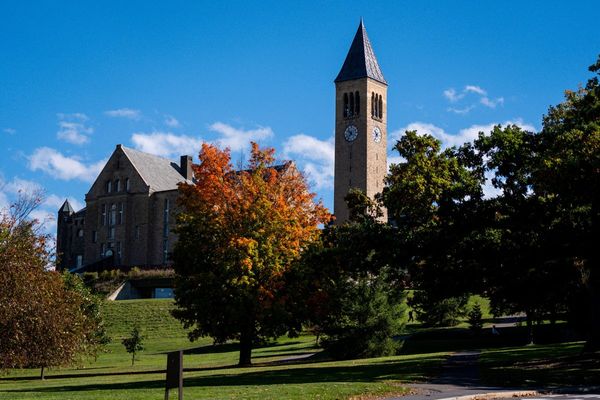
The owners of Château de Champlâtreux, near Paris, have found a best-of-both-worlds solution to the challenges of running this historic house design in the 21st century. The stately 18th-century castle, set in classical parkland, now earns its keep as a venue for weddings, parties, and photographic shoots.

Meanwhile, the couple and their two young children have decamped to a much smaller, but equally picturesque, house on the estate.

The move was not straightforward, however.
Built in 1810, their new home, a swift stroll away from the chateau, had once served as the town hall for the local region. When its staff were relocated to a more modern headquarters, the building fell into a state of benign neglect. Professional input was needed.
So the owners turned to Pia Casal, a Dublin-based architectural and interior designer, who has also worked in Paris, to rethink the ivy-wrapped building with its typically Gallic curved mansard roof.
‘My clients are young,’ says Pia, who holds an architecture degree from her native Argentina. ‘They wanted a home that reflected that. It had to be comfortable, relaxed – and unpretentious.’

The two-storey interior had been subdivided into a warren of dark offices. They began by removing the partition walls. Thus started a ‘process of discovery’, says Pia. As the project unfolded, she says, ‘we released the house’s potential’. They uncovered original features – beams, fireplaces, and moldings that had been obscured for decades.
They made other architectural changes, too. To bring gravitas to the ground-floor doorways, Pia designed the wide architraves and raised panels above. New, deep window seats offer views of the pristine topiary and beautiful gardens.

The ground floor was redesigned for socializing and family. In place of utilitarian offices, there is a colorful boot room and wallpaper-lined powder room. ‘The children – and the dog - can wander in and out in muddy boots. It’s all very laid-back.’
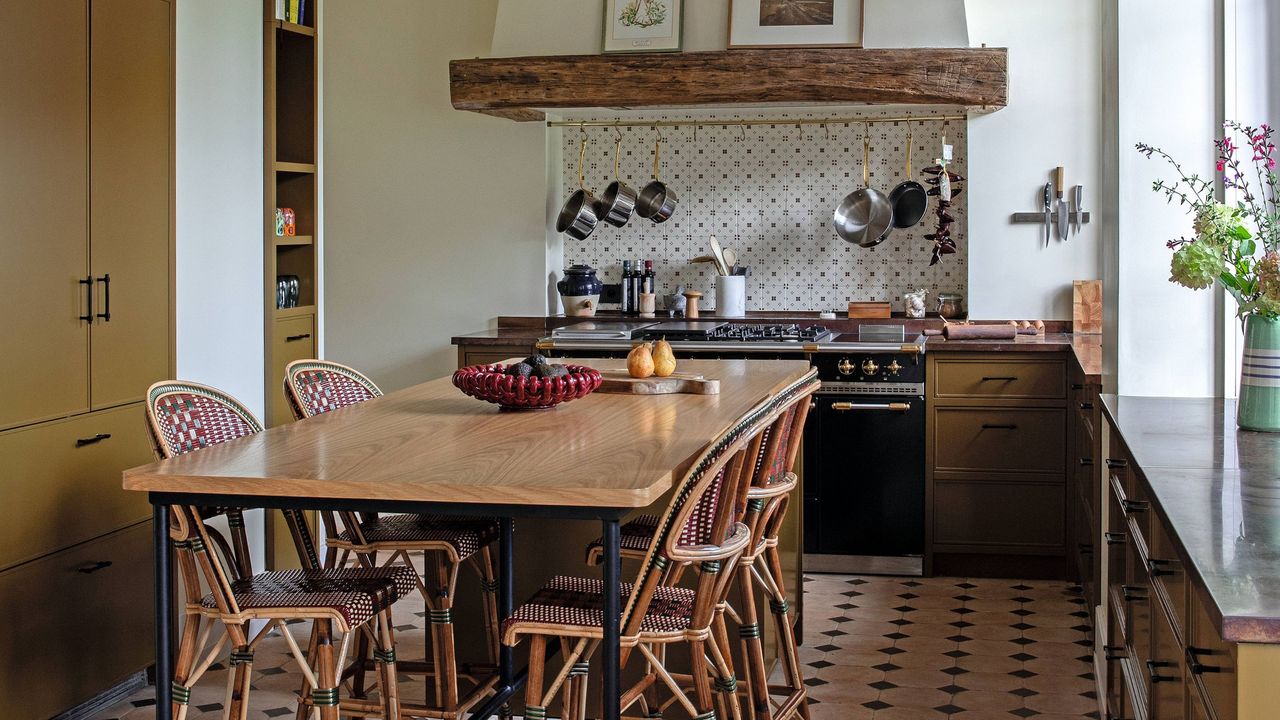
In the new open-plan kitchen, they designed the bespoke kitchen island for entertaining and homework. The caned bar stools are a modern version of the classic Parisian bistro chair.
In winter, a fire burns in the restored grate: a last-minute discovery which they have reinstated. ‘We call it the surprise fireplace.’

Next door, they removed a wall to open up the dining room and living room. The original fireplace is framed in simple, custom-made oak paneling and shelves.
There is not a hint of traditional decor: the gilt-edged fauteuils, rococo artworks, or weighty verdure tapestries synonymous with chateau interiors. Instead, a vintage Italian glass dining table, oversized flea market-find lights, and the set of curvy Cesca chairs add to the informal atmosphere.
An intriguing artwork, chosen for its suitably forested landscape, is made of recycled cardboard by the French artist Eva Jospin.

They were also careful to choose materials that nod to the setting – ‘as if they’d always been there,’ says Pia.
She singles out the chateau-esque black and white stone flooring and hand-painted faience tiles behind the range cooker. They positioned the kitchen countertops for views of the garden. The copper surfaces will also improve ‘with age – and splashes’. They applied the same old-new approach to the exterior: the peeling window frames were lightly repainted to retain the patina of time.

Guests now enjoy the self-contained ground-floor suite. Pia designed the racing-green alcove, which frames the bed, to add a focal point to the room where light pours through restored casement windows.
In the new bathroom, the claw-foot tub and hand shower – ‘very French’ – sits in a niche, to mirror the bedroom joinery. The main bedrooms are on the top floor. Here, too, they began again.

In place of the narrow attic staircase, new wooden treads lead upstairs. False ceilings were removed to reveal the beams. Instead of wallpaper, the rooms are lined in fabric, enhancing the serene treetop atmosphere.
This ageless feel stretches to the bathroom. Tongue-and-groove panelling is the backdrop for the deep, antique bath, which they found downstairs. And, of course, the restored tub has been carefully placed to take in the view of the chateau.