Get all your news in one place.
100’s of premium titles.
One app.
Start reading
The Guardian - UK
The Guardian - UK
World
Matthew Taylor Oliver Milman and Graham Readfearn

Cop30: countries still far apart as climate talks overrun – as it happened

People perform during the “people's plenary” at Cop30 in Brazil
People perform during the “people's plenary” at Cop30 in Brazil Photograph: Adriano Machado/Reuters

Day 11 of Cop30 - recapped

That’s about it for our live coverage of the so-called final day of the Cop30 climate summit in Belem, Brazil.

We say “so-called” because there is still no final agreement. It looks like we’re heading for at least one extra day of talks.

Here’s a quick recap on what happened today.

  • Countries appear to be still far apart on any agreement to draw up a roadmap to transition away from fossil fuels. As the clock approached 11pm in Belem, talks were ongoing.

  • Negotiating texts released early on Friday in Belem did not include the roadmap concept.

  • The UK energy secretary Ed Miliband said a deal to create a roadmap away from fossil fuels needed to happen “one way or another” – even if it was a voluntary process.

  • One representative from a country vulnerable to the climate crisis said: “Sometimes it’s like we are arguing with robots.”

  • Observers claimed the Arab group of nations had warned any mention of phasing out fossil fuels in final negotiations would see the talks collapse.

  • The architect of the Paris climate deal, Laurence Tubiana, said countries should not fear pursuing a deal on a roadmap.

  • Turkey and Australia has agreed to the details on hosting next year’s Cop31 summit, that will be held in Turkey. Turkey will take on the Cop31 presidency and an Australian – energy minister Chris Bowen – will be appointed vice-president and “president of negotiations”

  • Africa was still pushing for a tripling of the finance available from rich countries to help the poor world adapt to the impacts of the climate crisis.

Thanks a lot for staying with us. The climate summit in Belem is on a knife edge.

Join us again tomorrow, Belem time, as we follow what could be the actual final day.

In the meantime, you can follow all our coverage from Cop30 here.

Updated

Paris deal architect says don’t fear fossil fuel exit roadmap

Countries should not fear drawing up a roadmap to phase out fossil fuels, one of the architects of the Paris agreement has declared, because they will be able to set their own path, according to their own national circumstances.

Laurence Tubiana, chief executive of the European Climate Foundation, who has served as one of the special envoys appointed by Brazil for Cop30, told the Guardian that all of the important decisions would be for national governments to make, and they would not be coerced into any measures. She told the Guardian:

We want more renewable energy and less fossil fuel, but every country has to imagine for itself what policies they want, what role they have to play, and what ambition they have.

Countries demanding more finance from developed countries to help them adapt to the impacts of the climate crisis – a major concern for developing nations, particularly the poorest and most vulnerable, at the Cop30 talks – should be particularly in favour of a phase out, because the sooner the world shifts away from fossil fuels, the less adaptation they will require, she added.

It is just impossible to try to say, we want adaptation finance, but we don’t want a transition away from fossil fuels. Clearly, if you want adaptation, you should support the phase out.

She warned countries must also be prepared to rethink their national climate plans, known as nationally determined contributions (NDCs), given that the current crop are inadequate to limit global temperatures to 1.5C, the goal set out in the Paris agreement.

Some countries at the Cop30 talks, now in their final stages, have argued that discussions of the NDCs should be put off for three years, as technically the Paris agreement does not require them to be reviewed until then. Tubiana dismissed this argument. She asked:

What is the point of meeting for a Cop if you do not want to think about NDCs?

What is the point of the Paris agreement if you don’t address this? They are being irrational.

It was easier than ever for countries to make the shift to a low-carbon economy, she added, as in the decade since the Paris agreement was signed, the costs of renewable energy and clean technology had plummeted.

“Why invest in oil and gas now?” she asked.
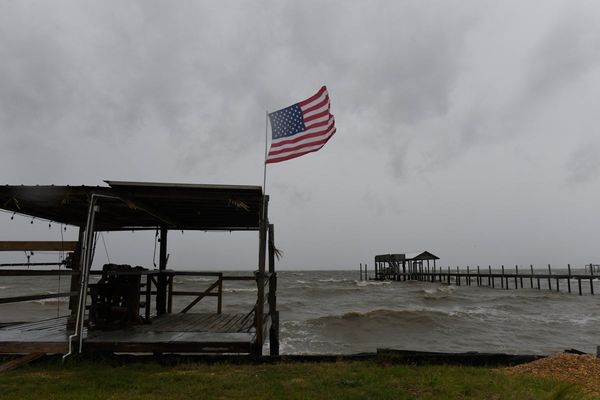
It’s now the witching-hour outside the Cop30 negotiating rooms

It’s passed 10pm in Belem on what should be the final day of negotiations. But it probably won’t be.

Negotiators are locked away in rooms pouring over texts.

Outside, it can be difficult to know what to do. Except wait, sleep, rush for a flight, go back to your bed or something else.

Our correspondents have been trying to capture this witching-hour vibe. They will be familiar scenes to anyone who has been to a Cop.

A game of football has also broken out. It is Brazil, after all (and yes, there is a football in this picture if you look closely).

Will Cop30 be able to close the gap to 1.5C or be “deadliest talk show ever”?

Also at stake at Cop30 is the question of how countries respond to the fact that current national climate plans, known as nationally determined contributions, would lead to about 2.5C of heating above preindustrial levels, far above the 1.5C limit target set by the Paris agreement.

One delegate from the Alliance of Small Island States said issue was critical to vulnerable countries, but the draft text contained only options to continue talking about the large gap between countries’ targets and the carbon cuts necessary to stay within 1.5C or as close to it as is now possible.

Harjeet Singh, from the Satat Sampada Climate Foundation, warned if there was not progress in the final hours, the meeting would “go down as the deadliest talk show ever produced”. He said:

Negotiators spend days discussing what to discuss and inventing new dialogues solely to avoid the actions that matter: committing to a just transition away from fossil fuels and putting money on the table.

How do you stop 50,000 climate conference delegates from overheating? Ask Olmo.

A chill is passing through the Cop30 negotiating halls as night falls on the scheduled final day of the climate conference in Belém.

It is neither a shiver of dread that the Paris Agreement may be breaking down, nor, sadly, a frisson of excitement that an important breakthrough might be imminent.

No, this cold sensation - felt by many shivering participants - derives from the venue’s vast air conditioning system, which has struggled for the past three weeks with the challenge of providing a tolerable temperature for the 50,000 attendees.

Climate conferences are often accused of being full of hot air, but that’s rarely been as literally true as at Cop30 where engineers have had to deal with equatorial heat outside the tent and the fluctuating energy generated inside by the throngs of people passing through the halls.

The target temperature is 24C, according to the host country agreement that Brazil signed with the United Nations, but it has sometimes proven hard to hit, particularly in the pavilion era, where barriers block the flow of air in one of the most crowded parts of the venue.

Tim Lenton, a planetary scientist who was visiting Belém to warn negotiators of dangerous tipping points in the climate system, kindly offered a back of the envelope calculation about the challenge. He said:

“A sitting human has 100 Watts power output. A running human would be around 300 Watts or more. Walking, around 200 Watts."

With tens of thousands of delegates in the centre at any one time, that can add megawatts of energy, much of it in the form of heat.

Then there is the tropical sun, which can heat the most exposed parts of the tent to 50C at the hottest part of the day.

Countering this, the organisers have deployed 200 giant air conditioning units - the relentless drone of which has provided the dystopian soundtrack to this conference, sometimes making it difficult to hear what people are saying.

Even so, the system can sometimes struggle. Staff at the help desk say roughly four in ten of the complaints they hear every day are about the heat.

Then there is the cold.

When sensible people leave at the end of the day - like now - their radiant heat goes with them, leaving the giant venue so excessively cooled that many people have to put on extra layers or coats.

The head of Brazilian organising committee’s Olmo Xavier, told The Guardian there is no giant thermostat that can regulate the entire 160,000 square meters of Blue Zone - which is bigger than any conference centre in Brazil - so it requires constant adjustment and daily consultations with the United Nations to get as close to the 24C target in as wide an area as possible.

“We have succeeded in the vast majority of this challenge,” he said, though acknowledges “there were some points where we had more difficulty.”

Temperatures, he said had ranged from a high of 28.2 degrees, down to 17.3 degrees.

Then there are the thunderstorms that have shaken the conference centre most afternoons, and brought torrents of rain, some of which has leaked through the roof.

The Yanomami Shaman Davi Kopenawa Yanomami said he called these deluges onto the venue to remind people inside this artificial negotiating bubble of the power of nature.

That lesson should be well heeded.

Humanity’s struggle to comfortably control the temperature in this space-ship-like COP structure throws into relief how much harder it is for us to manage the warmth on the 3 billion times bigger surface of the Earth.

Nature, of course, had been doing that very effectively for eons.

Turkey and Australia agree details for Cop31 talks

Pulling up from the deep divisions at Cop30 for a moment: Turkey and Australia have reached a deal in the protracted fight over hosting arrangements for Cop31. They are unusual, to say the least.

As previously reported, Turkey will host the event in the Mediterranean resort city of Antalya after Australia effectively dropped its bid to co-host with Pacific island nations.

Australia conceded despite having overwhelming support in the Western Europe and Others Group of countries, known as Weog, that had responsibility for deciding next year’s host.

Under UN rules, the decision needed to be made by consensus, Turkey refused to withdraw and some senior members of the Australian government had grown cold on bringing the conference to the South Australian capital of Adelaide.

Turkey will take on the Cop31 presidency and an Australian will be appointed vice-president of the Cop and “president of negotiations”.

According to the agreement, the Australian in that role - already flagged to be the country’s climate change and energy minister, Chris Bowen - will have “exclusive authority in relation to the negotiations” .

It says if there is a difference of views between the two countries “consultations will take place until the difference is resolved to mutual satisfaction”.

Turkey will have responsibility for all operational and logistical responsibilities, be responsible for the action agenda and appoint a high-level climate champion. It will appoint a youth champion proposed by Australia.

Australia will take responsibility from the end of Cop30 for convening negotiations and meetings through the year, selecting ministerial and other co-facilitators, producing draft texts at Cop31 and being the focal point for engagement with the UNFCCC on the negotiations.

It will also preside over a Pre-Cop31 meeting in a yet-to-be-decided Pacific island country. The agreement says this “will be an opportunity for a number of leaders and others to see Pacific climate impacts and responses first hand, hear voices and solutions from the region, and support Pacific-led initiatives”.

The arrangement has been backed by Weog nations but still needs to be formally signed off in the plenary.

Call for fossil fuel exit roadmap remains divisive at Cop30

More than 80 countries - developed and developing – have backed the call for a roadmap to “transition away from fossil fuels” in Belem, but scores of countries are against it.

The Arab Group, of which Saudi Arabia is the most prominent member, has led the opposition, but Russia, Bolivia, some African countries and some countries that are heavy consumers of fossil fuels have also rejected the wording.

The EU was also urging countries behind the scenes to come out publicly in favour of the transition away from fossil fuels.

Climate commissioner Wopke Hoekstra earlier on Friday called the text without the commitment “unacceptable”. He said

“Given that we’re so far away from where we should be, it’s unfortunate to say, but we’re really facing a no-deal situation.”

A few developing countries with fossil fuel interests, including Nigeria and Sierra Leone, have backed a potential roadmap.

But some developing countries have been angered by the insistence on a fossil fuel phase-out.

Richard Muyung, envoy to the president of Tanzania, and current chair of the African Group of Nations, accused rich countries including the EU of holding the poor to ransom on the issue.

He claimed they were opposing Africa’s call for a tripling of the finance available to poor countries to help them adapt to the impacts of the climate crisis, to about $120bn a year, because some African countries would not back the fossil fuel roadmap. He said:

The phase-out of fossil fuels is not an African issue. We emit only 4% of total global emissions, and we have never discussed a phase-out. We have been discussing a phase down.

Why are we being held to ransom? It’s like you are trading our lives with something we never caused. So they were saying, ‘If you do not accept phase out, we cannot give you the triple of adaptation.’ We said, ‘We cannot accept that.’”

We already compromised a lot. But we cannot compromise on the tripling of adaptation finance.

Juan Carlos Monterrey, Panama’s special representative for climate change, had a different view.

What we have also seen is the EU are willing to engage constructively on adaptation finance. I have had direct conversations with them and the UK. But I also understand that we need more ambition [on cutting fossil fuel emissions] in the text for them to open up the chequebook a little bit more. The two go together.

The Guardian understands from various countries’ delegates that China is not among the countries blocking a fossil fuel phase-out roadmap, while India has taken a harder line by insisting developed countries bear responsibility for past greenhouse gas emissions.

UK energy secretary says “one way or another” Cop30 summit will have fossil fuel transition roadmap

Supporters of a global phase-out of fossil fuels must find “creative” ways to keep the proposal alive, including making it voluntary rather than binding, the UK energy secretary Ed Miliband has said during the closing stages of the UN climate talks.

As the Cop30 summit in Brazil carried on past the Friday night deadline, the prospect of countries agreeing on the need for a roadmap to a global “transition away from fossil fuels” looked increasingly dim.

A first draft of the potential outcome text from the summit had contained the formulation, but the updated draft text produced on Friday by the Brazilian presidency excised the pledge.

Miliband told the Guardian that “one way or another” there would be an outcome from the two-week summit that contained the pledge, but that it might be in an altered form, or could be a voluntary initiative rather than a binding commitment. He said:

We are fighting for the roadmap for the transition away from fossil fuels, and we’ve determined that one way or another we won’t lose the momentum [towards that outcome] that we’ve built at this Cop. There’s a big coalition that wants this, of developing and developed countries.

We need to to think creatively about the possible ways in which we could get this roadmap process going.

What matters to me is the outcome, that this roadmap gets launched, the countries can engage in it, and it gets to be considered by a Cop in the future. We’ve got a critical mass of countries that want that to happen. But there’s different ways of doing it. We’re looking at all of the creative ways in which that can happen.

Updated

Observers on the prospects of a weak deal in Belem

Here are a few comments that have come through from observers at Cop30 on the negotiations over the final text which continue into the evening in Belem.

They are not particularly positive.

Director of the International Climate Politics Hub Cat Abreu warns countries are not being allowed to work up plans on key issues.

The clock is ticking down on COP30 and the level of ambition is heading down the drain. Brazil have been fantastic hosts in Belem but at this late hour the Presidency is throttling this process and not allowing countries to work up a credible plan to cut fossil fuels, end deforestation, deliver climate finance and adapt to climate impacts.

If we leave here with a few words but no clear action this summit will have failed to live up to expectations on the tenth anniversary of the Paris Agreement.

Joab Okanda, a climate, energy and diplomacy expert, says Africa “can’t afford to leave Belem with a weak deal.”

As Kenya’s envoy and Sierra Leone’s Minister of Environment stressed, Africa also needs support to invest in its energy transition and deliver renewable energy access for all. A credible roadmap that delivers both would be a truly positive outcome for Africa at COP30.

Dr Rachel Cleetus, senior policy director for the Climate and Energy program at the Union of Concerned Scientists, says the latest texts are weaker than earlier versions and “disappointing across the board.”

The COP Presidency must intensify its efforts to bridge differences, including in open and transparent plenaries in these final hours, to secure an ambitious outcome at COP30.

Fossil fuels are the root cause of the climate crisis and there is no credible pathway to meet science-based climate goals without a fast, fair, funded phaseout of fossil fuels.

Lower income nations cannot make this transition rapidly, nor can they close the vast energy poverty gap that millions suffer from today, without funding from richer countries. Public finance is essential.

“Simply catastrophic,” says Panama of current climate text at Belem.

The Guardian’s Damian Carrington has been speaking to Juan Carlos Monterrey, Panama’s special representative for climate change.

Normally a fluent, firebrand speaker, Monterrey said:

I’m honestly at a loss of words.

There is not much movement. We’re still negotiating with a text that for Panama is just simply catastrophic - a text that fails to mention fossil fuels or deforestation, the most important drivers of the climate crisis, a text that favours the very same [fossil fuel] industries that are causing this destruction to the detriment of everybody else.

What’s sickening is the fact that some groups of countries are accepting these texts.

We’re counting on the EU and the block of Latin American progressive nations that we belong to continue pushing for ambition. But we we feel lonely sometimes.

The EU and other developed nations have been criticised for not strengthening their commitment to providing climate finance to developing countries, especially for adaptation, i.e. protecting people against extreme weather supercharged by global heating.

Monterrey said that was fair to a point:

But what we have also seen is the EU are willing to engage constructively on adaptation finance. I have had direct conversations with them and the UK. But I also understand that we need more ambition [on cutting fossil fuel emissions] in the text for them to open up the chequebook a little bit more. The two go together.

“Wins for nature still feel distant” says major US conservation group

Some words here from Clare Shakya, the global managing director of climate at The Nature Conservancy, as Cop30 waits for an expected new draft of a final text. It’s 7.30pm in Belem now.

Whatever the final outcome, Brazil deserves real credit for pulling many of the toughest climate issues into the open in Belém.

Nature is back in the heart of talks, from deforestation and finance to Indigenous rights and adaptation, making this the most wide-ranging COP agenda since Paris. However, landmark wins for nature still feel distant at this time.

Shakya says parties at the conference “will need to show a hell of a lot more ambition in the final text for it to be considered a success.”

Thanks to Oliver Milman for that sterling effort steering the blog. This is Graham Readfearn in Brisbane taking over.

We are still at it in Belem on the final day of this fractious 30th Conference of the Parties – or Cop30 for short. And Friday is almost never the final day at UN climate talks.

Thanks for sticking with us. On we go.

Rich countries not doing enough on finance says Pakistan

Aisha Humaira, the head of delegation for Pakistan, has said that laying the blame on developing countries for lack of progress towards a transition away from fossil fuels is unfair while developed countries refuse to provide the finance needed for it to take place fairly.

“It is an issue of climate justice, the burden that developed countries carry for the climate chance happening now that needs to be fulfilled,” she told the Guardian. “It is part of the Paris Agreement that they have to pay developing countries to make the transition. That’s why article 9 is very important – and tripling the adaptation fund is not a huge demand.”:

Humaira said that adaptation was crucial for her country, which was facing intense impacts from climate change, including devastating floods and sweltering heatwaves. But she said that it was unfair for developed countries to expect countries like hers which still have widespread poverty to sacrifice economic growth. Countries like Pakistan and their peers needed technology, finance and support from the global north in order to make the transition.

And she pointed out the hypocrisy of developed countries asking the developing work to make a transition to clean energy they have not yet achieved.

She said: “Countries that have used all sources of energy in the last 200 years and have achieved the pinnacle of industrial growth and yet not stopped using all those sources of energy are telling us “stop growing”. The right to growth and security is fundamental for every country.

“That is the issue. Every individual is important. If a citizen in a developed country wants to live a high quality of life then the same right also exists in a developing country.”

Updated

Africa is still pushing for a tripling of the finance available from rich countries to help the poor world adapt to the impacts of the climate crisis. “We already compromised a lot,” said Richard Muyungi, Tanzania’s presidential envoy and current chair of the African Group of Nations. “But we cannot compromise on the means of implementation, the tripling of adaptation finance.”

He said developed countries demanded the group’s support for a roadmap to “transition away from fossil fuels” as the price of any support for an increase in adaptation finance.

Muyungi argued: “The phase-out of fossil fuels is not an African issue. We emit only 4% of total global emissions, and we have never discussed a phase-out. We have been discussing a phase down.”

He asked: “Why are we being held to ransom? It’s like you are trading our lives with something we never caused. So they were saying, ‘If you do not accept phase out, we cannot give you the triple of adaptation.’ We said, ‘We cannot accept that.’”

He said the group had been put under pressure to accept the removal of language calling for an increase in adaptation finance from the draft text of an outcome. But he replied: “Adaptation is a just request for the continent, and has nothing to do with the discussions on phasing out.”

This would require about $120bn a year in finance for adaptation. Developing countries can gain access to finance from the private sector for the technology they need to cut greenhouse gases and shift to a low-carbon economy, such as wind and solar power. But getting the private sector to invest in adaptation projects – such as defences against flooding, or changing the crops that farmers grow – is almost impossible.

Developing countries want more of the finance for adaptation to be delivered in the form of grants, not loans. However, developed countries have insisted on arduous “indicators” showing how the money is spent, which has been another bone of contention at these talks.

On the transition away from fossil fuels, Muyungi previously told the Guardian that Africa should be allowed to exploit its fossil fuel reserves, as rich countries had exploited theirs. Tanzania has large gas reserves, which it is planning to exploit in partnership with Saudi Arabia.

“Cop30 still has a choice – to protect people and life or the fossil fuel industry.” That was the message delivered directly to President Lula by eminent climate scientists here at Cop30 in Belém, led by Prof Johan Rockström, from the Potsdam Institute for Climate Impact Research in Germany. The scientists laid out the simple scientific reality.

“The global curve of greenhouse gas emissions needs to bend next year, 2026, not sometime in the future,” they told him. “We need to start, now, to reduce CO2 emissions from fossil-fuels, by at least 5% per year. This must happen in order to have a chance to avoid unmanageable and extremely costly climate impacts affecting all people in the world.”

To phase out fossil fuels quickly, the scientists said finance from rich countries to developing countries was imperative: “Without scaling and reforming climate finance, developing countries cannot plan, cannot invest and cannot deliver the transitions needed for a shared survival.”

“The global carbon budget, calculated by science, forms the backbone to guide the pace of emission reductions [needed],” the scientists said. “The remaining carbon budget [for 1.5C] is now essentially consumed, down to 130 billion tons of CO2, equivalent to 3-4 years of global emissions at current rate.

“This scientific budget provides the basis for all serious climate policy. It is our accounting tool away from danger. Removing the carbon budget from the text, means removing reality from the Cop.”

Our Kids’ Climate, a campaign group of parents, released a short film on Friday of the Global Climate March on the streets of Belém - it captures the colour and energy of the march.

Their message to the countries negotiating at Cop30 is simple: “Parents are watching. Our kids deserve a fighting chance of a safe, thriving future. Look at the energy and passion on the streets of Belém. We need a fair, fast shift from fossil fuels to clean, renewable energy to protect what we love: our kids and our planet.”

Updated

Arab countries reject fossil fuel phase out as EU warns of Cop deal collapse

The Arab group of nations at COP30 has insisted its energy industry is off limits and any mention of the subject would lead to a collapse of the climate talks, according to NGO observers.

The European Union has meanwhile warned that Cop30 could finish without any deal because the countries are so far apart.

At a “multirao” meeting of delegates that aims to close the gulf in positions, the bloc of 22 middle-eastern oil-producing countries reportedly said it would not accept any language relating to roadmaps for a fossil fuels transition.

It gained the support of the African group (AGN), which said it represented 54 countries, the observers said. The Africa group opposed any attempt to put conditions (reducing fossil fuels) on implementation (adaptation funding).

The claims by the AGN to speak for all of Africa were disputed by other countries which pointed out that several African nations had expressed public support for a phaseout roadmap, and insiders claimed that several others were also on board but not yet saying so publicly.

The current chair of the AGN group is Tanzania, which has significant gas reserves that it is seeking to exploit with partners including Saudi Arabia. “It is clearly untrue to claim they speak for all of Africa,” said one person involved in the talks.

A contrary view was put forward by the European Union, which warned there was a clear risk that COP30 would not reach an agreement, according to NGO observers. The EU was also critical of the negotiating process, saying that it now doubted the Brazilian host’s promise that this would be “the Cop of truth.”

The European Union’s commissioner for climate, Wopke Hoekstra reportedly expressed dismay at the current text saying there was no science, no mention of a transition for fossil fuels, no global stocktake. Instead, he complained there was only weakness and a clear breach of last year’s agreement on climate finance goals. He told the session that there were no circumstances under which the EU would accept what was on the table.

He is said to have proposed new language to recognise the need for annual follow-ups of each government’s climate plans, known as NDCs (nationally determined contributions) and emphasised the need to keep the 1.5C warming target alive in practice and implementation.

The top priority, he reportedly said, was to transition away from fossil fuels - and if countries delivered on mitigation together then they could ask the EU to move out of its comfort zone on adaptation financing.

The Latin America group is said to have joined Europe in saying the current package of texts was unacceptable, criticising its lack of ambition, failure to respond to the UN’s top climate science body and lack of linkages between climate and nature.

The least developed countries and small island states, which are most threatened by the climate crisis, demanded language to keep the target of 1.5C alive.

The Coalition of Rainforest Nations said reducing deforestation had been relegated to a preamble in the text, even though it was essential for the 1.5C target, according to observers from the Rainforest Foundation Norway.

The UK said the package was not ambitious enough and re-iterated the EU stance that there could be more flexibility on finance if countries were more ambitious on limiting warming emissions.

The Brazilian presidency was then said to have indicated that a roadmap to transition away from fossil fuels was off the table. Although Colombia said more than 80 countries supported the idea, Saudi Arabia had said this issue was a red flag. The president therefore suggested it was impossible to have a debate on something that cannot get consensus.

The hosts then reportedly suggested countries formed huddles to debate contentious issues, to which Russia was opposed, while Saudi Arabia said it would not huddle on any roadmaps.

It looks set to be a long and bruising night.

Additional reporting by Fiona Harvey

Finance needed to unlock climate adaptation is missing

Billions of people are already facing drought, food insecurity, floods, extreme heat and sea level rise, so adaptation is key to tackling global heating especially for developing countries facing the brunt of climate impacts but which have the least resources to adapt.

The global goal on adaptation (GGA) was first proposed by the African Group of Negotiators in 2013, and adopted under article 7 of the Paris agreement with the aim of “enhancing [the world’s] adaptive capacity, strengthening resilience and reducing vulnerability to climate change.”

GGA was meant to drive political action and finance for adaptation on the same scale as mitigation, but largely languished until Cop26 in Glasgow, when a working group was established. Finally, two years later at Cop28 in Dubai, a strong framework was agreed that includes broad themes such as water, health, agriculture, cultural heritage and public infrastructure, as well as more specific goals on impact based forecasting systems and hazard warning.

Since then, states have been focused on coming up with quantified, measurable adaptation targets as well as measures to mobilize finance, technology and capacity building - known collectively as the means of implementation - all of which are critical to driving adaptation and key to common but differentiated responsibility (CBDR) that oblige wealthy polluting nations to help developing nations who have contributed least to this mess.

The draft text on the GGA has a list of detailed indicators to measure progress on the adaptation targets, and which seem to include some, but not all, of the demands from developing and developed countries. For example it states:

  • Emphasizes that the Belém Adaptation Indicators are voluntary, non-prescriptive, non-punitive, facilitative, global in nature, respectful of national sovereignty and national circumstances and country-driven, and that the indicators should not create additional reporting burdens, particularly for developing country Parties, are not intended to serve as a basis for comparison among Parties, shall not become a barrier and shall not be used under any circumstances as a condition for developing country Parties to access funding under the Convention and the Paris Agreement

  • Also emphasizes that the Belém Adaptation Indicators do not create new financial obligations or commitments, nor liability and compensation

But, as Mohamed Adow from Powershift Africa likes to say, no matter how much you measure a cow, the cow won’t get bigger if you don’t feed it. “If you have a mechanism to weigh and scale the cow, you must also have a mechanism to fatten the cow through the provision of more finance.”

In addition to developing countries pushing for a separate adaptation fund (which is being negotiated as part of the main mutirao decision), they have been united on linking during each GGA indicator to means of implementation - in order to help track the finance gap that they simply cannot fill without the international cooperation required under international law, according to the Paris agreement and the ICJ ruling.

This is currently missing from the draft text, in a big win for developed countries.

Observers say that it’s this same roadblock around means of implementation that has paralysed progress on national adaptation plans, as developed countries steadfastly refuse to budge on providing fair finance, technology and capacity building needed for states to adapt their food, water, infrastructure and health systems.

“Finace is what unlocks progress. It’s the catalyst to adaptation - and all climate action, so if you don’t have the catalyst you won’t see progress,” Meena Raman from Third World Network said. “Without a clear link to means of implementation in the GGA, the developed countries must reciprocate this compromise with an ambitious, fair new adaptation finance goal.”

By 2035, developing countries will collectively need at least $310bn in adaptation finance per year in 2035. Yet international public adaptation finance to developing countries was $26 bn in 2023, down from $28 bn the previous year. The pact to double adaptation finance by 2025 made at Cop26 in Glasgow has not been met. The call from developing countries to triple that doubling is still under negotiation in Belem. And the draft text on the GGA, point 34, has been left empty for when this drops.

Updated

At Cops, both the countries and the campaign groups have their agendas which they are understandably fighting for. Finding neutral voices is more difficult, but some thinktanks come close to this, including E3G.

Alden Meyer, at E3G senior policy advisor says: “We’re in crisis in these talks. We can come out of here with something which is worthy of the call [by leaders at the start of Cop30] for multilateral collaboration and moving the Paris Agreement forward, something that meets the needs of people around the world, or we can come out of here with a very disappointing outcome.”

“The choice is now down to ministers,” he said. “I’d also say it is down to world leaders from the biggest countries meeting now [at a G20 summit] in Johannesburg, South Africa. President Lula is there and we believe he is talking to fellow leaders to try to get some signals back into this process from across the ocean, to try to strengthen the political will in the final hours.”

Alden said the European Union and other developed countries needed to improve their position on providing the promised $1.3tn of climate finance by 2035, and particularly for tripling adaptation funds, used to protect people from climate impacts: “I think that can unlock some trust and momentum from the vulnerable countries.”

In return, he said, “vulnerable countries and the Africa group need to be more willing to entertain reducing emissions and making the just transition to a sustainable energy future”.

Alden said there were multiple groups of countries on both sides threatening to walk away from a deal if they didn’t get what they needed.

Lily Harzmann, also at E3G, said the $1.3tn climate finance currently only has a “passing mention” in the draft text. “That is a disappointing outcome given the widespread recognition of the need for progress on channelling this level of financial resources into developing countries,” she said. “The formulation [on the tripling of adaptation finance] we have in the text at the moment is vague and it’s weak.”

The negotiations continue behind closed doors, with the Brazilian presidency having created “huddles” of nations to thrash out specific issues. A new text is expected later today.

Climate talks set to stretch into weekend as countries clash over ending fossil fuel era

It’s well into Friday afternoon in Belem and a contentious and sometimes incandescent Cop30 looks set to go into extra time (or overtime, for the Americans among us). Here are where things stand, according to the incomparable Fiona Harvey:

Climate crisis talks looked set to stretch well into the weekend in Brazil on Friday, with countries still far apart on the crucial issues of phasing out fossil fuels and cutting carbon.

Andre Correa do Lago, president of the talks, urged ministers and high-ranking officials from more than 190 countries to find common ground: “We need to preserve this regime [of the Paris climate agreement] with the spirit of cooperation, not in the spirit of who is going to win or is willing to lose. Because we know if we don’t strengthen this, everybody will lose.”

But on the core issue of a “transition away from fossil fuels”, no agreement looked likely and the conference has split into two large blocks. More than 80 developed and developing countries have called for the conference to begin a process of drawing up a roadmap for the transition, which would allow all governments to pursue their own self-chosen measures and timetable towards the eventual goal.

Even this – derided by some civil society groups as too weak – was unacceptable to a separate group of more than 80 countries, according to Corrêa do Lago. This bloc includes Saudi Arabia, Russia and some other petrostates, as well as some countries dependent on consuming fossil fuels. At their insistence, references to the roadmap were excised from a draft text published early on Friday morning.

Correa do Lago told the Guardian on Friday: “This issue [of a roadmap] has grown in importance. But more than 80 countries have said it is a non-starter. My president has said it is a priority. But we will see, as many countries have clearly said that they do not want this at the moment.”

A new draft text was expected late on Friday night or early on Saturday morning in Brazil, but several people involved in the talks warned it might have only minor “tweaks”. If so, this will bitterly disappoint those calling for stronger language on fossil fuels and the need to limit global temperatures. One developed country told the Guardian: “The Brazilians are only listening to the Arab Group.”


People of African descent have been specifically mentioned in a UNFCCC Cop text for the first time, but critics have called the mentions “perfunctory and secondary” and called for greater recognition.

The Global Afrodescendant Climate Justice Collaborative (GACJC) said in a statement that afro-descendant people were referenced across multiple strands of negotiations.

This breakthrough reflects years of Afro-descendants organising across the world. It opens the door for meaningful participation, data inclusion, and climate justice for our communities.

The mention comes after a concerted campaign for the mention of Afro-descendant peoples as a group that faces specific challenges related to climate breakdown. There had been a push to get afro-descendants mentioned in at least four operational areas, including gender, finance, just transition and adaptation.

According to the UN Working Group of Experts on People of African Descent, Afro-descendant populations represent approximately 200 million people worldwide, including descendants of the victims of the transatlantic slave trade forcibly displaced into the diaspora across the Americas and the Caribbean.

The texts are not finalised, and campaigners say that unresolved issues could still “torpedo the whole thing”. “Nonetheless we are calling it a win to have people of African descent in the draft decisions,” said Mariama Williams of the GACJC.

But some campaigners said the outcome fell far short of what had been hoped for at Cop30. Anthony Karefa Rogers-Wright, with the US based Black Alliance for Peace, said:

We came down here with specific demands and goals, so it’s the equivalent of going to expect to eat a full meal and only being given appetisers. There is the word ‘Afro-descendant’ in a few sentences, keeping in mind that none of these documents are legally binding, whereas the demand was to be installed as a full standalone constituency in the UNFCCC framework.

This is an attempt to curtail and assuage concerns with some very perfunctory and secondary prizes instead of the grand prize – it’s a continuation of the myriad ways the UN and far too many governments continue to dehumanise specific Afro Descendant challenges while perambulating our material conditions altogether.

While I respect the decision of some Afro Descendant groups to claim a few tawdry mentions as a “win” I would also remind them what the great Amilcar Cabral once noted, “tell no lies and claim no easy victories.”

Until we demand our whole damn dollar, we’re going to keep leaving these COP conferences with chump change.

Updated

It’s the final (scheduled) day of Cop30 and like the final days of previous climate summits there is mix of hope, frustration and deep exhaustion among the thousands of delegates.

Climate activists have made their presence felt and leading figures such as Irene Velez Torres, Colombia’s environment minister who has led a charge for a fossil fuel phase out in Belem, are in high demand.

For others the overriding feeling is one of fatigue after a two-week gathering that is winding towards an as-yet indeterminate, and potentially unsatisfying, ending.

Fresh from his whirlwind visit to Cop30, António Guterres has arrived in South Africa for the G20 gathering.

In remarks to the media in Johannesburg, the UN secretary-general didn’t mention the contentious issue of a fossil fuel phase out, instead reiterating his call for wealthy countries to step up financially for those worst affected by the climate crisis. He said:

The ongoing COP30 meeting demonstrates how much work needs to be done.

Countries have failed to keep temperatures to the 1.5C temperature rise limit. Science tells us that a temporary overshoot above this limit is now inevitable.

We must make this overshoot as small, short and safe as possible. Avoiding more climate chaos means bridging the adaptation gap – urgently. That requires a massive scale up of financing.

While countries remain deadlocked in Belem on the crucial issue of phasing out fossil fuels, advocates from the UK have been cheered by other aspects of the draft text. ‘Fossil fuels’ may not be there but ‘just transition’ is, as my colleague Damien Gayle explains:

Asad Rehman, chief executive of Friends of the Earth, has described the inclusion of working in the Cop30 text of a “just transition mechanism” as “northing short of momentous”.

In a rare upbeat moment for civil society organisations at the UN climate talks, several have now come forward to praise the inclusion of reference to the just transition, which comes after years of campaigning.

Rehman said:

It’s nothing short of momentous that a mechanism for a fair and just transition has made it into the draft text. This injects some hope that this process can deliver concrete outcomes and that we can secure a transition to a greener future that is fair, just as well as clean.

This victory comes after tens of thousands of our supporters in the UK stood alongside a global movement representing workers, climate justice campaigners and youth organisations who not only got it on the table, but were instrumental in making sure it stayed in the text. This reaffirms what we’ve always known: people power is the answer. By harnessing our collective strength we have changed the conversation at these talks.

As Damien notes, ‘just transition’ does indeed feature in the draft text, although it appears within a list of noted advances, such as loss and damage, that have occurred in recent years. It doesn’t mention the mechanism that many have been pushing for in Belem, which means any jubilation on this could be slightly premature.

Thank you to my colleague Matthew Taylor for his sterling work helming the blog thus far.

I’m Oliver Milman in New York and I will be taking on the blog for the latter stages of what is scheduled to be the final day of a Cop30 summit that has brought floods, fire and now (metaphorically at least) quagmire. We will see how things unfold from here.

But Bas Eickhout MEP, member of the European Parliament’s delegation to COP30, has a less optimistic take.

With this text as it stands, no deal is better than a bad deal. Failure to reach an agreement on a roadmap to transition away from fossil fuels would not only be a big win for petrostates, but also for Trump and his hard right allies.

We will continue to push for a strong agreement that includes the phase out of fossil fuels and tripling ambition on climate adaptation. No one can seriously expect us to win the fight on the climate crisis if we don’t deal with the elephant in the room: phasing out fossil fuels.

Updated

The key draft text issued by the Brazilian presidency has infuriated many nations - Prof Michael Jacobs, a political economist, argues it is a tactic.

The text does not include either a roadmap to transitioning away from fossil fuels” wanted by a large group of developed and developing countries, nor a commitment to a tripling of adaptation finance - money from rich nations to protect poorer communities from climate impacts.

Writing on LinkedIn he says: “By issuing a text that leans so far to one side - in this case, towards the Arab Group and Like-Minded Group (China, India and some other developing countries) - the presidency is seeking to provoke a public row in the plenary session. This will tell the Arab Group and LMDCs that they have to compromise. Brazil will then be able to pressure them to accept a text more acceptable to the Least Developed Countries group, Latins, islands and developed countries.”

Carbon Brief has a quick update on its “When will COP30 end?” sweepstake and it is tough reading for sleep deprived delegates…

The deadline for submissions was 23:59 last night. Thanks to the more than 300 of you (?!) who entered your guesses for when you think the gavel will go down in Belém.

My colleague Robert McSweeney has crunched the numbers and says the median time across all the entries is exactly 7pm tomorrow. (That’s Saturday for those of you who are losing track of which day it is.)

Updated

Most Americans say the US should take ambitious climate action with or without other countries.

From centrist politicians to hardline activists, Americans at Cop30 are repeating one refrain: Donald Trump doesn’t represent us on climate policy. A new poll shared exclusively with the Guardian lends credence to that sentiment.

A strong majority of US voters — 65% — believe the US should undertake ambitious climate action even if other states do not, shows the new survey from progressive polling group Data for Progress. That includes majorities of Democrats and Independents at 85% and 63% respectively. And it includes a plurality, 47%, of Republicans 47%.

By contrast, just 25% of voters said that the US should not take bold climate action if other countries fail to do so.

Perhaps even more strikingly, a majority of US voters — 55% — support a global phaseout of fossil fuels, like coal and oil, shows the new poll. These fuels are responsible for some 90% of all planet-heating carbon emissions.

Most voters also said the US should also make its own national commitment to phase out fossil fuels. 54% of voters — including 74% of Democrats and 54% of Independents — backed a national phaseout by the century’s end.

The new data was based on a web panel held last week, to which 1,224 U.S. likely voters responded. The sample was weighted to be representative of likely voters by age, gender, education, race, geography, and remembered presidential vote.

Updated

Elisa Morgera, the UN special rapporteur for human rights and climate change, said the draft text does not comply with the ICJ climate ruling.

There is nothing there that makes any tangible progress and a few instances of explicit regression, including what the ICJ advisory opinion confirmed about states responsibility under international law to show stringent due diligence and highest possible ambition in curtailing global warming to 1.5. Crucially, there is a glaring gap on fossil fuels which under international law, notably international human rights law, states must transition away from with the developed nations which have contributed most to the climate crisis going first.

The transition entails binding obligations to provide sufficient finance, appropriate technologies and good-faith cooperation for developing countries to leap-frog into a renewables-based economy and avoid any further harm from fossil fuels on health, nature and economies, on top of further climate harm. It’s essential to understand that many fossil fuel-producer and exporter countries are defossilizing at home, relying on cheapest and more secure renewables, while increasing the dependence on fossil fuels in the countries most affected by climate change.

The draft text does not align with science, with law, with the legitimate demands of children, youth, frontline communities, the medical profession, the climate justice movements, and ultimately with the very objective of the UNFCCC.

Here’s is an explainer on the ICJ ruling and Cop30 by my colleague Nina Lakhani.

Reaction to the draft text is still coming in. Cop veteran Harjeet Singh, from the Satat Sampada Climate Foundation said:

If the current draft text is accepted here in Belém, COP30 will go down in history as the deadliest talk show ever produced. Negotiators spend days discussing what to discuss and inventing new dialogues solely to avoid the actions that matter: committing to a just transition away from fossil fuels and putting money on the table.

We are done with empty talk as a stalling tactic. Real course correction demands three things right now: Establish the Belém Action Mechanism (BAM) for a true Just Transition; adopt a binding legal roadmap to phase out fossil fuels; and finally, force wealthy nations to open their purses and put grant-based public finance on the table for adaptation and loss and damage. Anything less is a talk-shop leading to death and destruction.

Mohamed Adow, founder and director of Power Shift Africa, also joined the chorus of dismay at the revised text.

After two weeks of talks, COP30 is drawing to a close with proposed final texts that fall dramatically short of what the world needs. What was meant to be a flexible climate agreement designed to ratchet up ambition has instead been whittled down through horse-trading to the lowest common denominator,” he said. “The result is a package that neither reflects scientific urgency nor responds to the lived realities of vulnerable communities already contending with climate collapse.


He said the draft texts were mostly placeholders that postponed ambition on key issues like just transition, adaptation and climate finance to another year.

For Africa and other vulnerable regions, the disappointment is acute. We arrived in Belém with priorities shaped by escalating climate impacts, ranging from droughts and cyclones to floods and food insecurity. Instead of concrete support, what we have now is watered-down language shaped more by politics than by the severity of climatic impacts. The biggest catastrophe of our times is not waiting for governments to gather courage, and communities on the frontlines cannot afford to continue paying the price for global hesitation.

Amid wide expectations that this Cop will continue beyond the scheduled 6pm finish this evening, he refused to give up hope:

There is still a narrow window for leadership. If developed countries step forward with real, grant-based finance, credible timelines and mechanisms capable of coordinating support, COP30 could yet deliver something more than disappointment. The world needs clear commitments, not rhetorical flourishes; coordination, not delay; solidarity, not strategic ambiguity. In the next few hours, there is still time to be ambitious and sincere, and the stakes for vulnerable communities could not be higher.

Updated

As negotiations at Cop30 remain mired over whether the world should ditch fossil fuels, some delegates in Belem have other pressing concerns – their accommodation is about to sail away.

Two large cruise ships docked near Belem to help solve the dearth of affordable hotel rooms at the summit are set to depart on Saturday, whether negotiations are finished or not.

The MSC Seaview and Costa Diadema were chartered by Brazil’s government amid a severe lack of available accommodation for thousands of delegates who arrived from around the world. The two ships, with a combined 6,000 beds, are docked in Belem’s Port of Outeiro, which was upgraded to receive cruise ships ahead of Cop30.

But guests will have to check out by 8am tomorrow, Cop30 organizers said, with some delegates saying they have been told it is best if they depart tonight. “Due to tidal conditions, the ships will depart from the Port of Outeiro later on Saturday morning,” a Cop30 spokesman said.

This means if, as seems likely, Cop30 overruns, delegates will have to scramble to find alternative arrangements. One negotiator said that it took them an hour each day to get to the summit venue on a bus from their cruise ship abode, with loud music from bands playing in corridors often keeping them awake late at night.

“We have to check out and find somewhere, I don’t know where,” said the negotiator. “I just hope it’s not another boat.”

Updated

The UN secretary-general has called out Saudi Arabia’s blocking tactics

The UN secretary-general António Guterres has identified Saudi Arabia as leading moves to block key outcomes at the Cop30 climate summit, the Financial Times has reported. It cites those present at a meeting with EU negotiators as the sources.

In separate bilateral meetings at COP30, those present said Guterres alluded again to Saudi blocking tactics, and noted COP30 talks could fail as a result.

Other European officials also said that Saudi Arabia had been more vehement in stating its positions this year than at previous climate summits. “My read is . . . that the Arab Group is strong-arming the Brazilians [COP presidency hosts],” one negotiator said.

Stephane Dujarric, spokesperson for Guterres, said the attendees’ interpretation of the closed-door meetings was “inaccurate”. “Saudi Arabia’s position that was well known by all was referred to, but not singled out,” he said.

Guterres also identified some developed countries’ opposition to adaptation funding pledges in the meeting with EU ministers, Dujarric said, and had separately met with Saudi Arabia too.

Saudi Arabia has a decades-long history in blocking action on climate change, as environment editor Damian Carrington has set out here.

Updated

Cop presidency issues plea for nations to come together and agree a deal

After a fast moving night, with petrostates accused of blocking a plan for a roadmap to phase out fossil fuels, a large group of developed and developing nations saying that including a roadmap is a red line for them, and civil society accusing rich nations of failing to fulfil their obligations to fund climate action in poor nations, the Brazilian president of Cop30, André Corrêa do Lago, has issued a plea for cooperation.

“We need to preserve this [Paris Accord] regime with the spirit of cooperation, not in the spirit of who is going to win or is willing to lose,” he said. “Because we know if we don’t strengthen this, everybody will lose.”

The world is currently on target for a catastrophic 2.6C of global heating and funds to protect people against climate impacts are puny. “Extreme weather events are telling us that the work we do here is urgent,” Do Lago said. He is usually an energetic and charismatic speaker, but looked tired - he may well have had no sleep last night.

One key message was that the Paris agreement was working and had achieved much more than critics say: ”This regime [caused] not only the action of countries, the action of citizens, but the action of communities, business, technology.” But it must be strengthened, he said.

Cop decisions are made by consensus, giving effective vetoes to small groups of countries, like the fossil-fuel rich Arab group. But Do Lago defended consensus: “The same consensus that exasperates so many people - that is the strength of this regime,” as it sends the most powerful messages to the world.

Do Lago emphasised the huge benefits of climate action: “We are creating a new economy that offers amazing opportunities for growth, amazing opportunities for jobs. This is and has to be a positive agenda. This cannot be an agenda that divides us.” But he said the pull out of the US under climate denier Donald Trump was a challenge.

“But let’s not stress divides now, in the moments we have left to reach an agreement, we need to preserve this regime,” he said.

Do Lago said there was going to be a meeting of all the countries’ ministers this morning to try and thrash out a deal, As things stand, that is a huge task.

Updated

‘The fight continues,’ vows high-ambition nations at Cop30.

To cheers and loud applause, Colombia led a fight back by dozens of countries to try to revive the roadmap for a fossil fuel phase-out on Friday morning as Cop30 entered its final scheduled day.

With this core demand currently removed from the negotiating text at the behest of major oil producing countries, the Colombia environment minister, Irene Vélez Torres warned the Belém climate conference was at risk of being decided by vetoes, rather than ambition.

“The message is unequivocal – we must leave this Cop with a global roadmap that guides us not symbolically but concretely our collective effort to phase out fossil fuels. We need global ownership, a map do camino (roadmap) that truly moves us forward,” she said to a packed and emotional press conference room, flanked by ministers from more than a dozen countries.

In a clear sign of the slow pace of progress at the United Nations talks, Colombia and the Netherlands announced they will hold a first international conference on the transition away from fossil fuels in Santa Marta, Colombia, next april 28-29. They said this will be a separate but complementary process for high-ambition nations.

“We have taken this step because, simply, we cannot wait any longer,” said Maina Talia, Minister for Home Affairs, Climate Change and Environment of Tuvalu, which aims to stage the second such conference in 2027 alongside other island nations. “The Pacific came to Cop30 demanding a survival roadmap away from fossil fuels. Yet this text does not even name the threat to our existence. This process is failing us so we will not wait.”

The planned series of annual conferences would bring together nations, businesses and civil society groups to create an exit ramp from the era of coal, gas and oil by sharing best practices and working together on trade, financing and technology.

During the often raucous session, the loudest cheers were for a speech by Juan Carlos Monterrey, the climate envoy for Panama, who called for people outside the conference to make their frustration heard.

“The current text fails the Amazon, fails science, it fails justice, and fails the people,” he said. “There is no mention of phase down or phase out or ending deforestation, nothing.” He said the text was even failing to repeat the language on fossil fuels already agreed in previous years..

Referring to scientific warnings that the world is fast approaching - and may even have passed - dangerous tipping points, he poured scorn on the current iteration of the negotiating text: “Our elementary school kids are reading textbooks that are more science-based and more in line with reality than the text we have here at the climate cop where we are supposed to fix this problem.”

The Brazilian presidency has said it removed the reference to a roadmap because too many countries were opposed, but these forces have not so far gone public - a sign perhaps that they know the vast majority of people in the world want their governments to take stronger climate action.

“We have voices from every single continent. This is a global effort and we are coming together to push at a global level to make sure this happens,” said Tina Stege, Climate Envoy for Marshall Islands. “We are really grateful for the leadership of Marina SIlva and Lula’s call to transition away and for his call to take forward this momentum at G20. Countries all around the world are here to give him the mandate to launch the roadmap. We know there are some who are not convinced but we will not wait, we can’t afford to wait. As a nation that is just two meters above sea level we know that climate action cannot wait. This roadmap is inevitable, it’s happening.”

The press conference wrapped up with defiant words from Colombia’s Irene Vélez Torres. “The fight continues,” she said.

Updated

The EU’s climate chief has warned Cop30 could end without a deal after host Brazil proposed an agreement that does not include a roadmap away from fossil fuels, AFP is reporting.

“What is now on the table is unacceptable. And given that we’re so far away from where we should be, it’s unfortunate to say, but we’re really facing a no-deal scenario,” European Commissioner for Climate, Wopke Hoekstra, told reporters at in Belem.

We understand Hoekstra is due to speak in more detail soon and will say: “This is in no way close to the ambition we need on mitigation. We are disappointed with the text currently on the table. We are willing to be ambitious on adaptation, but we would like to make clear that any language on finance should squarely be within the commitment reached last year on the NCQG.”

Updated

Cop presidency issues a plea for nations to come together and agree a deal

The Brazilian president of Cop30, André Corrêa do Lago, has issued a plea to the world’s nations to come together and agree a deal here in Belém.

The negotiations are fraught at the moment, with a stand-off over starting a roadmap to phase out fossil fuels, and rows over the provision of climate finance from rich nations to poorer ones.

“We need to preserve this [Paris Accord] regime with the spirit of cooperation, not in the spirit of who is going to win or is willing to lose. Because we know if we don’t strengthen this, everybody will lose.”

Updated

An informal stocktake plenary is now underway [see live feed at the top of the blog]. Here the presidency will update parties on the state of the negotiations.

My colleague Damian Carrington will be keeping across the main developments.

Countries still far apart with little progress made on scheduled final day

With only hours to go before the official end of the Cop30 summit at 6pm on Friday, the talks look nowhere near a conclusion. The fire that broke out on Thursday afternoon disrupted negotiations and forced a delay to key meetings, but that was not the real problem here. The problem is that countries are still far apart on the core issues that will define this Cop.

Those are: the beginning of a process to outline a “roadmap” for the phase-out of fossil fuels; a response to the fact that countries’ national climate plans are inadequate to limit global heating to 1.5C; finance from the rich to help the poor world cope with the climate crisis.

It is now almost a certainty that Cop30 will run into overtime, despite Brazil’s confident predictions earlier in the week of wrapping up the most contentious issues days ahead of schedule. Instead, the rifts among countries appear to have deepened, and criticism of the presidency itself is also growing.

New draft text presented about an hour before dawn broke in Belem on Friday showed key commitments had been excised. There was no reference to fossil fuels, and options to put off any consideration of the weakness of current climate plans to another day.

The draft prompted a pre-emptive letter from dozens of the countries that support a fossil fuel phase-out, revealed late on Thursday night by the Guardian. Those countries – a mix of developed and developing – insisted that an outcome to Cop30 that failed to address the need to “transition away from fossil fuels” was unacceptable.

Yet what countries are being asked to agree on fossil fuels is not even a roadmap in itself – it is a “roadmap to a roadmap”. In its most likely form, it would merely entail governments agreeing to begin a process of consultations in an open forum in which each could make their voices heard, that would last for a period spanning several Cops, of two or perhaps three years.

Each country would be able to set its own path. None would be forced to set an end date for their production or use of fossil fuels. None would be forced to set any milestones along the road, or agree to any specific measures.

In essence, it would only be an agreement to start talking in a little more detail about the promise made in 2023 at Cop28 in Dubai, in paragraph 28 of the decision text from that Cop, to “transition away from fossil fuels”.

The Guardian understands that the Arab Group, led by Saudi Arabia, and some members of the Like Minded Developing Country group, in which Saudi Arabia is also a prime mover, and which also includes smaller developing countries such as Bolivia and Venezuela, are leading the opposition to any discussion or mention of fossil fuels in the outcome text.

Big fossil fuel consuming countries are also said to be against mentions of a phase-out. But China’s position is understood to be ambivalent, and the position of India – which hopes to host Cop33 – is less clear.

And some countries that have fossil fuel reserves are in favour of the transition away – Colombia, despite coal reserves, is strongly championing the move, as is Sierra Leone; Nigeria, a major oil producer, is understood to be leaning towards the phase-out.

The Brazilian Cop30 presidency, which started amid high praise and goodwill, for all the strong preparatory work that the country’s team put in, has begun to come in for some stiff criticism from several countries.

The Guardian has been told that its “shuttle diplomacy” – summoning countries individually or in groups for private consultations with the presidency, in turn – is frustating to some who want a chance to negotiate directly with one another, in something more like the “mutirao” or Indigenous tribal meeting format the Brazil promised from the start.

There is also anger that Brazil “seems to be listening only to the Arab Group” and is giving more power to those who do not want mention of fossil fuels in the text.

Meanwhile, negotiations on how to address the shortfall in emissions pledges compared to what is needed to limit heating to 1.5C above pre-industrial levels are still not concluded, and the options in the text include further dialogue or a “global implementation accelerator” by which countries could voluntarily sign up to take stronger action.

Andre Correa do Lago, Brazil’s Cop president, just before starting the opening plenary told the Guardian: “We are going to have a plenary then engage in groups of ministerial discussions, in which we will have ample time for countries to exchange ideas and to try to make some changes [to the outcome].”

On the phase out of fossil fuels, he said “This issue has grown in importance. But more than 80 countries have said it is a non-starter. My president has said it is a priority. But we will see, as many countries have clearly said that they do not want this at the moment.”

At this point of a Cop, there is often confusion and frustration. Brazil still has some time to resolve these issues – but it’s worth remembering that the host country’s primary stated aim coming into this Cop was to “send a signal that the multilateral process is working”. It will require deep reserves of diplomacy just to prevent this Cop breaking down completely.

Updated

The AFP news agency has an interesting line from France which is claiming that Russia, the Saudis and India are the ones blocking Cop30 deal on fossil fuels.

France said Friday that Russia, Saudi Arabia and India, along with many emerging economies, were the main obstacles to a Cop30 deal on phasing out fossil fuels.
“Who are the biggest blockers? We all know them. They are the oil-producing countries, of course. Russia, India, Saudi Arabia. But they are joined by many emerging countries,” French ecological transition minister Monique Barbut told AFP.
German Environment Minister Carsten Schneider said the latest draft deal unveiled by Cop30 host Brazil “cannot remain as it is” and warned that “negotiations will be tough” on the last day of the UN climate talks in Belem, Brazil.

Updated

At least 29 nations will not sign an agreement with no mention of a fossil fuel phase out

Overnight the Guardian revealed that at least 29 nations supporting a phase-out of fossil fuels at the climate summit had sent a letter to the Brazilian Cop presidency threatening to block any agreement that did not include such a commitment, in a significant escalation of tensions at the crunch talks.

The leaked letter also demanded that the roadmap be included in the outcome of the talks.

Here is the text of letter in full:

Dear Presidency,

We wish to reaffirm our deep commitment to working hand in hand with you to ensure that COP30 becomes a true success—one that demonstrates to the world that climate multilateralism can indeed deliver the implementation results needed to keep the 1.5°C goal within reach. The legacy of the Presidency in making COP30 a milestone moment will depend on the quality—rather than the speed—of the outcome. A text that is inclusive, balanced, and ambitious would reflect the leadership needed to inspire confidence. Conversely, a weak text would be remembered as a missed and regrettable opportunity and would undermine the credibility of the process, of the Presidency, and of the regime itself.

We express deep concern regarding the current proposal under consideration for a take it or leave it. We acknowledge the significant effort made by the Presidency to move the process toward conclusion, and we reaffirm our commitment to engage constructively. However, we must be honest: in its present form, the proposal does not meet the minimum conditions required for a credible COP outcome.

We cannot support an outcome that does not include a roadmap for implementing a just, orderly, and equitable transition away from fossil fuels. This expectation is shared by a vast majority of Parties, as well as by science and by the people who are watching our work closely. The world is looking to this COP to demonstrate continuity and progress following the Global Stocktake. Anything less would inevitably be seen as a step backward.

Third, the exclusion of a roadmap for addressing climate–nature interdependence, particularly to halt deforestation—remains deeply concerning. Not reflecting this signals that even the least contentious issues cannot be agreed.

Fourth, ambition must be matched with appropriate means of implementation. We reinforce that implementation needs to be supported through concrete outcomes on finance, technology, and capacity-building. Without this, ambition remains rhetorical and implementation becomes unattainable.

Finally, we are concerned by emerging narratives suggesting that ambitious countries are slowing progress. This does not reflect the real dynamics. The challenge arises when a package that omits essential elements is presented with the expectation of unconditional acceptance, reflecting only what is acceptable to a limited few. Ambition should not be portrayed as an obstacle; it is the efforts to constrain it that hinder our collective progress.

For these reasons, we respectfully yet firmly request that the Presidency present a revised proposal that reflects the views of the majority and restores balance, ambition, and credibility to the process. We stand ready to work constructively with you toward such an outcome.

This COP remains a crucial opportunity for leadership. But true leadership requires delivering a text that advances the global response to the climate crisis—not one that lowers expectations to accommodate the most reluctant. The success of the Presidency will lie in presenting a balanced and forward-looking outcome, rather than in asking others to accept only what the least ambitious are willing to allow.

The Guardian understands that the signatories include: Austria, Belgium, Chile, Colombia, Costa Rica, Croatia, Czechia, Estonia, Finland, France, Germany, Guatemala, Honduras, Iceland, Ireland, Liechtenstein, Luxembourg, the Marshall Islands, Mexico, Monaco, the Netherlands, Panama, Palau, Slovenia, Spain, Sweden, Switzerland, the UK and Vanuatu.

Updated

The draft text is a detailed and lengthy document but experts are already homing in on what they consider to be the most important aspects.

Ed King from the Global Strategic Communications Council has this take:

This is Brazil’s headliner, so this document is important and worth digging into. Below is a hot-take of the key elements:
*Adaptation - calls for efforts to triple adaptation finance, ‘urges’ developed countries to increase provision of climate finance (para 53, Mutirão).
*Finance - high-level ministerial round table to reflect on the implementation of the $300bn & $1.3 trillion and a 2-year work programme on the provision of finance (para 52, Mutirão).
*Mitigation - no mention of fossil fuels or paragraph 28, but calls for launch of a ‘global implementation accelerator’ as a cooperative, voluntary initiative under the guidance of the presidencies to report back at Cop31.
*NDCs - calls on countries to ‘accelerate the full implementation’ of NDCs [emissions pledges] while ‘striving to do better’ collectively and cooperatively (para 33, Mutirão).
*1.5C/NDC gap - calls for a ‘Belém Mission to 1.5’ aimed at accelerating action to close the gap, also to report back at Cop31 (para 42, Mutirão).
*Trade - dialogues over the next 2 years with UN trade agencies to address trade & climate, slams unilateral measures (para 55-56, Mutirão), no mentions of Brazil’s trade forum.
*Transparency - acknowledges reporting creates burdens (para 56, Mutirão).
Global goal on adaptation - the range of ‘indicators’ related to adaptation has been reduced and adopted, but defined as voluntary and not a basis for financial commitments; contains a placeholder for adaptation finance goal; establishes 2-year policy alignment plan (para 6, 7, 8, 21, 34, GGA).

Meanwhile Simon Evans from Carbon Brief has a snap analysis on Bluesky highlighting the lack of a road map and no mention of fossil fuels. He also points out there is no paragraph 28 [which calls for calls for deep, rapid, and sustained reductions in greenhouse gas emissions to limit global warming to 1.5C].

He also says the latest draft would be a first-ever Cop reference to limiting “overshoot” of 1.5C [above preindustrial levels] stating “its resolve to pursue efforts to limit [warming] to 1.5C [and] to limit both the magnitude and the duration of any temperature overshoot”

Updated

Away from the hustle and bustle of this year’s Cop esteemed Guardian journalist Paul Brown takes a poignant and sobering long view of the process in his last weatherwatch column.

Updated

As we wait for more reaction to the text it is worth catching up with this piece on Saudi Arabia and its role as the biggest blocker of climate action – even while its population wrestle with the devastating impacts of the climate crisis.

Reaction to the draft text issued overnight is starting to come in as Belem wakes up – and it is far from positive.

Bronwen Tucker, public finance lead at Oil Change International, is not holding back:

This is outrageous. We came here to secure a COP 30 package for justice and equity. The Presidency has presented a shamefully weak text that fails to mention fossil fuels, fails to deliver accountability towards rich countries’ finance obligations, and only makes vague promises on adaptation. The Belém Action Mechanism for a just transition needs to be protected at all costs in the final hours. But let’s be clear, we need all of these pillars to work together in one package: the just transition, public finance, and planning for a fair fossil fuel phaseout.

A large group of countries have been vocal in their support for a roadmap to transition away from fossil fuels, but rich parties are still refusing to deliver the debt-free public finance on fair terms that is key to make it happen. Until they stop blocking efforts to address the systemic barriers developing countries face to phasing out fossil fuels, any roadmap will be a dead-end.

On Bluesky the World Wildlife Fund said:

The latest draft text from COP30 is extremely disappointing. Vested fossil fuel interests and big agriculture must be celebrating the lack of any roadmaps to transition away from fossil fuels and to stop deforestation. We call for substantial improvements to stay on a pathway to a 1.5C world.

Greenpeace said the text “fails to raise ambition, protect forests, deliver finance”

Tracy Carty, climate politics expert, Greenpeace International added:

2035 emission targets are wildly off track and this Mutirão text might as well be blank as it does so little to bridge the 1.5°C ambition gap or push countries to accelerate action. There is no option here but for countries to reject it and send it back to the presidency for revision.

She said hopes had been raised by initial proposals for roadmaps both to end deforestation and fossil fuels, “but these roadmaps have disappeared and we’re again lost without a map to 1.5°C and fumbling our way in the dark while time is running out.”

COP30 has shown rising support for a roadmap away from fossil fuels, so the Belem outcome must include it to ensure we end the burning of oil, gas and coal as quickly as possible. Reports and more talks are not enough. We need a global response plan.

Updated

Good morning, Matthew Taylor here and I will be hosting the blog for the next few hours on what is supposed to be the final day at Cop30. It is likely to be a fascinating – and hectic – phase of the negotiations.

Draft texts drop early in the morning with no mention of fossil fuels

The dramatic scenes on Thursday of the global climate summit going up in flames were too obvious a metaphor for anyone to miss. Thankfully no-one was seriously injured, although 13 people were being treated for smoke inhalation.

“Today’s fire felt symbolic of the world we’re living in - a reminder of how quickly things can fall apart when we move fast and without care,” said Gunjan Nanda, co-founder of the Entertainment + Culture Pavilion, one of those most damaged by the fire.

“We are reminded that millions of people living on the frontlines of the climate crisis are already living with the loss that comes with wildfires, extreme heat, and abnormal weather patterns,” Nanda said. “If anything, this moment strengthened our conviction: the work we do - bringing culture, community, and justice to the centre of climate action - is more urgent than ever.”

Whether the fire has brought added urgency to the national negotiators resuming their talks today remains to be seen. It is the last scheduled day of Cop30, but most Cops run over time, and the delay caused by fire suggests this one is now certain to.

The last two weeks have seen an extraordinary range of theme days, which shine the spotlight on key issues. Health, jobs, education, human rights, workers, industry, transport, tourism, forests, oceans, children and food and farming were among the more than two dozen themes. It shows that the climate crisis now impacts every facet of human life and nature.

But we are now down to the wire, as the UN secretary general António Guterres told delegates on Thursday. He was blunt about the stakes: the yawning gap between today’s climate action and that needed is a “death sentence for many”.

The biggest fight is about developing a road map for a transition away from fossil fuels. It is objectively extraordinary that it took 28 years of Cops for the root cause of global heating to even be mentioned in a final Cop decision, in Dubai in 2023. The reason is that Cops make decisions by consensus, meaning small groups of fossil-fuel-heavy states effectively have a veto.

Sources told the Guardian on Thursday that some petro states, including Saudi Arabia and Russia, and some large fossil fuel consuming countries, including India had rejected the road map and the proposal had been stripped from the main draft negotiating text.

But overnight, my colleague Fiona Harvey revealed more than two dozen countries that back a roadmap, including Colombia, France, Mexico, Palau and the UK, fighting back, saying they would not accept a deal without one. More than 80 countries gave their support to a roadmap on Tuesday, though this included few major fossil fuel producers.

Early this morning, the draft texts dropped. The key text contains no road map and no mention of fossil fuels. The diplomatic skills of the Brazilian hosts of Cop30 face a severe challenge.

Developing a road map for a transition away from fossil fuels, which all acknowledge will vary from one country to another, may not sound like a very radical move. But the power of Cop decisions, to which all 196 countries put their name, is the signal they send to the world beyond Cop.

When the Paris agreement was signed in 2015, founded on voluntary national actions, the world was on track for 4C of global heating - Armageddon territory. Today, climate action has cut that to 2.6C, still far too high, but significantly lower. A road map further strengthens that signal - that the fossil fuel era is over - giving society the confidence to move past it.

However, the feat Brazil has to pull off is far more complex than just a single issue. There are a multitude of crucial and interlocking decisions that have to be agreed. Can the adaptation finance from rich nations needed to protect people who have done little to cause the climate crisis be trebled? The draft text “calls for efforts” to do so.

Can a plan to ensure that a new green economy is fair for all - a just transition - be clinched? Countries may yield a little in one area if they gain in another, creating a multi-dimensional puzzle to be solved.

In the aftermath of the fire, Mohamed Adow, a Cop powerhouse and director of think tank Power Shift Africa said: “Even in a moment of chaos, one thing stood out: people from every corner of the world, different nations, creeds and affiliations, looked out for one another.”

“When faced with a crisis, cooperation wasn’t a slogan, but a human instinct in its rawest, truest form,” he said. “That spirit is precisely what climate action demands. If we can respond to the planet’s emergencies with the same unity shown in that tense moment, Cop30 might yet be remembered not for an incident, but for a turning point.”

Updated

Sign up to read this article
Read news from 100’s of titles, curated specifically for you.
Already a member? Sign in here
Related Stories
Top stories on inkl right now
One subscription that gives you access to news from hundreds of sites
Already a member? Sign in here
Our Picks
Fourteen days free
Download the app
One app. One membership.
100+ trusted global sources.