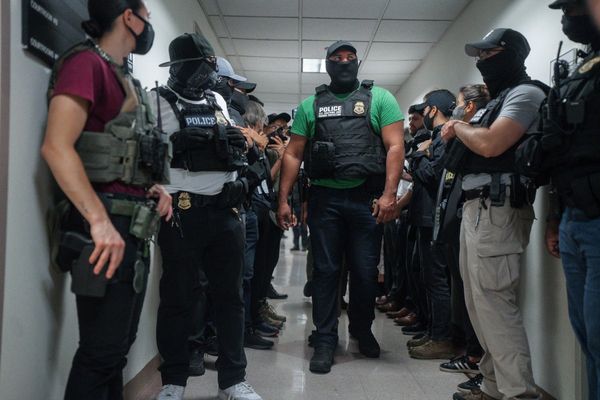
Most of us are used to thinking of the believers in bizarre conspiracies as harmless. They believe some weird things which are literally incredible to the rest of us. They may leave us irritated or vaguely amused, but the terrible events in Queensland should make us think again.
It has emerged that Gareth Train, one of the three participants in the murderous ambush of police, was involved in an online conspiracy group, where he posted about mistrust of police as well as a crazy belief that the Port Arthur massacre was perpetrated as a means to take away guns from people. According to news reports, Stacey Train had stopped work as a school principal because of Queensland's insistence mandate that teachers get COVID jabs.
There is clearly a complexity of driving forces there. But what emerges is a picture of a group of people who were living in some sort of different reality.
More than a year ago, the academic Josh Roose of Deakin University wrote: "Far right nationalists, anti-vaxxers, libertarians and conspiracy theorists have come together over COVID, and capitalised on the anger and uncertainty simmering in some sections of the community."
For too long, some have asserted that the internet should not be policed. The owners of social media sites like to think that it's all about free speech, and free speech must be sacrosanct. But free speech is already limited in many ways. We do not have the freedom to state defamatory falsehoods about others.
Social media companies are very resistant to the idea that they should be held responsible for what they publish. The difficulty of course, is the vast complexity of the task, the myriad of dark net and other sites that deliberately make it difficult to trace and hold them accountable. If a television company, in contrast, broadcasts live a speech which libels someone, the broadcaster is responsible for that content. It is not a defence against a case of defamation to say that the broadcaster was only broadcasting someone else's views. The government ought to review the law as it affects social media companies. If they knew that the crazy views expressed on their sites had consequences for their bottom line, they might reform their attitude to propagating vile falsity.