Get all your news in one place.
100’s of premium titles.
One app.
Start reading
The Guardian - UK
The Guardian - UK
Politics
Andrew Sparrow

Nicola Sturgeon says SNP crisis unexpected, beyond her ‘worst nightmares’, but not her reason for resigning – as it happened

Nicola Sturgeon talking to media as she returns to the Scottish parliament in Edinburgh.
Nicola Sturgeon talking to media as she returns to the Scottish parliament in Edinburgh. Photograph: Andrew Milligan/PA

Early evening summary

  • Nicola Sturgeon, the former Scottish first minister, has said that the SNP finance crisis was not the cause of her resignation and that what has happened in recent weeks was something she “could not have anticipated in my worst nightmares”. (See 4.35pm.)

  • Conservative MPs have voted down an attempt by Labour to set aside time next month for MPs to debate a bill to reduce sewage discharges into rivers. After the vote Labour said the Tories had voted to allow sewage dumping to continue. (See 5.02pm.) Thérèse Coffey, the environment secretary, said most of what Labour was proposing was being done by the government anyway, and that the other aspects of the plan were counterproductive, or would increase prices for consumers. (See 4.14pm.)

Nicola Sturgeon speaking to reporters at Holyrood today.
Nicola Sturgeon speaking to reporters at Holyrood today. Photograph: Jeff J Mitchell/Getty Images

Updated

1,000 jobs at risk in Welsh universities after loss of EU funding, economy minister tells Senedd

The Welsh economy minister, Vaughan Gething, has claimed there are 1,000 imminent job losses in universities across Wales because replacement for EU funding leaves the country £1.1bn worse off.

Speaking in the Senedd, Gething said the shared prosperity fund was “smaller, less flexible and narrower in scope than the EU funding it claims to replace”. He said:

In the existing round of EU programmes, £380m was invested in research, development and innovation, which supported expansions of research facilities and major collaborations between business and academia.

The shared prosperity fund does not even have RD&I within its investment priorities. This is resulting in major job losses and the closure of key projects in areas such as decarbonisation, renewable energy and industrial skills. There are around 1,000 imminent job losses across Welsh universities and scaled-back RD&I opportunities for Welsh businesses as a direct result of the UK government’s choices.

Gething said the levelling-up fund was “equally dispiriting” for Wales. He continued:

Local authorities ... have spent huge amounts of time developing project bids – the vast majority of which have been rejected by the UK government.

Five local authorities – Flintshire, Merthyr Tydfil, Monmouthshire, Newport and the Vale of Glamorgan – have received nothing from the first two rounds of this fund.

Updated
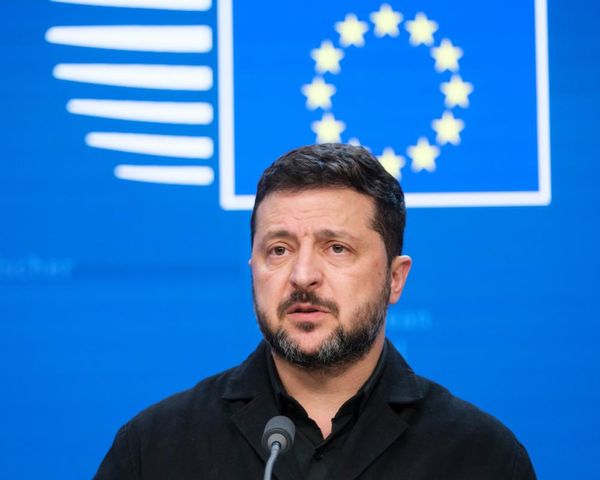
Humza Yousaf says SNP would 'of course' cooperate with Labour in hung parliament - 'but there will be price'

Humza Yousaf, Scotland’s new first minister, has recorded an interview with LBC’s Andrew Marr for Marr’s 6pm show tonight. LBC has sent out some excerpts, and here are the highlights.

  • Yousaf said the SNP would cooperate with Labour in the event of a hung parliament, but that it would demand a “price”. He said his priority would be getting power for Holyrood to call an independence referendum. He said:

Well, we would certainly be willing to cooperate with a Labour government because we want to see the back of the Tories. But of course, that would come at a cost. And, of course, the first demand I would make would be to get powers over a section 30 order and having that devolved to Scotland …

We know that if Labour has a majority, then they ignore Scotland. They did that last time they were in power; they will do it again. So, in order to get Scotland’s voice heard in Westminster, you have to vote for as many SNP MPs. And if there is a hung parliament, then of course we will cooperate, I’ll say that unequivocally. We’ll cooperate with anybody that is a progressive political party that’s looking to see the back of the Tories, but there will be a price.

Under the Scotland Act, if the Scottish government wants to hold a referendum on independence (a matter reserved to Westminster), it needs a section 30 order to amend the devolution settlement. And the UK government has to agree that order.

  • He said he had not spoken to Nicola Sturgeon, his predecessor, since her husband, Peter Murrell, was arrested. It would not be right for them to discuss the police investigation, he said.

  • He refused to comment in detail on the £600,000 raised by the SNP for spending on an independence campaign. This is the focus of the police investigation, he admitted. He said the money was not being returned to donors.

  • He said he was keen to talk to Gordon Brown, the former Labour PM, about Brown’s plans for further devolution. He said:

He and I will have constitutional differences. I believe in independence, he doesn’t. But if the Labour party are going to be in power in 12 to 18 months, I want to make sure we’re laying the groundwork … While we don’t have independence, I’ll do everything I can to make our parliament as powerful as possible.

Humza Yousaf speaking at Holyrood last week.
Humza Yousaf speaking at Holyrood last week. Photograph: Ken Jack/Getty Images

Updated

Jackie Baillie, the Scottish Labour deputy leader, has accused Nicola Sturgeon of being evasive in her brief appearance before journalists at Holyrood earlier. (See 4.35pm.) Baillie said:

Nicola Sturgeon might have taken some questions but she has given no answers.

Her attempt to downplay the extraordinary chaos we’re seeing in the SNP is an insult to the public’s intelligence.

That Nicola Sturgeon is proud of a leadership that failed even by its own metrics and ended in the grotesque spectacle of a police raid on her home shows that she has completely lost touch.

The same old secrecy and spin from Nicola Sturgeon won’t cut it any more; we need real answers about the scandal and sleaze engulfing the SNP.

Updated

Labour MPs have started tweeting about their vote in the debate on sewage discharges. This is from Jim McMahon, the shadow environment secretary.

Updated

MPs vote down Labour's bid to create time for its water quality bill to be debated

The Labour debate on water has ended, and MPs voted by 290 to 188 – a majority of 102 – for the government amendment blocking the opposition’s plan for to allow time for its water quality bill to be debated next month.

Sturgeon says SNP crisis unexpected, not reason for resignation and beyond anything anticipated in her 'worst nightmares'

This is what Nicola Sturgeon, the former Scottish first minister, said to journalists at Holyrood about being frustrated at not being able to give her side of the story.

Look, one of the frustrating things just now – and I’m not complaining about this, I understand the process that is under way – but one of the frustrating aspects of that is that I’m not able to give my version of what is going on just now.

Hopefully the time will come when I can do that. So I appreciate the concern, I appreciate the frustration, but that is the nature of the process that is under way right now.

And this is what she said about the recent SNP scandal being unexpected, and not a factor in her decision to resign. She was asked if she would apologise to Humza Yousaf, her successor, for the state in which she left their party. She replied:

I think Humza is doing, in very, very difficult circumstances, an outstanding job. I have become ever more convinced – and I was already convinced of this – that he’s going to be a very fine first minister.

I understand the view that some people might have that I knew this was all about to unfold and that’s why I walked away. Nothing could be further from the truth. I could not have anticipated in my worst nightmares what would have unfolded over the past few weeks.

I believe the SNP, notwithstanding the real difficulties that surround the party just now, is in good shape and I think Humza will take it to even better places.

Her husband, Peter Murrell, who had been the SNP’s chief executive when she was first minister, was arrested earlier this month in connection with the policy inquiry into SNP finances. He was released without charge.

Nicola Sturgeon to the media at Holyrood today.
Nicola Sturgeon to the media at Holyrood today. Photograph: Andrew Milligan/PA Media

Updated

Here is a longer clip showing Nicola Sturgeon talking to journalists at Holyrood. This is from the radio journalist Alan Smith.

Nicola Sturgeon also told reporters that the last few weeks had been “difficult” and in some respects “traumatic”. And she said she would be staying on as an SNP.

Nicola Sturgeon says it is 'frustrating' not being able to give her side of story in SNP finance crisis

Nicola Sturgeon, the former Scottish first minister, has been speaking to reporters at Holyrood. She told them that it was “frustrating” not being able to give her side of the story, in relation to the SNP finance crisis.

As Peter MacMahon from ITV Border reports, she also said she had not been questioned by the police, and that this issue was not a factor in her decision to stand down.

Government confirms it won't make misogyny hate crime

Ministers have confirmed that they will not make misogyny a hate crime.

Sarah Dines, the safeguarding minister, made the announcement in response to a report from the law commission.

When the police, crime, sentencing and courts bill was going through parliament the government came under pressure to include misogyny as a hate crime, and it agreed, as part of the 2022 Act that was passed, to consider the issue and report back within a year.

In a statement issued to fulfil that obligation, Dines said:

The government is particularly conscious of the potential difficulties arising to prosecuting serious crimes which disproportionately affect women and girls – such as sexual offences and domestic abuse – were sex or gender to be added to the hate crime framework. As the Law Commission highlights, this arises as it would be necessary to prove in some way that an offender demonstrated or was motivated by hostility in the context of an individual offence. This might be through evidence of a specific misogynistic motivation or behaviour as it concerns crimes against women, such as the use of a gendered slur during the offence. However, this could be difficult to determine given the nature of violence against women and girls (VAWG) crimes. The Law Commission concludes: “It might be practically difficult to prove a sex or gender-based aggravation in the context of VAWG crimes that usually take place in private, for example sexual offences or domestic abuse.”

Labour argued for misogyny to be made a hate crime when the police, crime, sentencing and courts bill was going though parliament and it included the plan in a green paper it published in 2021.

According to a party source, Labour is still committed to the idea, although the recent document published by Keir Starmer explaining his anti-crime “mission” did not specifically mention this. It did, though, say Labour was committed to halving the level of violence against women and girls within a decade.

Updated

Scottish Tories say SNP campervan revelation 'beggars belief'

The Scottish Conservatives have also put out a statement describing Colin Beattie’s motorhome comment as a “bombshell revelation”. This is from Craig Hoy, the Scottish Tory chair.

This causal admission from Colin Beattie beggars belief. He’s effectively saying ‘Motorhome? What motorhome?’

He has serious questions to answer over this bombshell revelation. How on earth could someone who was treasurer, when the accounts featuring this six-figure purchase were signed off, now claim he was never aware of it?

The murkiness surrounding the scandal-ridden SNP increases by the day. Claims like this make a complete mockery of Keith Brown’s remarks at the weekend that the SNP was one of the most transparent parties in the UK.

Updated

Here is the clip of Colin Beattie telling journalists that he did not know about the campervan (as PA Media called it), or the motorhome (as the Scottish reporters put it).

Scottish Labour says 'bombshell' campervan revelation shows SNP 'in meltdown'

Scottish Labour has described Colin Beattie’s campervan admission (see 2.53pm) as a “bombshell revelation”. Jackie Baillie, the party’s deputy leader, said:

This is yet another bombshell revelation that lays bare the chaos at the heart of the SNP.

That the treasurer of the party did not know that over £100,000 had been spent on a motorhome is mind-boggling.

This is a party in meltdown with nothing to offer Scots. It’s time for a clean break with Scottish Labour.

Former SNP treasurer Colin Beattie says he did not know party had bought £100,000 campervan

Colin Beattie told journalists today that he did not know anything about a campervan paid for by the SNP when he was treasurer. He made the comment when he spoke to reporters for the first time since his arrest last week. (See 1.21pm.)

As PA Media reports, the Niesmann + Bischoff vehicle, which can sell for as much as £110,000, was seized by police from the home of the mother of Nicola Sturgeon’s husband, Peter Murrell, at the same time he was in custody and the home he shares with the former first minister was being searched by police.

Murrell was released without charge later that day “pending further investigation”.

Asked by journalists in Holyrood if he knew about the vehicle purchase, Beattie said: “No, I didn’t know about it.”

Updated

Coffey claims Labour's plan for automatic fines for sewage dumping could make enforcement 'weaker'

One area where Labour’s water quality bill goes beyond what the government is doing relates to automatic fines. Labour says it would impose “automatic fines for sewage dumping”.

Thérèse Coffey, the environment secretary, told MPs that, although this plan was well intentioned, “it strongly risks effectively making enforcement weaker, and potentially letting the most serious polluters off the hook”.

She explained that she had been advised by officials that this plan could actually limit liability. She suggested that if fines were automatic, there might be a problem when a pollution incident turned out to be more serious than originally thought. These incidents needed to be properly investigated, she said, so that culpability could be established.

She concluded her speech:

In summary, Labour want monitoring. We’ve already delivered it. Labour want fines. We’ve delivered record fines. Labour want large penalties. We’re making them unlimited. Labour say they want strong restrictions. But they would, in effect, weaken them. Labour want a plan. We’ve already published one. Ours is fully costed and credible. Labour says their plan won’t impact householders. But they can’t say how much it would cost.

It was a Labour government that was taken to court by the European Union for allowing discharge of sewage. And in Wales, where Labour are actually in government, they are a discharging sewage almost twice as often as in England.

That’s not a plan. It’s an uncosted political game, and a recipe for tripling the average for water bill.

This is what Labour says its bill would do. It says:

Labour’s water quality (sewage discharge) bill is the party’s plan to end the Tory sewage scandal by 2030. It seeks to legally underpin four crucial reduction measures:

Setting a legal requirement for the monitoring of all sewage outlets and penalties for failures in adhering to monitoring requirements.

Imposing automatic fines for sewage dumping.

Implementing a legally binding target to reduce sewage dumping events.

And a requirement for the secretary of state to publish a strategy for the reduction of sewage discharges and regular economic impact assessments.

Updated

Back in the Commons, Thérèse Coffey, the environment secretary, has just challenged Labour to explain what impact its plans would have on customer bills. She said Jim McMahon, her Labour shadow, was not naive enough to think there was a “magic money” tree available to pay for this.

A reader has sent me this query.

What happened to the parliamentary debate of yesterday about Brexit? Did it take place, has it been published, did the ImBrexiles embarrass themselves with lies aimed at saving their dishonourable careers or went AWOL? In any case, I’m certain it didn’t look good, which is why there is silence about it.

The debate did go ahead, and I covered the opening in the blog yesterday. The full debate has not received much media coverage, but that is as much to do with the fact that Westminster Hall debates never change anything as the fact that it did not reflect well on Brexiters. (Only two of them spoke.) The BBC (here) and HuffPost UK (here), and you can read the whole trancript on the Hansard website.

Updated

Coffey tells MPs Labour's sewage discharge bill 'pointless' because government mostly implementing these plans anyway

Thérèse Coffey, the environment secretary, is now responding to Labour in the debate on sewage discharges.

She says people are “rightly disgusted” about excessive sewage into rivers. And “so is this government”, she says.

She claims the government has already taken more action on this issue than any previous administration. And she claims that the proposed Labour legislation is “pointless” because much of it is being implemented anyway.

The government has tabled an amendment to the Labour motion that would strike out almost all of it, and leave a motion just saying “that this house calls on the government to set a target for the reduction of sewage discharges”. Earlier today she issued a written statement saying the government would be making sewage reduction targets legally binding. (See 12.14pm.)

Updated

Back in the Commons, Jim McMahon, the shadow environment secretary, is wrapping up his speech on sewage discharges. He says the bill proposed by Labour would be the first step in reform of the water industry.

SNP 'not going bust', former treasurer says

The SNP is “not going bust”, its former treasurer has said.

Speaking to journalists for the first time since he was arrested, and then released without charge, in connection with an inquiry into the party’s finances, Colin Beattie said: “The SNP is in the black.”

Asked if the party was “not going bust”, Beattie said: “We’re a going concern, definitely.”

And asked why the party was finding it hard appointing new auditors, after the previous ones quit in October, he replied: “Partly, that’s a market situation.”

The SNP group at Westminster is at risk of losing the £1.2m it receives annually in so-called Short money – taxpayer funding for opposition parties – if the party cannot submit audited accounts by 31 May.

After Humza Yousaf’s first meeting as Scotland’s new first minister with Rishi Sunak last night, the Scottish government briefed that Yousaf used the meeting to push for Scotland to be given the right to hold another independence referendum. That led to this splash in the pro-SNP National.

At the Downing Street lobby briefing the PM’s spokesperson suggested the meeting was largely focused on other matters. He said:

Without getting into the detail of their conversation, I think we have been consistently clear that the priority for the people of Scotland and indeed for the entire UK is halving inflation, tackling the NHS waiting times, ensuring energy security and growing our economy across the whole of the UK.

And it is our strong desire for the Scottish government to work with us on delivering those priorities and we hope there will be no distractions from them.

Updated

Back in the Commons, Jim McMahon, the shadow environment secretary, says human waste is even being discharged from the House of Commons. He goes on:

Now think about that when members go to vote – there is no place exempt from the Tory sewage scandal. What a metaphor for the last 13 years of the Tory government.

Updated

Donald Trump to visit Scotland next week

Former US president Donald Trump is to visit Scotland next week, PA Media reports. PA says:

Trump is expected to spend time at his golf resort Trump Turnberry in South Ayrshire, PA understands.

The 76-year-old will also stop off in Ireland, where he is understood to be landing at Shannon airport on 3 May.

He will stay at his Trump International Hotel and Golf Links on the outskirts of Doonbeg in County Clare.

The visit comes as Trump faces court action in the United States amid speculation he could be planning to run for president again in 2024.

Trump previously visited Scotland in July 2018 while in office.

Updated

Labour accuses Tories of turning country into 'open sewer' as MPs start debating sewage discharges

In the Commons Jim McMahon, the shadow environment secretary, is opening the debate, on the Labour motion that would set aside parliamentary time for MPs to pass Labour’s water quality (sewage discharge) bill.

He says the Tories have turned out green land into “an open sewer”.

No 10 refuses to say what policy change might follow from Sunak's pledge to 'protect women's spaces'

Today the Daily Express has splashed on comments in an article written for the paper by Rishi Sunak backing its campaign to protect single-sex spaces. Sunak says:

Today I am pledging my support to Miriam Cates MP and Rosie Duffield MP’s call [backed by the Express] to protect women’s rights and ensure the dignity of women and girls by preserving single-sex spaces such as women’s refuges and rape crisis centres.

I have enormous compassion and understanding for people questioning their identity – and there is a route available for those who want to transition.

Treating people with respect and ensuring people can live their lives the way they wish, is very much part of who we are as a country.

But we must also recognise the challenges that this can pose.

And when it comes to women’s spaces, women’s prisons, changing rooms, sports, and health, I believe that biological sex really matters. I know what a woman is – and I’ll protect women’s rights and women’s spaces.

At the No 10 lobby briefing, when asked if this meant Sunak wanted to ban trans women from places like women’s changing rooms (which they can access at the moment), the spokesperson would not commit to that. He said the article did not amount to a “policy update”.

But the spokesperson also confirmed that the government is considering a proposal from the Equality and Human Rights Commission to clarify the definition of sex in the Equality Act 2010 to make it clear that this refers to biological sex. This would provide “greater legal clarity”, Lady Falkner, chair of the EHRC, said in a letter to the government earlier this month.

The spokesperson said that the government was considering this advice and that he could not speculate on what would happen next.

Updated

At the Downing Street lobby briefing the PM’s spokesperson confirmed that Rishi Sunak wants to extend opportunities for Britons to use e-gates when travelling in the EU. The spokesperson said:

We are working closely with the European Commission and member states to understand the impact of the introduction of the entry/exit system for British citizens.

And our priority is always to minimise unnecessary delays for British passengers and some countries such as Spain already allow British citizens to use E-gates on arrival in certain circumstances.

But the spokesperson said he did not recognise reports that Rishi Sunak was personally pushing for better access in talks with EU leaders. “As far as I’m aware there are no live discussions to that end,” the spokesperson added.

Alex Wickham, the Bloomberg reporter who broke the story, is taking the No 10 briefing as confirmation of his scoop.

Coffey defends Tory record on tackling sewage discharges, and dismisses Labour's plan as 'ill-considered'

Ahead of the Labour debate on sewage discharges this afternoon (see 9.20am), Thérèse Coffey, the environment secretary, has announced that the government will make targets for water companies to cut discharges legally binding.

In a Commons written statement, she says:

This government has been clear that sewage discharging into our rivers is completely unacceptable. In August 2022 this government published the storm overflows discharge reduction pan, with an accompanying impact assessment …

Today, we are announcing plans to enshrine the plan further in law. Through the Environment Act 2021, we will legislate for a clear target on storm overflow reduction in line with our plan. A clear, credible and costed legally binding target will add to our transparent and determined approach to solve this issue, whilst keeping consumer bills low. This will also be backed by existing separate interim targets for bathing waters and our most precious habitats.

In some respects this mirrors what Labour is proposing with its own bill, which would also make sewage dumping reduction targets legally binding. But the Labour legislation would also include automatic fines for sewage discharges.

Commenting on the Labour plan, Coffey said it was '“ill-considered”. She said:

Labour have turned a blind eye to raw sewage being dumped almost twice as often in Wales where they are actually in government.

They’ve turned Welsh waters into open sewers whilst playing politics in England. It’s clear they haven’t even read the government’s plan.

It was a Conservative government that introduced 100% monitoring of storm overflows.

We’ve brought forward stronger regulations, tougher enforcement and the largest water infrastructure programme in history – an expected £56bn investment – and we will make fines unlimited so that the polluter always pays.

Thérèse Coffey, the environment secretary (right) leaving cabinet this morning with Kemi Badenoch, the business and trade secretary.
Thérèse Coffey, the environment secretary (right) leaving cabinet this morning with Kemi Badenoch, the business and trade secretary. Photograph: Tristan Fewings/Getty Images

'We've got no plan ... Holy crap, what will we do?' - how Boris Johnson reacted to 2016 Brexit vote

No one who followed Brexit will be at all surprised by the “revelation” that the leave campaign did not have a plan for exiting in the EU in 2016. Arguably, the government is still looking for one.

But it is still interesting to know that Boris Johnson, de facto leader of the Vote Leave campaign, said as much when the result was announced. This is one of the revelations in the latest extract from Johnson at 10: The Inside Story, by Anthony Seldon and Raymond Newell, serialised in the Times today.

Describing what happened after the result was announced, Seldon and Newell write.

“What the hell is happening?” he kept saying. Then a pang of guilt struck him when he saw pictures of Samantha on the television looking utterly distraught. “Oh my God. Look at Sam. God. Poor Sam.” Soon after, stopping in his tracks, a new thought struck him: “Oh shit, we’ve got no plan. We haven’t thought about it. I didn’t think it would happen. Holy crap, what will we do?” Still muttering, he went off to write the speech he knew he would in no time have to deliver.

Those who knew Johnson intimately say they had never seen him more frightened and dismayed than at this moment of triumph.

It is well known that Johnson, and other leading Brexiters, did not expect the UK to vote to leave the EU. It is also assumed that some of them did not even want this outcome and another new book, The Parliamentary Battle Over Brexit, by Meg Russell and Lisa James, quotes a senior Labour figure, interviewed in confidence by the authors during their research, saying that some Tories backed Brexit despite believing it was a bad idea. Talking about the period before the 2016 vote, the interviewee said:

I remember I had lots of conversations with Tories who were backing Brexit and they went along the lines of saying to them ‘you don’t believe this nonsense do you?’ and they said ‘no, of course I don’t, I’ve just got to keep the constituency association happy. You guys win the referendum and then politics can return to normal.’

The Parliamentary Battle Over Brexit is a bit like the Nuffield election guides; intended to serve as the definitive account, it is academically rigorous, thorough, fair and highly readable.

Updated

Sue Gray, the senior civil servant who quit Whitehall to take a job as chief of staff to Keir Starmer, may be told to delay taking up the post for up to two years, the Sun claims. That could stop her starting until after the next election.

In his story Harry Cole, the paper’s political editor, also says a Cabinet Office inquiry into the circumstances of her departure will make difficult reading for her.

Officials have left the civil service to work for political parties in the past, but Gray’s move was controversial for two reasons.

First, as the person who led the Partygate inquiry, and as a former head of the Cabinet Office’s propriety and ethics team, Gray knows more government secrets than most other senior civil servants operating at her level.

Second, Gray started communicating with Labour about a job while still working in the civil service, where officials are not supposed to contact the opposition without ministerial permisson.

The Advisory Committee on Business Appoinments, Acoba, will recommend what cooling off period should apply before Gray starts her job and Cole says Whitehall figures believe it will recommend up to two years. He also reports:

Labour has denied talking with Ms Gray while she probed Boris Johnson and the lockdown gatherings.

But ministers ordered a formal Cabinet Office probe of her resignation.

Government sources have claimed the findings are likely to make “extremely uncomfortable reading” for Ms Gray.

Acoba recommendations are not binding, but Labour has said it will follow them in this case.

Thousands of London Underground workers are to vote on whether to continue a campaign of strike action in a long-running dispute over jobs and pensions, PA Media reports. PA says:

More than 10,000 members of the Rail, Maritime and Transport union (RMT) will be re-balloted in the coming weeks.

Unions have to achieve a fresh mandate for industrial action every six months.

The union has been locked in a row with Transport for London (TfL) and the mayor, Sadiq Khan, for nearly a year, over plans to cut jobs.

The union says other plans have raised the prospect of Tube workers losing over 30% of their pensions.

The ballot will run until the 23 May and the current mandate runs out in June.

Starmer says Labour would outlaw spiking drinks because law must 'keep up with evolving crime'

The Labour party has sent out a briefing note on its proposal to create a new offence to outlaw spiking drinks (see 10.29am), instead of relying on existing offences to deal with the problem.

It would also consider allowing people to report spiking incidents anonymously, it says. The party explains:

Spiking is currently covered by several different offences but there is no single dedicated offence for police to use to catch dangerous perpetrators. The number of reported spiking incidents is on the rise, with a notable increase in the number of ‘needle spiking’, which is injecting someone with drugs without their consent.

Nearly 5,000 cases of needle and drink spiking incidents were reported to police in England and Wales in the 12 months to September 2022.

The home affairs select committee has recommended the creation of a separate criminal offence for spiking. However, that recommendation has been rejected by the government, arguing it was ‘unnecessary’. A spiking offence is supported by campaigners, police officers and the Association of Police and Crime Commissioners.

The next Labour government will also explore anonymous reporting systems for victims of spiking. Research suggests just 3% of spiking victims report to the police, making it a significantly under-reported crime.

Anonymous reporting would allow victims to report without shame or fear, but also allow police to identify spiking hotspots and flood resources to deal with perpetrators.

In a statement Keir Starmer said:

I saw first-hand as director of public prosecutions that victims are let down when the law doesn’t keep up with evolving crime. My government will recognise the reality of dangerous new crimes being perpetrated against, more often than not, young women, and we will act.

The rise of spiking sends terror through the heart of every parent with a daughter; and leaves young women feeling vulnerable. Women should not have to live in fear that when they go out, their drink may be spiked, or that they may be injected with a harmful substance. It is a pernicious, dangerous, and hateful crime, and Labour will punish it as such.

Keir Starmer at a roundtable event on tackling violence against women and girls yesterday.
Keir Starmer at a roundtable event on tackling violence against women and girls yesterday. Photograph: Aaron Chown/PA

Diane Abbott's letter to Observer submitted twice, with no changes, report says

When Diane Abbott issued an apology on Sunday, after the Observer published a letter from her implying the racism experienced by Irish, Jewish and Traveller people was not as serious as racism experienced by black people, she said that she had made a mistake and that this was partly due to “an initial draft being sent”.

But a report for the Jewish Chronicle challenges this account. In his story David Rose says Abbott submitted the letter to the paper twice, three hours apart. Rose reports:

The letter was identical each time it was sent, three hours apart, and the suspended Labour MP made no efforts to revise it in the seven days after it was sent.

The fact that it was sent from her own email address – not from one controlled by an aide – suggests that she was entirely in control of the process.

The first time the email was sent, the JC understands, Abbott received an automatic reply asking her to send it again but this time with the addition of a postal address. She did this, leaving the text of the letter unchanged.

Abbott has been approached for a comment.

Updated

Sunak eyes deal to allow UK passport holders to use e-gates at EU airports

Rishi Sunak is seeking to capitalise on his improved relations with the EU with hopes of an agreement to allow British passport holders to use e-gates when travelling in the bloc, Lisa O’Carroll reports.

On small boats, Starmer told This Morning that he wanted to stop the boats. Labour would focus on two policies in particular, he said.

First, it would target the criminal gangs. And, second, it would cut the backlog of asylum claims, he said.

Starmer was also asked to defend Labour’s controversial anti-Sunak attack ad in his This Morning interview.

When it was put to him that David Blunkett, a former Labour home secretary, had criticised the ad as gutter politics, Starmer said he agreed with Blunkett on many things, but not this.

He said Labour was right to attack the government on crime because the system was broken. And he said the Tories should not be allowed to argue that, because there was a new prime minister, they did not have to defend their 13-year record.

Asked about the government’s decision to go to court to try to stop the latest strike by the Royal College of Nursing, Starmer said this approach was “completely wrong”.

He said the government should negotiate with the RCN to reach a solution.

Asked what pay rise he would be willing to offer nurses, he refused to give a figure. But he said there would have to be a compromise. He favoured a reasonable agreement, he said.

Keir Starmer told ITV’s This Morning that Labour would make spiking drinks a specific offence.

That would encourage people to report spiking incidents, and make it easier for prosecutions to happen, he said.

When it was put to him that the government thought the creation of a new offence was not necessary, because the crime can be prosecuted under current offences, Starmer said he disagreed.

This was a crime that struck “real fear” into people, he said. He said his daughter was only 12, but he was already worried as a parent about her safety.

UPDATE: See 11.04am for more on this policy.

Updated

Starmer claims Labour has made 'significant progress' on tackling antisemitism under his leadership

Keir Starmer has been on ITV’s This Morning, and the first question he got was about Diane Abbott.

He said that party took “swift action” over her letter to the Observer, and that it was “very important to me” that it did.

Labour will not tolerate antisemitism, he said.

Asked if there was still antisemitism in the pary, Starmer said what Abbott said was antisemitic. But he said the party had changed a lot in the past three years.

Jewish organisations would say the party has made “significant progress”, he said.

Asked if it was “frustrating” that this story had distracted attention from his local election campaigning, he said it was. He said he wanted to focus on violence against women and girls this week.

Here is my colleague Aletha Adu’s story about plans on this topic Starmer discussed at an event yesterday.

Updated

Mel Stride, the work and pensions secretary (left), and Alex Chalk, the new justice secretary, arriving for cabinet this morning.
Mel Stride, the work and pensions secretary (left), and Alex Chalk, the new justice secretary, arriving for cabinet this morning. Photograph: Tristan Fewings/Getty Images

'We cannot borrow forever,' says Hunt, as year-on-year government borrowing rises by £18bn

The rocketing cost of energy bills support and soaring debt interest saw UK government borrowing jump by more than £18bn in the year to March, PA Media reports. PA says:

The Office for National Statistics (ONS) said the public sector borrowed £139.2bn in the past financial year – the fourth highest since records began and £18.1bn more than in 2021-22, according to official figures.

But the figure was lower than the £152.4bn predicted last month by Britain’s fiscal watchdog, the Office for Budget Responsibility (OBR).

This comes despite the government forking out £41.2bn over the past six months to support households and businesses with energy costs.

Sky-high inflation also pushed debt interest payments on public sector debt to £106.6bn – 47% higher than the previous year as painful rises in retail prices index inflation have increased the interest payable on index-linked gilts.

Commenting on the latest borrowing figures, Jeremy Hunt, the chancellor, said:

These numbers reflect the inevitable consequences of borrowing eye-watering sums to help families and businesses through a pandemic and [Vladimir] Putin’s energy crisis.”

We stepped up to support the British economy in the face of two global shocks, but we cannot borrow forever.

We now have a clear plan to get debt falling, which will reduce the financial pressure we pass on to our children and grandchildren.

Jeremy Hunt watching Rishi Sunak give a speech at the Business Connect event yesterday.
Jeremy Hunt watching Rishi Sunak give a speech at the Business Connect event yesterday. Photograph: WPA/Getty Images

UK to begin evacuating British nationals from Sudan

James Cleverly, the foreign secretary, has announced that the government is evacuating British nationals from Sudan.

Patrick Wintour and Dan Sabbagh have the story here.

And there is more coverage on our Sudan live blog.

Conservatives face ‘judgment day’ on sewage crisis as Labour forces Commons vote

Good morning. Water quality used to be a niche concern for environmentalists, rather than a mainstream political issue. But that has changed in recent years, as people have become increasingly angry about water companies continuing to allow sewage to be discharged into rivers. Today Labour will seek to exploit that by challenging Tory MPs to vote down a bill that would do something about it.

Today has been set aside for opposition day debates – Commons debates on a Labour motion. Normally these are used for declarative motions (“This house believes that the government is rubbish …” etc) and the government often tells its MPs to abstain, because nothing happens if the motion passes. But increasingly Labour is using these slots to debate procedural motions, that would have an effect if passed, and the government cannot ignore these without consequence.

Using a technique used by MPs determined to stop a no-deal Brexit before the 2019 election, Labour has tabled a motion today that would allow it to take control of Commons business one day next month to pass a water quality (sewage discharge) bill. My colleague Peter Walker has written about it here. As he points out, the last time Labour tried this, to create time for a bill to ban new fracking, the Tory dissent this created was instrumental in finishing off the Liz Truss premiership.

No one expects today’s debate to have quite the same impact, but Labour is assuming that Tory MPs will vote against, and that it will be able to go into the final days of the local elections campaigning saying the Conservatives have voted down a move to stop sewage being discharged into rivers.

Jim McMahon, the shadow environment secretary, said:

It is clear that we have a Tory government that has run out of ideas, only regurgitating old announcements that do nothing to end sewage dumping. That is why Labour has brought forward legislation to clean up our water system.

Today, Tory MPs have an opportunity to support Labour’s water quality bill which will put an end to sewage dumping once and for all. Their constituents will be watching to see if they will put the best interests of our country before their party.

The Lib Dems are supporting Labour and Tim Farron, the Lib Dem environment spokesperson, said:

This vote will be judgment day for Conservative MPs on the sewage crisis plaguing our coastlines and rivers.

Conservative MPs have spent the past year blocking tough new laws on water companies. They are trying to take the British public for fools with tough talk and no action.

Communities across the country have had enough of Conservative MPs who would rather protect water firms over their local environment.

There is a lot else on too. Here is the agenda for the day.

9.30am: Rishi Sunak chairs cabinet.

9.45am: Chris Philp, the policing minister, gives evidence to the Commons home affairs committee on policing.

10.05am: Keir Starmer gives an interview to ITV’s This Morning.

11.30am: Downing Street holds a lobby briefing.

11.30am: Steve Barclay, the health secretary, takes questions in the Commons.

12pm: Robert Jenrick, the immigration minister, gives a speech to the Policy Exchange thinktank.

After 12.30pm: MPs debate a Labour motion that would allow the party to control Commons business on Tuesday 2 May to pass a bill to limit sewage discharges into rivers.

2pm: Ben Wallace, the defence secretary, gives evidence to the Commons defence committee.

2.30pm: Chris Heaton-Harris, the Northern Ireland secretary, gives evidence to the Northern Ireland affairs committee.

If you want to contact me, do try the new “send us a message” feature. You’ll see it just below the byline – on the left of the screen, if you are reading on a PC or a laptop. (It is not available on the app yet.) This is for people who want to message me directly. I find it very useful when people message to point out errors (even typos – no mistake is too small to correct). Often I find your questions very interesting too. I can’t promise to reply to them all, but I will try to reply to as many as I can, either in the comments below the line, privately (if you leave an email address and that seems more appropriate), or in the main blog, if I think it is a topic of wide interest.

Updated

Sign up to read this article
Read news from 100’s of titles, curated specifically for you.
Already a member? Sign in here
Related Stories
Top stories on inkl right now
One subscription that gives you access to news from hundreds of sites
Already a member? Sign in here
Our Picks
Fourteen days free
Download the app
One app. One membership.
100+ trusted global sources.