Get all your news in one place.
100's of premium titles.
One app.
Start reading
The Conversation
The Conversation
Environment
Vivian R. Underhill, Postdoctoral Researcher in social Science and Environmental Health, Northeastern University

Companies that frack for oil and gas can keep a lot of information secret – but what they disclose shows widespread use of hazardous chemicals

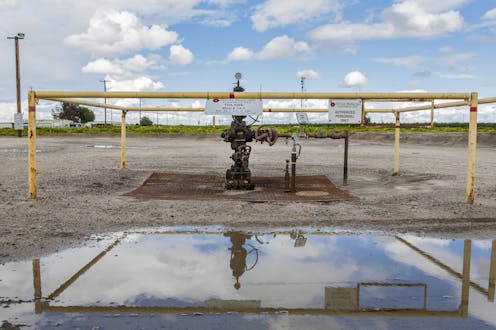
A deep injection well used for disposal of fracking wastewater in Kern County, Calif. Citizens of the Planet/Education Images/Universal Images Group via Getty Images

From rural Pennsylvania to Los Angeles, more than 17 million Americans live within a mile of at least one oil or gas well. Since 2014, most new oil and gas wells have been fracked.

Fracking, short for hydraulic fracturing, is a process in which workers inject fluids underground under high pressure. The fluids fracture coal beds and shale rock, allowing the gas and oil trapped within the rock to rise to the surface. Advances in fracking launched a huge expansion of U.S. oil and gas production starting in the early 2000s but also triggered intense debate over its health and environmental impacts.

Sign up to read this article
Read news from 100's of titles, curated specifically for you.
Already a member? Sign in here
Related Stories
Top stories on inkl right now
One subscription that gives you access to news from hundreds of sites
Already a member? Sign in here
Our Picks
Fourteen days free
Download the app
One app. One membership.
100+ trusted global sources.