Get all your news in one place.
100's of premium titles.
One app.
Start reading
The Conversation
The Conversation
Peter C. Mancall, Distinguished Professor and Professor of the Humanities, USC Dornsife College of Letters, Arts and Sciences

Columbus’ own writings reveal how tightly religion and conquest were intertwined from the start

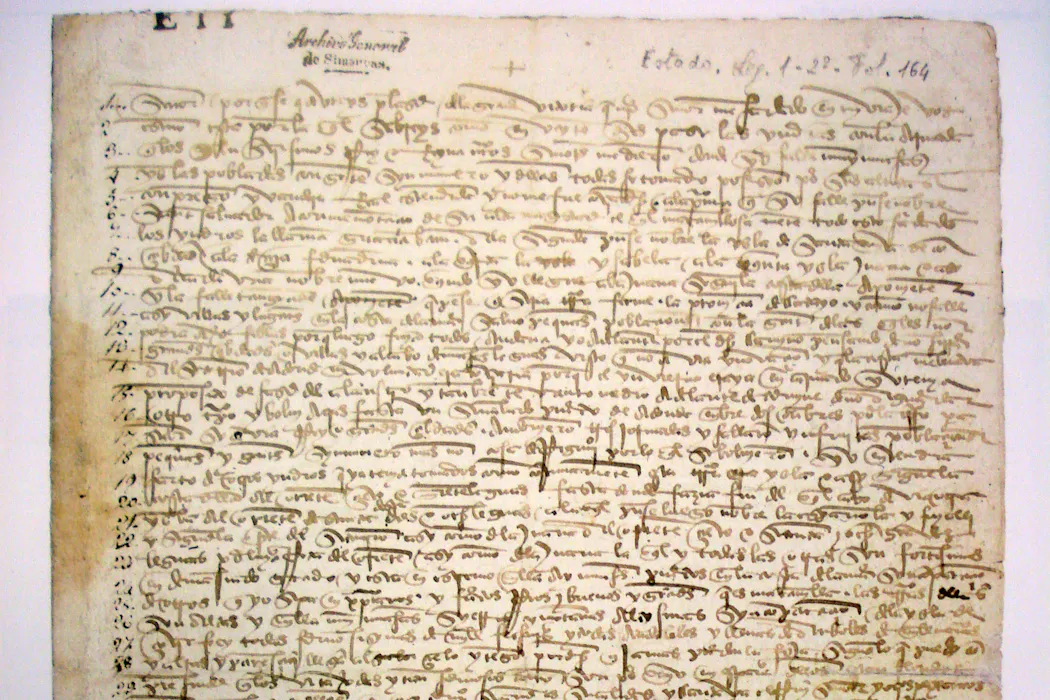
A manuscript with the text of the letter Cristopher Columbus wrote in February 1493, giving his account of the first voyage to the Americas. Archivo General de Simancas/Spanish Ministry of Culture via Wikimedia Commons

Few historic figures are as divisive as Christopher Columbus. For some, in both Spain and the United States, he remains a great hero, an explorer who found a “new world.” He is reviled by others who see him as an arrogant conqueror: the first European to enslave Indigenous Americans, and the man who launched ecological destruction in the Western Hemisphere.

As a historian who writes about early encounters between Europeans, Indigenous Americans and Africans in North America, I believe it is important to recapture this period as much as we can from existing documents – including Columbus’ own writings. Those texts reveal the enormous importance the push to spread Christianity played in Europeans’ colonial plans from the start.
Sign up to read this article
Read news from 100's of titles, curated specifically for you.
Already a member? Sign in here
Related Stories
Top stories on inkl right now
Our Picks
Fourteen days free
Download the app
One app. One membership.
100+ trusted global sources.