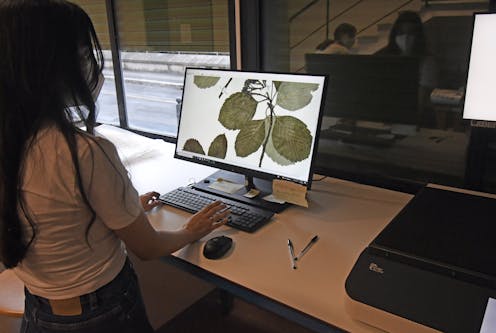
Some of the world’s most popular museums are natural history collections: Think of dinosaur fossils, gemstones and preserved animals. Herbaria – collections of pressed, dried plant specimens – are a less-known but important type of natural history collection. There are some 400 million botanical specimens stored across over 3,500 herbaria around the world, but most are not widely publicized and rarely host public exhibits.
I study biodiversity and global change, and these collections have fueled my work. My collaborators and I have used herbarium collections to study how flowering times respond to changes in climate, how dispersal traits and environmental preferences affect the likelihood that plants will become invasive, and how fires affect tropical biodiversity.