The fragile hope that diplomacy might pull the Middle East back from the brink is fading fast. Fresh Iranian attacks on Kuwait, renewed US military strikes near the Strait of Hormuz and the collapse of momentum in negotiations have underlined a dangerous reality. Economists warn that world economy is becoming increasingly hostage to a geopolitical confrontation that neither side appears ready to resolve.
What began as a regional conflict has evolved into a global economic threat. Oil markets remain on edge, commercial shipping through one of the world's most important energy arteries is still severely disrupted and policymakers from Washington to Brussels are warning that the economic costs are rising with each passing week.

The latest forecasts from the OECD, warnings from Moody's chief economist Mark Zandi and fresh estimates from the European Commission all point in the same direction. If a durable US-Iran agreement remains elusive for much longer, the world could be staring at an economic shock comparable to some of the most disruptive crises of recent decades.
A ceasefire in name, escalation in reality
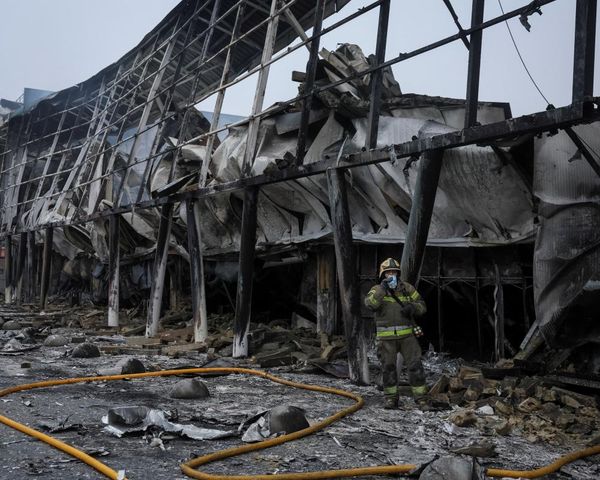
The latest flare-up illustrates how precarious the situation has become. Iranian missile and drone attacks struck Kuwait on Wednesday, damaging airport infrastructure, killing one person and injuring dozens. Tehran also claimed attacks on US military assets in Bahrain, although US Central Command denied that its facilities were successfully hit. In response, the US carried out another round of strikes against missile launch sites and mining operations in southern Iran, including targets near Qeshm Island close to the Strait of Hormuz.
Also Read | Iran claims responsibility for attacks on US Fifth Fleet HQ, Kuwait air base
The military exchanges are occurring despite a nominal ceasefire that has existed since April. Instead of moving toward de-escalation, both sides appear trapped in a cycle of limited retaliation while negotiations remain frozen over broader regional issues, particularly Israeli military operations in Lebanon. The result is a dangerous strategic limbo. There is enough fighting to keep energy markets nervous but not enough diplomatic progress to reassure investors that stability is returning.
At the center of the crisis sits the Strait of Hormuz, the narrow waterway through which roughly one-fifth of global oil supplies normally pass. More than three months after US and Israeli strikes on Iran triggered the current confrontation, shipping traffic through the strait remains heavily restricted.
Meanwhile, Bloomberg has reported today that a month after Trump announced, and then abandoned, a plan to escort commercial ships through the Strait of Hormuz, the US military is trying less public ways of protecting vessels in the vital waterway. Rather than announcing an open challenge against Iran, the US is quietly coordinating with shippers willing to take a different approach. Evidence gleaned from US Central Command statements, shipping data and people with knowledge of the transits suggest ships are turning off transponders and sticking close to the Omani coast on the strait’s south to avoid Iranian mines, with the US military assisting if needed.
Moreover, reopening the strait is not simply a matter of declaring it open. Even if a peace agreement were signed tomorrow, restoring normal shipping patterns could take months. Kuwait Petroleum Corporation now estimates that it could restore only around 70% of oil production within six to eight weeks after Hormuz fully reopens, with complete recovery requiring additional time. Other industry estimates are even more cautious.
Such a lag creates a significant economic risk. Energy markets are pricing not only current shortages but also the possibility that disruptions become semi-permanent.
Also Read | Iran says Kuwait, Bahrain to blame for US attacks
The transmission mechanism of global pain
Every major economic forecast tied to the conflict points to the same transmission channel: energy.
The latest attacks and diplomatic stalemate pushed oil prices higher once again. While recent gains have been relatively modest, economists are increasingly worried about what happens if the disruption persists through the summer.
Mark Zandi, chief economist at Moody's Analytics, has emerged as one of the most vocal voices warning about the dangers. According to comments reported by Business Insider, Zandi believes the US has only days, not months, to secure a meaningful diplomatic breakthrough. His concern revolves around a simple economic mechanism. Higher oil prices feed directly into gasoline prices. Rising gasoline prices reduce disposable income. Reduced consumer spending slows economic activity. Eventually, recession follows.
The US national average gasoline price has already climbed sharply. Zandi argues that if prices rise toward $5 per gallon, consumer spending could contract enough to push the economy into recession. He has also highlighted the depletion of emergency oil reserves and warned that crude prices above $125 per barrel would represent a particularly dangerous threshold.
His warning is especially significant because it comes against a backdrop of already slowing growth, elevated borrowing costs and weakening consumer confidence.
The OECD's stark warning: A crisis that could rival 2008
Perhaps the most alarming assessment comes from the Organisation for Economic Co-operation and Development (OECD). In its June Economic Outlook, the OECD cut its global growth projections and warned that the current conflict could produce dramatically worse outcomes if disruptions persist.
Under its baseline scenario, which assumes eventual stabilization and gradual normalization of Gulf energy exports, global growth is expected to slow from 3.4% in 2025 to 2.8% in 2026 before recovering modestly in 2027. But that relatively benign outcome depends heavily on a peace agreement being reached and shipping disruptions easing relatively soon.
The alternative scenario is considerably more troubling. If disruptions to shipping and energy infrastructure continue into 2027, OECD economists estimate global growth could collapse to just 2.1% in 2026 and 1.8% in 2027. Those figures would place the global economy in territory historically associated with severe economic crises, including the aftermath of the 2008 financial crash and the Covid-era downturn. Inflation would also accelerate sharply, forcing central banks to maintain tighter monetary policies for longer.
As OECD chief economist Stefano Scarpetta noted, "The longer the disruptions last, the larger the economic and social costs become."
Europe faces an industrial shock
Nowhere outside Asia may be more vulnerable than Europe. The European Commission estimates that rising energy costs linked to the conflict could put as many as 1.3 million jobs at risk this year. Labour Commissioner Roxana Minzatu warned that energy-intensive sectors are particularly exposed. Reuters reported that the automotive industry alone could lose up to 600,000 jobs, while construction, chemicals, metals and transport sectors face significant additional layoffs. Battery projects, solar manufacturing and steel production are also under pressure.
This is particularly troubling because Europe has spent much of the past four years attempting to recover from the energy shock triggered by Russia's invasion of Ukraine.
Many European manufacturers never fully regained their previous competitive position after the spike in natural gas prices that followed the Ukraine war. Another sustained energy shock could deepen deindustrialization concerns across Germany, France, Italy and other manufacturing-heavy economies. For low-income households, the effects would be immediate. Higher fuel and transportation costs would consume a greater share of disposable income, further weakening consumer demand across the continent.
Asia's dependence adds further risk
While Europe faces an industrial challenge, Asia faces an energy security challenge. Countries such as India, Japan and South Korea remain heavily dependent on Gulf oil and gas supplies. Scarpetta noted that while Japan and South Korea possess significant strategic reserves, prolonged disruptions would eventually become difficult to absorb. India has already begun rationing some gas usage in response to supply pressures.
For Asia's manufacturing-driven economies, the threat extends beyond energy costs. Supply chain disruptions, higher shipping expenses and weaker global demand would compound the damage. The danger is that multiple economic shocks begin reinforcing one another. Higher energy prices raise production costs. Higher production costs fuel inflation. Inflation forces tighter monetary policy. Slower growth then reduces investment and employment. That cycle can become self-sustaining.
Markets are nervous
Financial markets are not reacting solely to current events. They are reacting to the growing probability that policymakers are running out of options. The US administration has repeatedly signaled that an agreement with Iran is close. Yet each apparent breakthrough has been followed by fresh setbacks. Tehran continues to demand sanctions relief, access to frozen oil revenues and guarantees linked to regional security issues. Washington remains unwilling to make concessions that could be perceived as rewarding Iranian pressure tactics. Meanwhile, military activity continues. That combination creates the worst possible environment for businesses and investors of persistent uncertainty. Companies can adapt to high energy prices. They can adapt to war. What they struggle to adapt to is a prolonged period in which neither peace nor escalation is fully resolved.
The longer negotiations remain suspended, the more likely businesses are to postpone investment decisions, delay hiring and conserve capital. Those defensive measures, repeated across thousands of firms globally, can become a recessionary force in their own right.
Window for diplomacy closing fast
The world economy is not yet facing a crisis on the scale of 2008 or 2020. But the trajectory is increasingly concerning. The military confrontation has already disrupted global energy markets, weakened growth forecasts and threatened employment across multiple continents. The longer the Strait of Hormuz operates below normal capacity, the greater the pressure on oil prices, inflation and consumer spending.
Perhaps the most worrying aspect is that the economic damage may continue long after any eventual peace agreement is signed. Energy infrastructure takes time to restore. Shipping confidence takes time to rebuild. Supply chains take time to normalise. That means every additional week of diplomatic paralysis carries costs that extend far into the future.
For months, markets have largely accepted Trump's repeated assurances that a deal with Iran is within reach. The problem now is that economic forecasts are beginning to assume the opposite. Unless negotiations produce tangible results soon, the world may discover that the economic consequences of the Gulf conflict are no longer a future risk but the beginning of a global downturn already underway.