
Get all your news in one place.
100’s of premium titles.
One app.
Start reading
GamesRadar
GamesRadar
Technology
Alessandro Fillari

Code Vein 2 is Dark Souls through an anime lens, and one surprisingly emotional dungeon proves Bandai Namco has raised the stakes

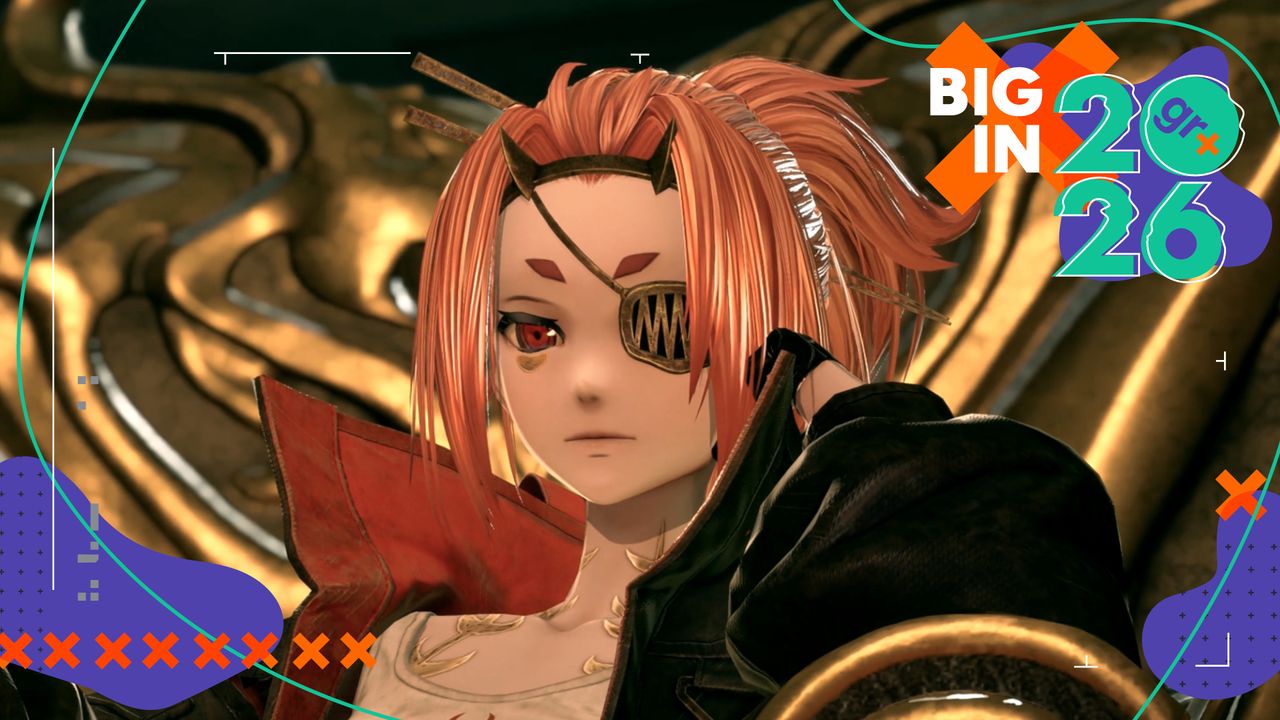
A character from Code Vein 2 with an eyepatch framed with GamesRadar+ Big in 2026 decorations.

Bandai Namco has developer FromSoftware's Elden Ring and Dark Souls franchises under its wing, but that hasn't stopped the publisher from pursuing other takes on the Souls experience. The upcoming Code Vein 2 is Bandai Namco's second go-around with this particularly unique spin on the Soulslike, building off the original Code Vein's twist of an anime-inspired dark fantasy where players and their chosen partner braved treacherous dungeons in style.

The sequel focuses even more on building its cast of characters and giving a greater reason to feel invested in a world that will be shaped by your actions across two time periods. Picture an anime-style Dark Souls by way of Back to the Future. I recently had some hands-on time with Code Vein 2, learning more about the mix of sci-fi and dark fantasy and how the developers want to build on the original's character-first action-RPG stylings.

Two timelines, one big quest

(Image credit: Bandai Namco)

Much like its predecessor, Code Vein 2 asks players to build up their custom protagonist's abilities and arsenals to defeat bosses and complete quests in a sprawling world. The sequel carries many concepts and familiar lore from the original, such as vampire-like characters known as Revenants who wield powerful abilities. However, the second game is a standalone follow-up that builds up a story focusing on building a better future by setting things right in the past.

Playing as a hunter of rogue revenants, you're tasked with saving the world following a cataclysmic event known as the Resurgence. After forming a bond with a mysterious ally named Lou, the protagonist gains the ability to travel between two time periods 100 years apart to reverse anomalies in the past, in turn improving life in the present day – but some changes may lead to some unexpected consequences that could put the future in peril.

"The core concepts of Code Vein that I believe define it in the landscape of Soulslike games are really that character drama – the charm that you get from interacting with your partner and overcoming these tough encounters, dungeons, and challenging enemies with your partner," explains producer Keita Iizuka during the extended preview.

There's a keen focus on reshaping the world around you. The time-travel element adds a cool wrinkle to the world, as you restore areas of the present to unlock new zones and side quests. These can also reveal hidden objectives and opportunities to discover, which is an intriguing evolution from the original's more rigid structure.

(Image credit: Bandai Namco)

Seeing the game world shift between two different eras, with the protagonist teaming up with allies from the past and then seeing their impact in the future, is a cool concept for a soulslike. The main quest we focus on during the preview sees the protagonist paired with Josee, a plucky mercenary from the past who seeks to purify a water source within the Sunken Pylon, which is heavily polluted in the present era.

This sequence presents an intriguing setup for one of the early time-travel escapades. As one of the core objectives is to uncover the root causes of the Resurgence, this entails connecting with characters from the past who will eventually become corrupted, monstrous versions of themselves in the present era. In essence, Code Vein 2 actually has you bond and partner up with likeable human versions of Souls-style bosses before they become corrupted. Bonding with Josee during the dungeon crawl before seeing their eventual corruption offers a bit of context that you normally don't get prior to facing off against a boss in a Souls-game, and the inevitable battle against Josee's corrupt form is an unexpectedly tragic boss battle to cap off the quest.

I'm intrigued by the broader scope of Code Vein 2's main story, which feels more conscious of the world and the characters within it, but it also ties into the game's larger world to explore. Tying together the main dungeons and key points of interest are the large open zones to explore filled monsters, hidden quests, and other side-tasks to uncover. It's not on the level of Elden Ring's open world, but it's certainly more expansive than the original Code Vein's structure.

What I did find interesting about Code Vein 2's setting is seeing the larger world slowly healing after completing different milestones. After defeating the Metagen Remnant, which poisoned the water in the past, the next major zone set in the massive city opened up, giving the impression that nature is healing and that your actions are slowly but surely building a better future.

Embracing 'anime Dark Souls'

(Image credit: Bandai Namco)

Despite the larger scope, the dungeon crawls and focused combat encounters are still very much in play in Code Vein 2. The Sunken Pylon hits all the beats of a classic Souls-style dungeon – trapped in a flooded area, I had to defend myself against spiked monsters darting through the area, barely making it out alive with the treasure hidden inside. This area really got me up to speed on Code Vein 2's improved combat. It carries the fundamentals of the original but with a far better flow that feels much more responsive and satisfying than the previous game.

According to the developers, this was a particular area they wanted to improve upon from the original. "We got some not-so-good feedback in terms of the quality of the encounters from the previous game, the action in battles, and the way we adjusted the difficulty compared to other Soulslike games," says game producer Keita Iizuka. "There was certainly room for improvement. So, including upgrading the partner system, we really want to lean into our strengths [of style] and improve some of the areas that need improvement, and to really make battles feel more threatening and keep players on the edge of their seat."

The second game largely sticks with the original's approach to character building and power progression, emphasizing selecting builds and weapon styles and using your partner's skills rather than tinkering with stats. Code Vein kept the familiar combat flow and style of many Soulslikes; but what truly set it apart from other games was its offering of more opportunities to experiment with class archetypes called Blood Codes. Instead of allocating points to individual stats, level-ups are all pre-defined stat buffs, letting players focus more on selecting playstyles and skills to use.

(Image credit: Bandai Namco)

Combat in Code Vein 2 feels far more punchy and precise. I really take to its flow, landing my weapon strikes and combat arts, entering into a third-person aiming mode for my ranged weapon, and utilizing finisher attacks against stunned enemies. In a way, Code Vein 2's flashy, stylized action leans further into the concept of the series being the so-called 'anime-Dark Souls' – the Souls community's endearing way to describe its look and tone. Even though I have a lot of options in fights, I still feel the tension of that underlying Soulslike experience.

I develop a particular fondness for the twin swords and polearm weapons, with each having its own combat arts to utilize. But what really impresses me is the expanded partner system, which is more versatile and helpful this go around. In addition to gaining stats and ability buffs from your chosen partner, who does a solid job of holding their own in a fight, they're also able to revive you if you get knocked out by an enemy – at the cost of their own life, before they revive on cooldown. This 'extra life' of sorts comes in clutch during the more challenging boss battles, giving me a much-needed second wind to power through corrupted Josee.

You can also assimilate your partner, giving the protagonist heightened attack and defensive abilities. It's an exciting option to have – especially for players who feel more comfortable playing solo. I generally kept my partner by my side, but in some of the more challenging battles, I find the assimilate option to be helpful in a pinch, especially while whittling down the last slivers of Metagen Remnant's health bar to close out the Sunken Pylon dungeon.

Upping the stakes

(Image credit: Bandai Namco)

Soulslikes tend to be very isolating by design, so it's neat to see Code Vein 2 lean into its partner system to make those dungeon crawls and boss battles more of a bonding experience with supporting characters. Playing Code Vein 2 already makes me feel more engaged with its setting, much more than the original game. I get the sense that the stakes of the adventure are much greater – a time-travel story that focuses on cause and effect is a fascinating concept for a Soulslike.

While Code Vein 2 hits many of the standard beats of the genre, the sequel is so far building further upon the original's character-focused Soulslike spectacle in an interesting way. Even with Bandai Namco being the core publisher of FromSoftware's Elden Ring, Code Vein 2 makes the case for more story-driven takes on the formula that move away from isolation and more towards bonding with allies. Hopefully, this sequel will stick the landing and embrace its oddities for the larger adventure ahead.

Code Vein 2 launches on January 29 for PC, Xbox Series, and PS5. To pass the time until launch, here are the best RPGs we think you should play at least once

Sign up to read this article
Read news from 100’s of titles, curated specifically for you.
Already a member? Sign in here
Related Stories
Top stories on inkl right now
Our Picks
Fourteen days free
Download the app
One app. One membership.
100+ trusted global sources.