
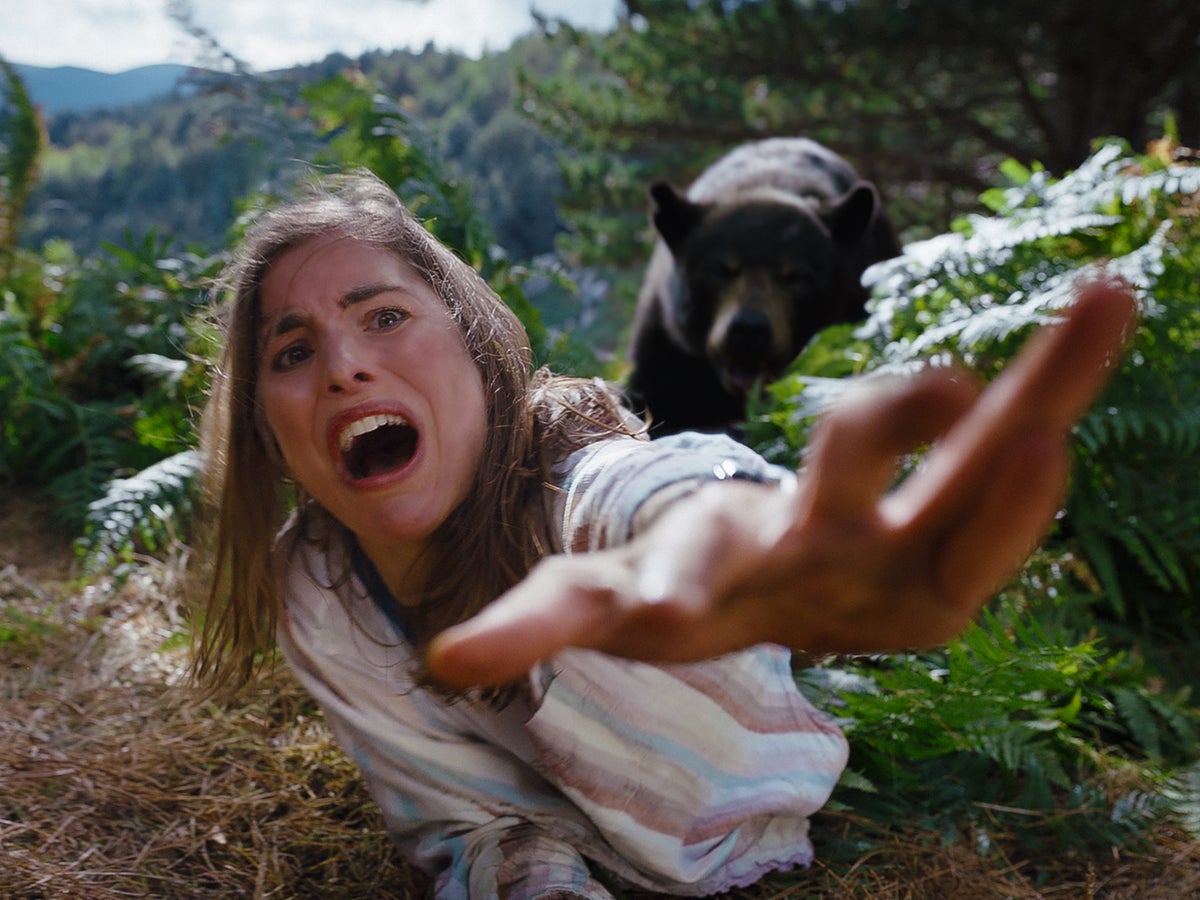
Cocaine Bear is a film worthy of its title, and perfectly constructed to feel like the kind of cult horror movie you’d find on a dusty VHS tape somewhere in a stoner’s basement. It’s bloody and grotesque, at times quite dark, but also surprisingly endearing. Any worry that actor and filmmaker Elizabeth Banks’s third feature wouldn’t live up to its gloriously stupid title is misplaced.
The fact that Cocaine Bear is based on a true story isn’t particularly relevant beyond its initial hook. The real Cocaine Bear – a dead 175-pound male nicknamed Pablo Eskobear – was discovered in the Chattahoochee National Forest during the mid-Eighties. His body was surrounded by 40 opened plastic containers with traces of cocaine, supposedly tossed from a plane by convicted smuggler Andrew Thornton. Thornton had attempted to parachute down to Earth with his spoils, only to die in the attempt – his body was later found in a neighbourhood driveway in Knoxville, Tennessee. The bear, meanwhile, had dined on Thornton’s coke, absorbing three or four grams into its bloodstream and dying roughly 20 minutes later.












