Get all your news in one place.
100's of premium titles.
One app.
Start reading
International Business Times UK
Nick Suter

Climate Emergency Algae Outbreak Threatens To Erase Historic Cerne Giant Outline As Dorset Volunteers Struggle

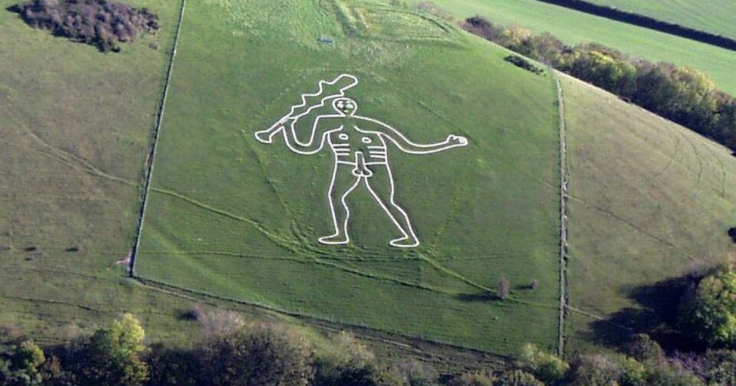
The Cerne Giant (Credit: PHOTO : PETE HARLOW/WIKIMEDIA COMMONS)

The Cerne Giant is fighting a battle against climate change and algae as volunteers and workers battle against the heat to re-chalk the giant to ensure that he can still be seen.


The Giant Versus Climate Change

'The giant is hundreds of years old but the modern world is certainly affecting him,' said Luke Dawson, a National Trust lead ranger, who is supervising the workers and volunteers re-chalking the giant.

'We've noticed algae growth starting to dull the giant's bright white outline. We can't say for certain what's driving that, but warmer, wetter conditions may be a factor. The milder winters and wetter summers make perfect growing conditions,' Dawson said.

'We're also seeing more intense rainfall, which can increase water runoff and gradually wear away the chalk, so we're planning further monitoring to understand the impacts,' he continued.

The re-chalking comes in the midst of a record heatwave that perfectly illustrates the problems the giant is facing.

How Old is the Giant and Why is he There?

Who made the giant, why the giant was made, and when it was made have remained a mystery for centuries, however we may be finally getting some clarity on some of those questions.

National Trust senior archaeologist Martin Papworth said while studying soil samples from the giant: 'The archaeology on the hillside was surprisingly deep – people have been re-chalking the giant over a long period of time. The deepest sample from his elbows and feet tells us he could not have been made before 700AD, ruling out theories that he is of prehistoric or Roman origin.'

Papworth's new discovery does lean it heavily towards it appearing around the time of the Saxons.

'This probable Saxon date places him in a dramatic part of Cerne history. Nearby Cerne Abbey was founded in 987AD and some sources think the abbey was set up to convert the locals from the worship of an early Anglo Saxon god known as 'Heil' or 'Helith.' The early part of our date range does invite the question, was the giant originally a depiction of that god,' Papworth said.

A geoarchaeologist may have a theory as to why it seems to have been forgotten.

'I wonder whether he was created very early on, perhaps in the late Saxon period, but then became grassed over and was forgotten. But at some stage, in low sunlight, people saw that figure on the hill and decided to re-cut him again. That would explain why he doesn't appear in the abbey records or in Tudor surveys,' Independent geoarchaeologist Mike Allen said.

What is the Process to Restoring Him?

The process to re-chalking the giant has evolved over the years as the climate has changed.

The re-chalking takes place every seven to 10 years. It was last done in 2019 and before then in 2008.

'It may be we have to adapt and perhaps rechalk more often,' Dawson said. 'We will also explore ways to retain more water within the landscape, for example by allowing areas of scrub to develop and establishing permanent grassland.'

In 2008 and 2017, it involved dry chalk and tamping it down. 'But that's very difficult because the hill is so steep,' Dawson said.

The new chalk Dawson said is 'like a putty, which makes it easier to make it stick.'

Sign up to read this article
Read news from 100's of titles, curated specifically for you.
Already a member? Sign in here
Related Stories
Top stories on inkl right now
One subscription that gives you access to news from hundreds of sites
Already a member? Sign in here
Our Picks
Fourteen days free
Download the app
One app. One membership.
100+ trusted global sources.