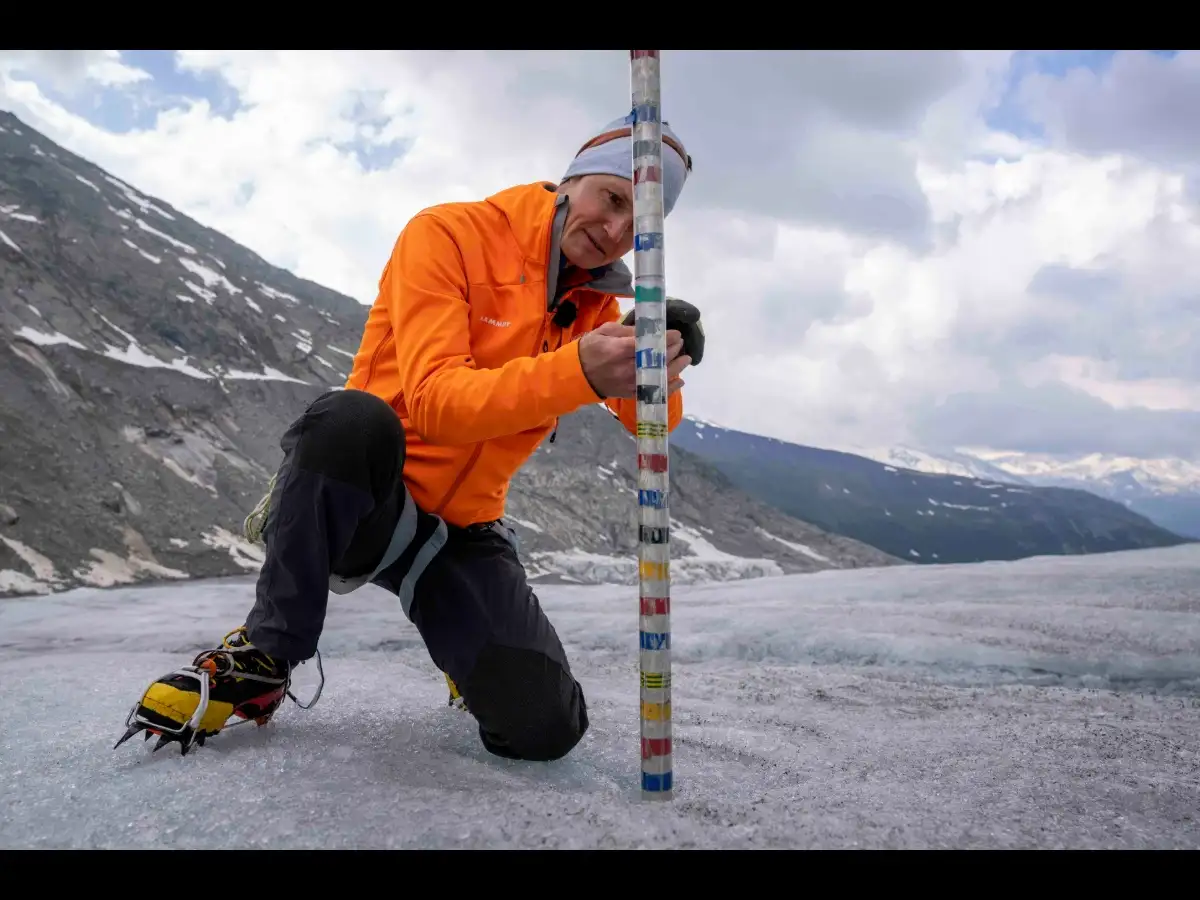
Switzerland's largest glacier, Aletsch Glacier, suffered its biggest-ever melt this year as Swiss glaciers lost more than 5 per cent of their ice in 2026, a report by the Swiss Glacier Monitoring Network (GLAMOS) and the Swiss Commission for Cryosphere Observation of the Swiss Academy of Sciences showed on Thursday. Swiss glaciers are shrinking rapidly after suffering one of their worst years of ice loss during a record-breaking European heatwave.
The findings underscore the accelerating pace of glacier retreat as extreme melt years become routine. Over the past five years, Swiss glaciers have shed almost a fifth of their ice, the report showed, threatening future water supplies and raising questions about the long-term survival of Europe's ice fields.