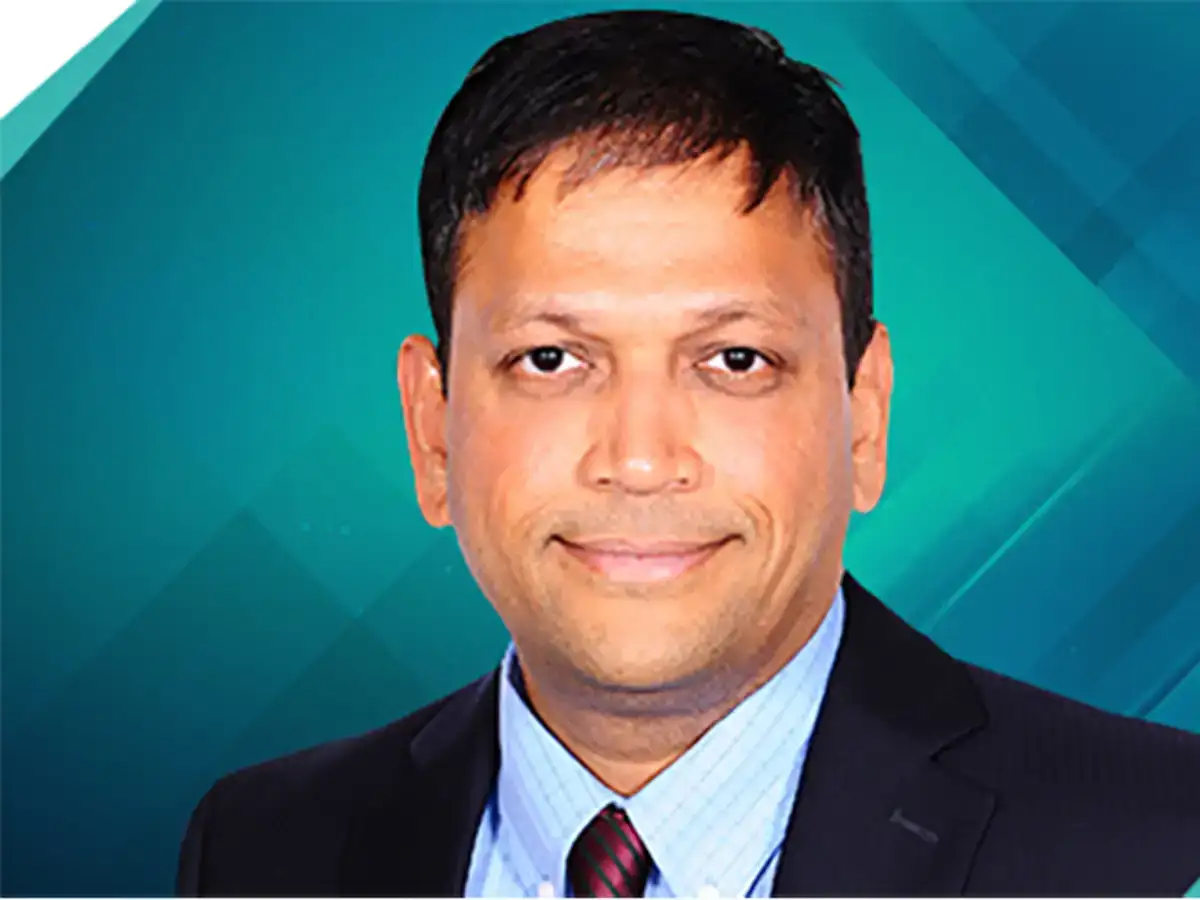
Client spending on artificial intelligence (AI) has moved beyond experiments or proofs of concept to a concrete roadmap that signposts investment returns, Hexaware chief executive R Srikrishna said, pointing to the altered budget allocation priorities for the technology that now dominates Wall Street market cap sweepstakes.
“The difference compared with last year in how clients are spending on AI is that they no longer want experimentation alone and expect a measurable return on investment immediately, sometimes within one or two months,” Srikrishna told ET.
The chief of the Carlyle-backed firm, however, said AI model companies entering the services business are not in a position to threaten large IT firms.
“Capabilities from companies like Anthropic or OpenAI will not automatically translate into being able to deliver transformation for enterprises," he said.
"That is only one element in the value chain. Our industry has specialised for decades in translating technology capabilities into real-world implementation and use cases for complex enterprises,” Srikrishna said.
In the post-AI world, the most defensible moat is trust in customer relationships, Srikrisna highlighted, adding that service providers will need to understand the customer’s domain, systems, where the data resides, the company culture and how quickly they can change.
Hexaware is focusing on the speed and agility of its services as the pace of AI-led change accelerates.
“What that means for us right now is that we are telling ourselves we will launch one new service every single month. And from the time it is launched, we have to knock on 100 customers’ doors in the first 90 days. It is not just about launching services. It is about selling, scaling and executing them,” he said.
"Clients expect a measurable return on investment immediately, sometimes within one or two months,” Srikrishna said.
The company reported a 7.5% year-on-year rise in net profit for the first quarter of FY26 to Rs. 351.6 crore, while sequentially it gained 20.6%, even amid geopolitical uncertainties.
A mixed bag
However, some verticals’ revenue growth was dented by the macroeconomic disruptions.
“Manufacturing conditions have improved because tariff uncertainty has reduced. What has worsened is fuel prices. The first impact for us is on the travel industry, and that situation has become worse. There could also be second-order inflationary effects. But we believe we can offset those pressures,” Srikrishna said.
The Carlyle-backed company reiterated its baseline revenue growth of 7.6% for the year 2026.
In the age of AI, the chief executive officer of mid-tier IT services firm Hexaware, R. Srikrishna, expects growth to come for people who are fundamentally changing the business markets, he told ET in a post-earnings interview.
“In the past, every technology change — whether cloud or ERP — meant you retained your people, formed the right partnerships and moved ahead. That playbook will not work anymore because everyone in the industry will do that,” Srikrishna said.
“That means changing everything — new services, new talent, new operating models and new pricing models. Every facet of business will change, he added, highlighting that the lack of scale like tier-1 companies, enables them to change effectively.
The comments come as globally technology firms deal with rapid adoption of generative AI and increasing competition from AI model companies that are beginning to build consulting and services capabilities.
“Clients are definitely spending on AI projects. The difference compared to last year is that they no longer want experimentation alone.