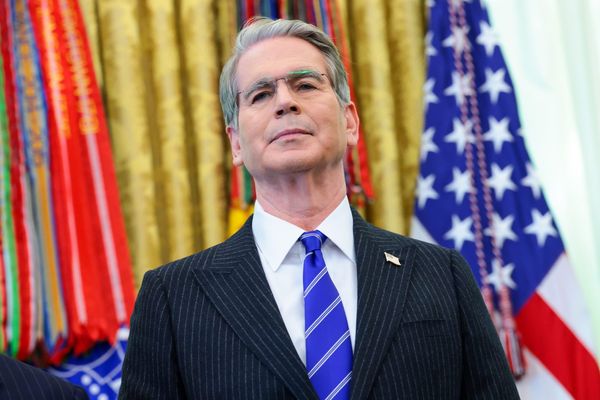
There are parallels between China’s actions at the Line of Actual Control (LAC) and its tensions between China and the US over Taiwan, says former Australian Prime Minister and China watcher Kevin Rudd. Mr. Rudd, who is the author of a new book, “The Avoidable War: The Dangers of a Catastrophic Conflict between the U.S. and Xi Jinping’s China”, is also the President of the Asia Society, and is in Delhi for the launch of a new policy institute, to be inaugurated by External Affairs Minister S. Jaishankar in Delhi on Monday.
How do you see U.S. and China tensions over Taiwan?
My analysis is that Xi Jinping’s China is different in two fundamental ways. The first is that the balance of power has changed between China and the United States: militarily, economically, and technologically. The second is the particular agency of Xi Jinping’s leadership. Xi Jinping is not a “status quo” politician, he is a “let's change the game” politician, [focused on] China's national ambitions to be the preeminent regional and global power by 2049 and to reincorporate Taiwan on the way through. Since 2017, United States has recognized this challenge, named this challenge, and defined this relationship as one of strategic competition. And the winner of this competitive race is who either remains or becomes the dominant regional global power.