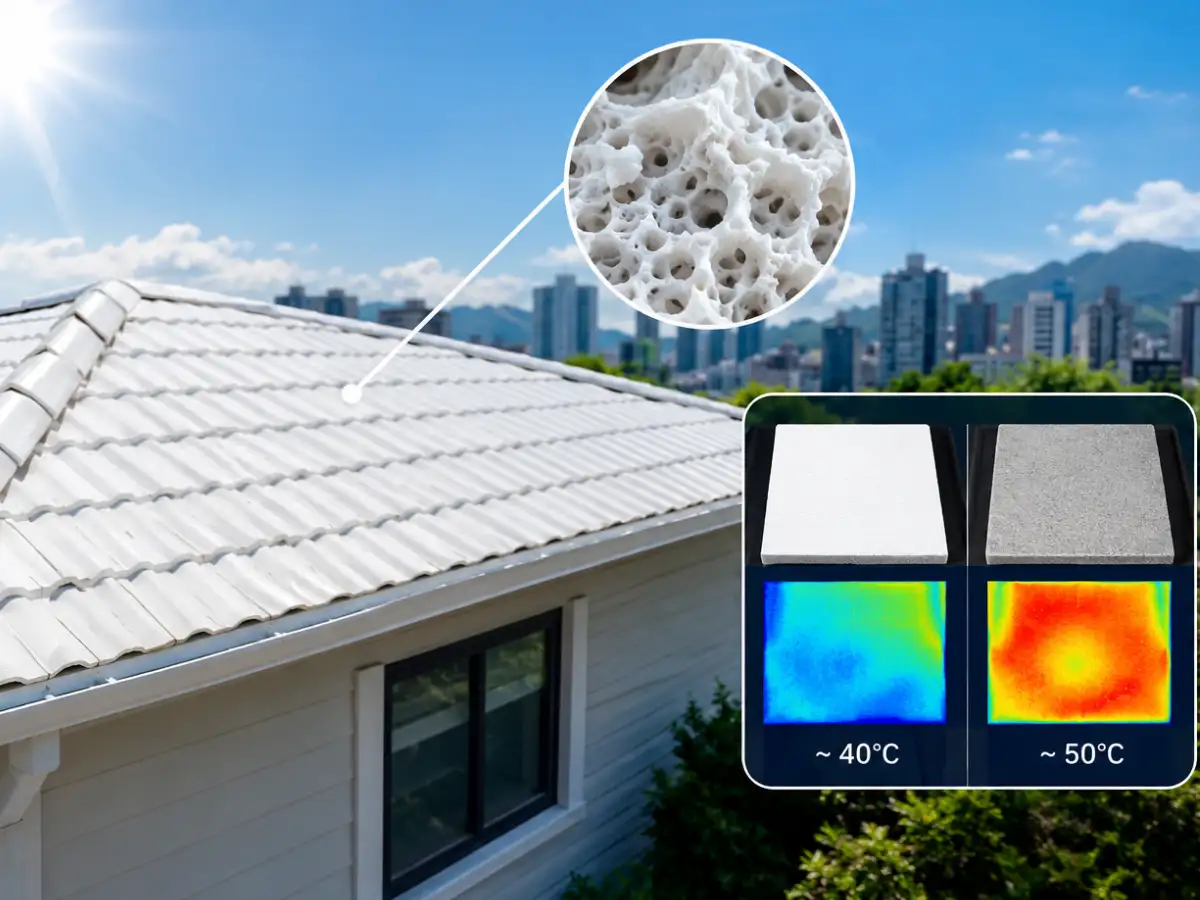
Summer cooling costs are going up. Roofs that soak up heat only make things worse. Researchers at City University of Hong Kong, working with a team at Hong Kong Polytechnic University, have developed a tile that reflects 99.6% of sunlight. This is an exceptionally high reflectivity for a passive material. The results were published in the peer-reviewed journal Science in November 2023, in a paper titled "Hierarchically structured passive radiative cooling ceramic with high solar reflectivity." Professor Edwin Chi-Yan Tso and PhD student Kaixin Lin led the work. This is not a paint or a coating you can apply. It's a tile built from the ground up at the microscopic level, designed to bounce nearly all sunlight back into the sky instead of letting it heat buildings.
Why an insect inspired this cooling material