Get all your news in one place.
100's of premium titles.
One app.
Start reading
The Texas Tribune
The Texas Tribune
National
Gabby Birenbaum

Christian Menefee’s district sat vacant for 11 months. His first bill in Congress would set a deadline for special elections.

WASHINGTON — Rep. Christian Menefee, D-Houston, will introduce his first bill as a member of Congress on Thursday, proposing a nationwide cap on how long congressional seats can remain vacant.

The Special Election Timeliness Act, or SET Act, would require states to hold special elections for House vacancies within 180 days of the seat coming open.

The proposal is highly symbolic for Menefee, who was sworn in to represent Texas’ 18th Congressional District in February — 334 days after the death of his predecessor, former Rep. Sylvester Turner. The nearly yearlong vacancy was a source of frustration to constituents and Texas Democrats, who accused Gov. Greg Abbott of intentionally holding the safely blue seat open.
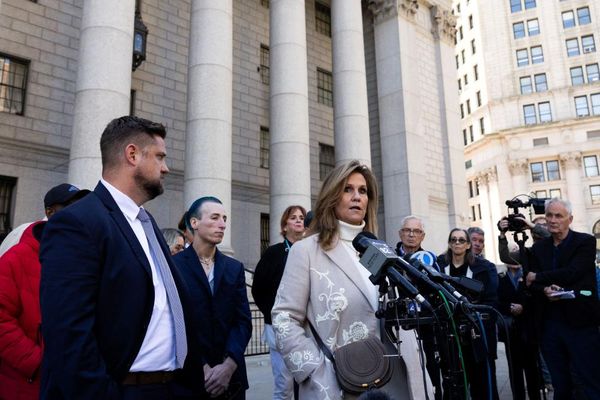
Turner died on March 5, 2025, creating a vacancy that could only be filled via a special election called by the governor. With nothing in Texas law specifying a deadline for ordering such contests, Abbott called the election for Nov. 4 of that year, ensuring the seat would remain empty for at least eight months.

Because nobody received a majority of the vote in November, the vacancy extended through a Jan. 31 runoff, which Menefee won. He was sworn in Feb. 2, after an 11-month vacancy that proved costly for Democrats in a narrowly divided House. During that span, Republicans passed major legislation — including the initial version of Republicans’ tax and spending megabill — by single-vote margins.

“What was happening in Congress at the time?” Menefee said in a statement. “Republicans were operating on a razor-thin majority. An additional Democratic vote would have pushed the Epstein files discharge petition over the threshold. And while our seat sat empty, the House voted on the One Big Beautiful Bill. The people of TX-18 were being taxed and governed with no voice. That is the core moral argument for this bill.”

Under Menefee’s bill, the special election would have been required to take place by Sept. 1 last year.

The SET Act would allow state attorneys general or aggrieved individuals, such as House party leaders, to sue a state’s chief executive to enforce the 180-day requirement. And the bill makes an exception for vacancies in which a regularly scheduled general election for the vacant office is already set to fall within the 180-day window.

Maryland Rep. Jamie Raskin, the top Democrat on the House Judiciary Committee, has signed onto the bill as a cosponsor. The measure could face an uphill climb with both chambers of Congress under GOP control, though Menefee’s office said it has drawn Republican interest.

Locally, state Sen. Borris Miles, D-Houston, and Houston City Controller Chris Hollins, who oversaw the 2020 election as Harris County clerk, threw their support behind the bill.

“The Special Election Timeliness Act will make sure no governor, Republican or Democrat, can play politics with our representation ever again,” Hollins said in a statement. “We shouldn’t need a law to force elected officials to do the right thing, but this bill will protect our rights when we do.”

Menefee, who has been in Congress for all of three months, is in a May 26 runoff with fellow Houston Democratic Rep. Al Green after their districts were essentially combined by Republican lawmakers in last summer’s congressional redistricting.

The 119th Congress has experienced 12 vacancies in just 16 months, with the special elections to fill the seats occurring over myriad timelines. There are currently three vacancies due to resignation, including in Texas’ 23rd Congressional District, which was left open earlier this month after Rep. Tony Gonzales, R-San Antonio, left Congress in the wake of a sex scandal.

California Gov. Gavin Newsom set an Aug. 18 special election to fill the recently vacated seat of former Democratic Rep. Eric Swalwell. But in the other two open seats — Gonzales’ district and a Democratic seat in Florida — the governors have yet to call special elections.

Long vacancies have affected both parties in recent years.

After Republican Rep. Doug LaMalfa died in January, for example, Newsom set the special election for Aug. 4. That means LaMalfa’s heavily Republican district will remain vacant for at least seven months, compared to the four-month timeline for Swalwell’s blue district.

Abbott has acted quickly in the past to fill Republican seats, such as after the 2018 resignation of GOP Rep. Blake Farenthold in the wake of sexual harassment allegations. Farenthold resigned in early April, and Abbott set the special election for late June, saying that ongoing recovery from Hurricane Harvey required an emergency special election that enabled him to hold it sooner than usual.

Sign up to read this article
Read news from 100's of titles, curated specifically for you.
Already a member? Sign in here
Related Stories
Top stories on inkl right now
One subscription that gives you access to news from hundreds of sites
Already a member? Sign in here
Our Picks
Fourteen days free
Download the app
One app. One membership.
100+ trusted global sources.