Get all your news in one place.
100’s of premium titles.
One app.
Start reading
The Independent UK
The Independent UK
Science
Vishwam Sankaran

Chinese breakthrough could extend viability of transplant organs from hours to days

Chinese researchers have developed a new method to preserve tissues at cold temperatures, an advance that could extend the viability of transplant organs from hours to days.

Currently, organ transplants remain the only effective treatment for many end-stage diseases like severe heart, liver or kidney failure. The moment an organ is removed from a donor, however, it begins to deteriorate as cells stop receiving oxygen and toxic compounds accumulate in tissues.
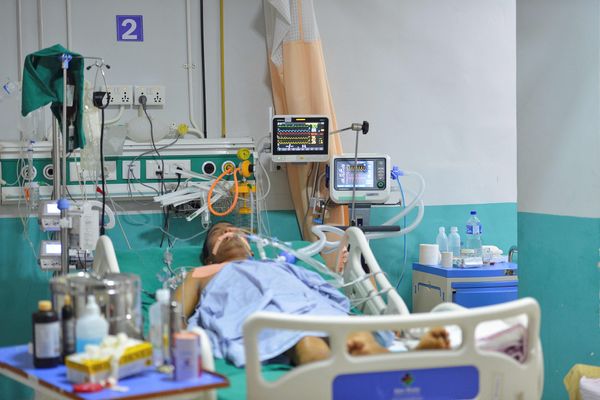
To overcome this, hospitals usually place organs meant for transplant in an ice-cold preservation solution.

But even with these arrangements, organs can only survive for a few hours. The heart, for instance, can currently be preserved for a maximum of about six hours after leaving the donor while kidneys remain viable for up to 24 hours.

In recent years, instead of preserving organs on ice, scientists have been using machine perfusion systems that mimic blood circulation while the organ is outside the body. But these systems come with their own disadvantages.

While colder storage can preserve organs longer, machine perfusion systems work at temperatures above freezing.

“Currently, machine perfusion devices for organs above 0C are available, but those for subzero temperatures and suitable for multiple organs remain underdeveloped,” the Chinese scientists explain in a study published in the Journal of Medical Devices.

The study from China’s State Key Laboratory of Cryogenic Science and Technology unveils a new Multithermic Machine Perfusion System, or MTMP, which works across temperatures, including below 0C.

Researchers showed that the new system could preserve rat hearts, rabbit kidneys, and pig kidneys in liquid nitrogen at minus 150C for seven days before successfully reviving and transplanting them.

“Here, we develop an MTMP system which enables programmable and precise regulation over a wide temperature range from normothermia (37C), hypothermia (4C) to supercooling (less than 0C),” scientists said.

“The device demonstrates precise control over temperature, pressure, and flow rate.”

For organs like the heart, extending the viability time could help clear the waitlist for transplants, researchers said.

“If just half of the currently discarded transplant hearts in the US could be preserved and used, we could clear the entire US waiting list for organ transplants within two to three years,” the study said.

“Extending the low-temperature preservation time of the heart to 24 hours would provide patients with a larger time window, which may save more lives.”

The new system, according to scientists, can address critical gaps in organ preservation technology and provide a “foundation for extending preservation duration”.

Sign up to read this article
Read news from 100’s of titles, curated specifically for you.
Already a member? Sign in here
Related Stories
Top stories on inkl right now
One subscription that gives you access to news from hundreds of sites
Already a member? Sign in here
Our Picks
Fourteen days free
Download the app
One app. One membership.
100+ trusted global sources.