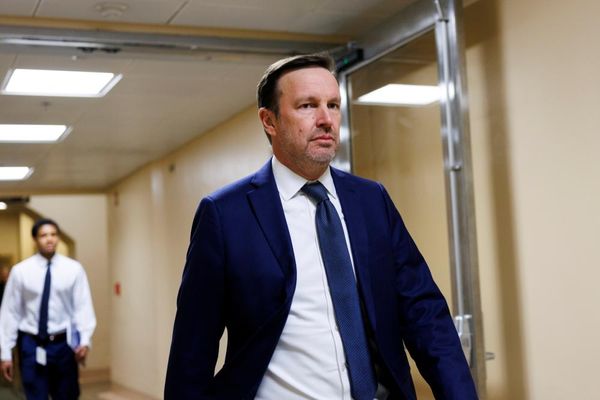
Chinese Defence Minister Admiral Dong Jun issued a pointed warning to Washington on Monday, declaring that Beijing's ships would continue transiting the Strait of Hormuz and that China's trade and energy ties with Iran were not subject to outside interference. His remarks came hours after the United States military formally began implementing a naval blockade of all Iranian ports, following the collapse of weekend peace talks in Islamabad.
'Our ships are moving in and out of the waters of the Strait of Hormuz,' Dong Jun said. 'We have trade and energy agreements with Iran. We will respect and honour them and expect others not to meddle in our affairs. Iran controls the Strait of Hormuz, and it is open for us.' The statement was among the most direct pushback Beijing has offered since the US-Israel war on Iran began on 28 February.

A Blockade That Changes Everything
US Central Command announced that its forces began implementing the blockade at 10 am ET on Monday, 13 April, acting under a presidential proclamation from President Donald Trump. CENTCOM specified that the operation would be 'enforced impartially against vessels of all nations entering or departing Iranian ports and coastal areas, including all Iranian ports on the Arabian Gulf and Gulf of Oman.' The command added, however, that it 'will not impede freedom of navigation for vessels transiting the Strait of Hormuz to and from non-Iranian ports' — a notable qualification that appeared to narrow the scope of what Trump had initially described on Truth Social. Under those terms, Chinese vessels transiting to non-Iranian destinations would fall outside the blockade's stated scope, a distinction Beijing's statement did not acknowledge.
The blockade followed the failure of more than 21 hours of face-to-face negotiations in Pakistan, led on the American side by Vice President JD Vance. Iran's foreign minister Abbas Araghchi wrote on X that Washington's 'maximalism, shifting goalposts, and blockade' had derailed what he described as a near-complete 'Islamabad MoU.'
Trump separately warned on Truth Social that any Iranian 'fast attack ships' approaching the blockade would be 'immediately ELIMINATED,' adding that the rest of Iran's navy had been 'completely obliterated.'

What the Hormuz Closure Means for China
The stakes for Beijing are considerable. China is the world's largest importer of crude oil and the single biggest buyer of Iranian petroleum. Any sustained disruption to shipments through the Strait of Hormuz stands to affect both Iran's revenue and China's oil supply directly. Since the start of the conflict, Iran had permitted vessels from a limited number of countries — including China — to transit the waterway, while blocking ships linked to the US, Israel, and their Western allies.
Dong Jun also stated that Beijing remained 'committed to peace and stability in the world' and was closely monitoring developments in the Middle East, signalling that China does not intend to be drawn into direct military confrontation, even as it holds firm on the right to continue trading with Tehran.
Allies Distance Themselves From Washington
China's rebuke arrived alongside a broader wave of opposition from US partners. British Prime Minister Keir Starmer told BBC Radio 5 Live that the UK was 'not supporting the blockade,' adding that it was vital to get the Strait reopened. Starmer also said the UK's military assets in the region, including minesweepers, were 'focused from our point of view on getting the Strait fully open.' France's Emmanuel Macron announced that Paris and London would co-host a conference in the coming days to coordinate a multinational approach to restoring freedom of navigation. Spain's defence minister Margarita Robles called the blockade something that 'makes no sense,' describing it as 'one more episode in this whole downward spiral.'
🚨🇨🇳 CHINA JUST WARNED THE US
— New Direction AFRICA (@Its_ereko) April 13, 2026
Chinese Defense Minister Admiral Dong Jun today:
"We have trade and energy agreements with Iran. We expect others not to interfere in our affairs. The Strait of Hormuz is open to us."
This is a direct response to the US naval blockade on Iran.… pic.twitter.com/uPpOzmFhcI
Iran's armed forces, for their part, warned that if the security of its ports were threatened, 'no port in the Persian Gulf and the Arabian Sea will be safe.' Iranian officials described the US move as illegal and said it 'amounts to piracy.'
The Strait of Hormuz carries roughly one-fifth of the world's daily oil and liquefied natural gas supply. Its disruption since late February has already sent energy costs surging globally, with analysts warning of prolonged consequences for consumers in the UK and across Europe.
The two-week ceasefire between Washington and Tehran is due to expire on 21 April. CENTCOM has not publicly addressed how the blockade will be enforced against vessels from countries that have declared their intention to continue transiting the waterway. China's foreign ministry has not issued a follow-up statement since Dong Jun's remarks on Monday.