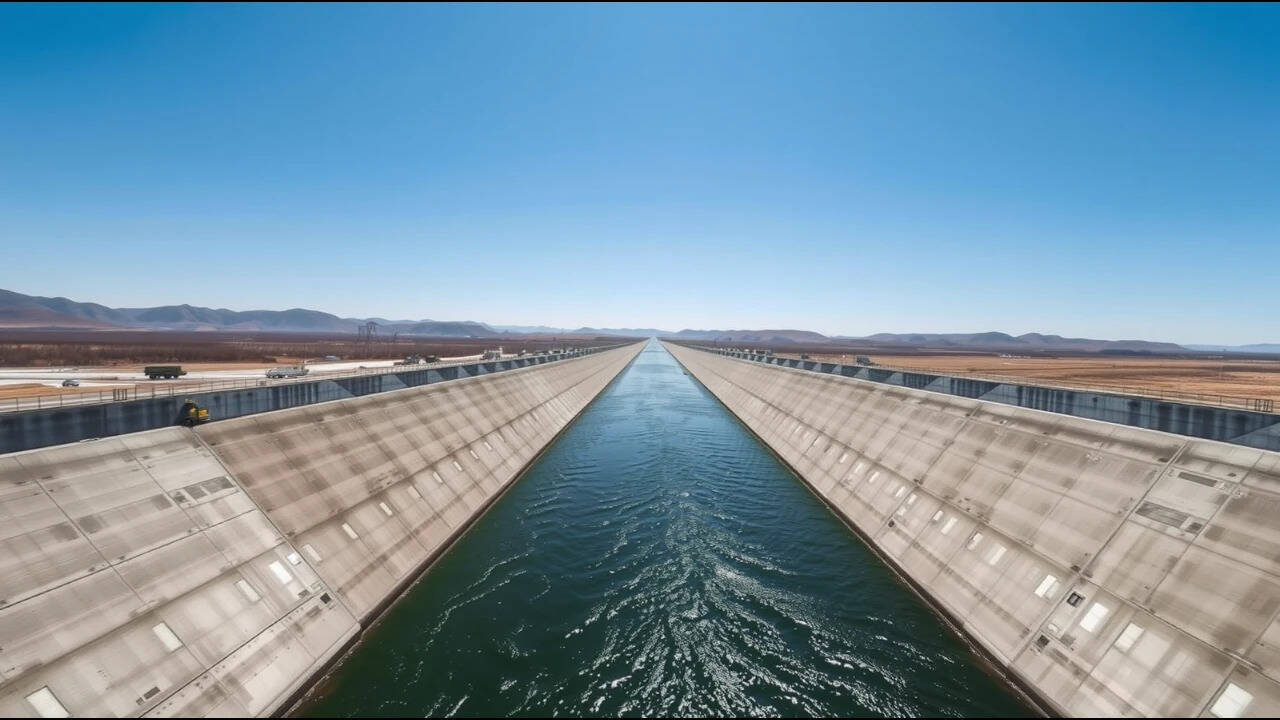
In 2002, China's State Council formally approved construction of the South-to-North Water Diversion Project, an engineering undertaking designed to move water from the relatively water-rich Yangtze River basin in the south to the chronically dry cities and farmland of northern China, including Beijing. More than two decades later, the project stands as the largest water transfer scheme ever built anywhere in the world, moving tens of billions of cubic metres of water annually through thousands of kilometres of canals, tunnels and aqueducts. According to Chinese authorities, more than 185 million people across northern China have directly benefited from the water it now delivers. Achieving that scale came at a high human cost, with at least 330,000 residents relocated from their homes to make way for the project's reservoirs and canals. Mao's original vision, first sketched decades before China possessed the resources to realise it, illustrates how some infrastructure ambitions patiently wait generations for technology and political will to finally converge.
Get breaking news anytime, anywhere. Download the TOI app now!